Thanks to our vigilance and hard work we’ve found THE fishing vehicle for big river and stillwater fishermen. You only have to choose between Gibbs Amphibians’ 30-foot, 500-horsepower turbo diesel powered Phibian or the 21.5-foot, 350-horsepower V8 driven Humdinga (pictured).
In all fairness, my dad didn’t see it coming. I blame it on the thin air or the simple joy of being outdoors in God’s country.
For more than a few years, my brother, my sister, and I eagerly anticipated a week or more of camping in the Tuolumne Meadows campground. These trips were filled with hiking, fishing, campfires, hiking that was sporadically interrupted by fishing, and that general freedom engendered by nature’s wide-open spaces.
Many hikes started in the campground or nearby, which meant a starting elevation of at least 8,500 feet and often closer to 9,500 feet. Many of the trails were obvious or followed rivers or streams, and were usually marked on the USGS maps dad packed with the space blankets, water, lunches, snacks and other supplies. Some hikes were long and generally flat, others shorter but a bit tougher on the shorter legs of kids. The trail to Lake Elizabeth gained about 1,000 feet in elevation over 4.5 miles. Getting to Gaylor Lakes required rising 600 feet in what seemed like the first mile of the three. (Gaylor Lakes supposedly offered great fishing, but the inhalation of swarms of mosquitoes that rose with every step on the surrounding marshes cut the trip short.)
Lembert Dome — a 900-foot tall mass of granite — towers above the nearby Tuolumne River. From the meadows one can often see tiny people standing on top. Then, one summer, me, my dad, my brother and my sister saddled up and began an ill-fated hike that would take us to the top of the dome on a relatively easy trail, but one that grows steeper as it ascends the backside.
The trail cut through a forest and over a few streams as it traced the lower edge of the dome, then looped toward the back the dome. All the while we gained elevation, but it’s the last fourth of the 2.8 miles that asked the most of our legs. This climb started with a clear demarcation of the alpine zone. Trees became fewer and shorter, some stunted, and soon we stood on granite. Then it got a bit tricky, with some rock scrambling and careful footwork required before we reached the top.
Yes, we made it... (This is the original, unaltered photo. Scroll down for a better colorized version. And where the heck did I get that belt buckle?)
Standing on top of this massive granite dome, where the air seems just slightly thinner, the deep greens of the meadows and trees contrast with a sky of eye-straining blues and snow-capped mountains reaching 11,000 feet or more. We lingered and marveled; maybe a bit too long.
Not exactly the best boots for hiking.
The hike had taken a little bit longer than expected and dad was a tad anxious about getting back to camp dome before dark. From where we stood, the face of the dome didn’t look too steep. It also looked like a shortcut.
We didn’t know that there was a surprising amount of glacial polish and exfoliation, cracks parallel to the surface that develop with expansion and contraction‡. Our Sears Roebuck and Co. boots would have been more at home on a flat construction site and offered limited grip. (You might know these boots; versions are still sold today under the Diehard brand — the ones with white leather crepe sole with a tread best described as small rolling hills.) Baseball-sized rocks and small BBs of decomposed granite tumbled beside us as we picked our way down.
We’d also find out that the stitching and rivets in our jeans didn’t offer much traction. It wasn’t easy to walk down the steep granite, so we controlled much of our descent with the seat of our pants. Literally. We slid on our bums. I think our pants gave up their last threads that day.
We did make it down Lembert Dome that afternoon and my brother and I hiked back to camp with just a bit of bravado. Dad, no doubt, and probably my sister, were relieved.
We were too young to be appropriately terrified worried that day. Now that age has tempered my bravado, when I think about this, I’m suitably scared for that young man. But I’m always glad that he had this adventure.
...and here we are with the color slightly adjusted. (Forgot that Mark was ever so small.)
Us kids looking out from atop Lembert Dome. Not so scary...
My brother, my son, and I made it back in 2011. This time there'd be no sliding down Lembert Dome's face.
† This prompt was issued a few days ago, but nothing immediately think came to mind, which I chalk up to a lack of adventurousness the preparedness taught to me by the Boy Scouts.
‡ There is no general agreement among geologists as to the exact cause of this phenomenon.
I wouldn’t normally write something for a Monday, but I’m sitting here between Super Bowl commercials marveling at the breadth of the ‘raw honesty’ discussion resulting from a post asking if this raw honesty is needed and how it may be connected to the success, relevance, or execution of a fishing blog, fly or otherwise; or any blog for that matter.
An acceptance that there is a place for anyone’s blog, even if just an opportunity to ‘howl at the moon,’ seems to echo through every opinion and observation, and an inherent support of an interpretation that ‘raw honesty’ means writing what you want to write and letting your personality separate your blog from the herd.
The Internet is a very public place, and an increasingly accessible space in which blogs in various forms arise. According to statistics from Technorati and Blogpulse, the estimated number of blogs ballooned from 3 million in July 2004 to 164 million last year. This diversity gives voice to authors that may have never been read if not for a blog, and I think we are all the better for it. I’m happy to see that I’m not the only person who’s grateful.
There seems to be little glory in blogging, and it’s generally fleeting. But like fly fishing, much of the fun of blogging is in the doing. Hooking a fish/reader is a welcome consequence.
I have a confession to make. I have been reading many of your blogs. You don’t know this, because I don’t comment much. My wife disagrees, but often I don’t feel my words will add much to the conversation. I lurk, looking for writing that will take me away from the everyday, writing that will inspire, now and again enjoying others’ stories about water I hope to fish, and some that I probably won’t.
I won’t pretend that my encouragement will reach that many eyes. But, occasionally and perhaps more than admitted, blogging isn’t about catering to readers; it’s about the act of writing. This post, itself, is a modest reaction to a claim on [name redacted]’s another blog that “…99% of fly fishing blogs are boring…” and have followed “…the boring/cyclical path of print.” This seems an unfair assessment, though it is unclear whether this judgment and call for bloggers to “…put it all out there…” is leveled at blogs in general and includes those written by the vast majority who fly fish when they can, and for whom their blog is a hobby and another welcome diversion.
While these charges offer valid advice for all writers, the simplicity of launching and maintaining a blog has redefined freedom of expression. It’s clear that the intention behind some blogs is a simple sharing of experiences with family and friends, and the occasional visitor. They may be written for the joy of the task itself, or to satisfy ego, record for posterity, or to push an idea, belief, or agenda into or onto the world. (Or perhaps, as a response to something read somewhere else?) This blog grew out of ego years ago, initially as a website, to share my life with those few who might be interested. Sure, I’m grateful when more than three readers visit in a week, but this has evolved into a more permanent record, a journal of sorts, through which even I occasionally revisit old memories.
I’d also respectfully submit that many bloggers could be considered the essayists of today, making observations of daily life. It’s easy to recall more famous essayists such as Ralph Waldo Emerson, Sarah Margaret Fuller, Arthur Miller, Jonathan Swift or John Updike. But for each one of these writers, many others shared anonymous and perhaps less polished observations and opinions in leaflets, pamphlets, or other media that has since disappeared.
In one respect, blogging is a most public form of learning, with all of one’s mistakes on display. It’s inherent in the learning process that bloggers might unconsciously test styles used by others as they find their way, leading to a sameness. Writing, particularly regularly and regularly well, can be difficult. It requires a well of ideas, opinions, and experiences. These experiences may be limited, and not everyone cares to divulge every personal hiccup in their life. Here I decided early on that certain topics would be verboten; a voluntary limitation on “raw honesty.” I’d suspect this is true with other bloggers. (I can’t help but wonder if in today’s world the term “raw honesty” no longer has any real meaning.)
More widely read bloggers have a better understanding of communal attraction of wistfulness and humor and how rooting posts in common experiences can make writing memorable without need for flowery language and a vast vocabulary. These are plain ideas not so easily applied. And, frankly, I don’t expect this level of writing in every blog, understanding that countless blogs were started out of passion, not because the author was a writer.
Blogs become my favorites simply because the writing or topics touch me in some way. At times I want to escape through the eyes of another, especially when I can’t fish. There’s an attraction in stories that offer differing perspectives of familiar or nearby places. Many times it’s merely catching up with the goings on in a friend’s life.
Reading over what I’ve written here, I asked, “Is this raw honesty?” Honest, yes. Raw, no; that’s just not me. I’m just a regular guy, working a job, with a family, who fly fishes when he can, usually less than he hopes; and for whom his blog is writing and sharing without expectation. Judge my blog as you will.
P.S. A discussion with a friend about whether the wording of this post should be strengthened, interestingly enough, led to an answer in the understanding that being true (honest) to my style offered a subtle metaphor.
* I excised “fellow” originally inserted before “fly fishing bloggers” with the consideration this is not a fly fishing-only blog.
Us fly fishers can safely assume trout will be where we left them last season, but the clock ticked a minute closer to the Outdoor Apocalypse with the new version of the U.S. Department of Agriculture’s “Plant Hardiness Zone Map.” Welcome news for gardeners at more northerly latitudes, to be sure, but I for one am not looking forward to roses and magnolias crowding the banks of Sierra streams any time soon.
And though the USDA website notes…
Climate changes are usually based on trends in overall average temperatures recorded over 50-100 years. Because the (new map) represents 30-year averages of what are essentially extreme weather events (the coldest temperature of the year), changes in zones are not reliable evidence of whether there has been global warming.
…the new hardiness map shows a decided shift north nationwide.
And while these warmth loving plants won’t give triffids any competition, by the time they show up next to my favorite trout waters, it’s likely the trout will be gone and the water rendered unfishable by an invasion of members of the Centrarchidae family.
Be honest. This is often the way we imagine it could have happened. Standing in a river in early May, maybe June, the fish are still eager and maybe still a bit stupid. The spot you’ve chosen offers a clear cast to riffles only half a dozen yards long. The weather is cool enough to encourage the wearing of that old, long-sleeve flannel shirt. The bright sun is blocked by a classic wool walking hat; the one that lends the wearer a certain swagger. The patches of aspen, peaking out between the Jeffery and piñon pines, are once again covered with bright green leaves.
It wouldn’t be too difficult to cast from here, and you consider it, but you are new to the sport and the desire to properly and softly present the fly requires a few more steps. The trout slowly and quietly slurp Baetis duns. You check your leader, eyeing its length and looking for any nicks or knots that would give away your fly as a fake.
You cast the fly into a seam you think will carry it past the closest edge of the feeding fish. The fly slips around one rock, then another. To keep the drift realistic, you lift your rod tip to keep as much line off the water as possible. Everything looks and feels right. The fly disappears, and without thinking, and an imperceptible pause, you set the hook. If time allowed, there’d be a debate as to who was more surprised, you or the fish.
All of this positioning and decision-making doesn’t take as long as it seems, except that it takes great effort to ensure that everything is perfect for the woman watching from the bank. She sits on a checkerboard blanket, the remnants of a picnic scattered about. Her classic beauty competes with the trout for your attention. She smiles, impressed, as the rainbow trout glistens in the sunlight, before you carefully return it to the water.
However, unless you’re luckier than the rest of us, reality is much different…even for better-looking people, particularly those who’ve just learned to cast a fly.
Ewan McGregor took Hollywood actress Emily Blunt fly fishing – and she ended up catching his dog.
The Crieff-born actor was in Scotland last year filming Salmon Fishing in the Yemen, about a fisheries scientist who tries to bring the sport to the Middle East.
Ewan was showing off his newly acquired casting skills to Emily…
He said: “All the actors stayed in this beautiful little house. They had a pond down at the bottom of the garden and some rods and both Amr Waked, who is also in the movie, and I had learnt to fly fish.
“We were showing off because we were trying to impress Emily with our fly fishing skills – ‘Look, you do it like this, don’t bendy our wrist, no, that’s right…’
“And she caught my dog who was running around behind. She hooked him. She didn’t catch any fish but she did catch my dog.”
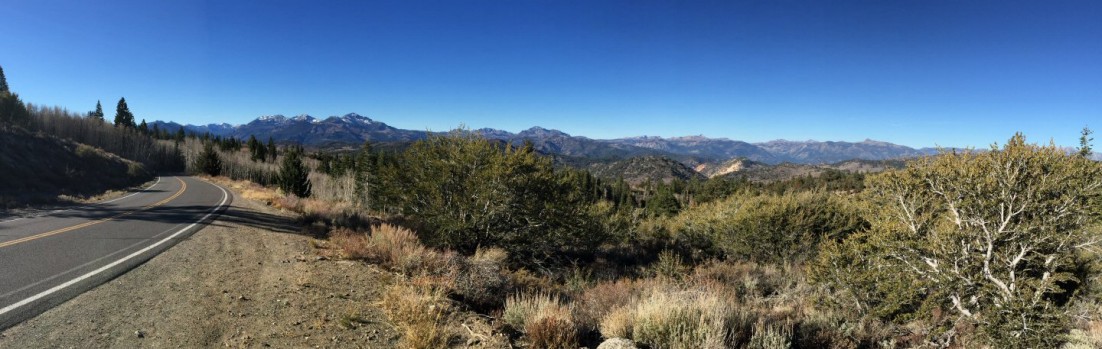


 …the new hardiness map shows a decided shift north nationwide.
 You cast the fly into a seam you think will carry it past the closest edge of the feeding fish. The fly slips around one rock, then another. To keep the drift realistic, you lift your rod tip to keep as much line off the water as possible. Everything looks and feels right. The fly disappears, and without thinking, and an imperceptible pause, you set the hook. If time allowed, there’d be a debate as to who was more surprised, you or the fish.
  fishing for words