January’s promise to get out and fish earlier, more often and in different places now echoes with so much emptiness that the unthinkable is the only resolution.
Yes, I will be chasing trout this weekend. Memorial Day weekend.
The events and circumstances that kept me closer to home haven’t been unpleasant. They just didn’t include trout. Staying home last weekend included free and unrestricted quantities of barbecue and wine, not really a bad thing.
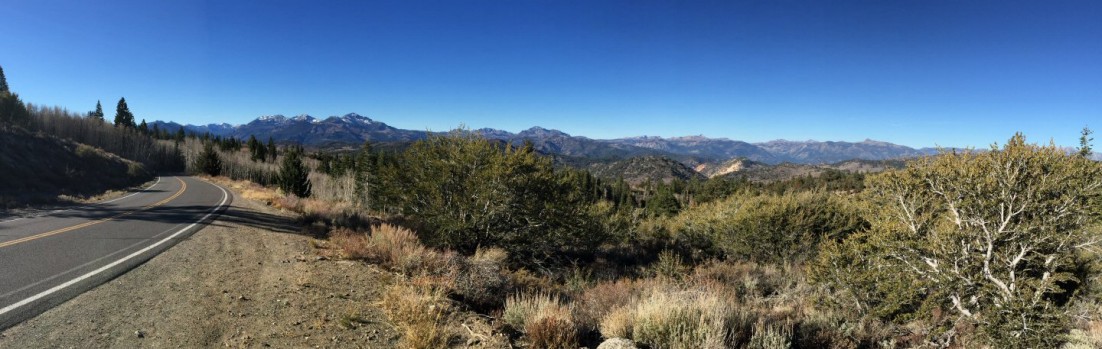
This is the first and possibly one of the few times to get to the cabin this summer, and despite the Sierra Nevada and its foothills being infested with a couple thousand campers and anglers, I’m going. With fishing reports read and flows checked, plans are firming.
An eyewitness account from a fellow fly fisherman suggests that a target river and one of its tributaries will still be high and muddy for a few days. But that bad news lends some optimism that little R Creek may have the water needed for guilt-free fishing for its wild rainbows. It’s a ten-mile dirt road drive to this little gem, so while in the area it’ll make sense to explore other blue lines on the map and not too far away.
It’s a certainty that a few high mountain streams will be walked, likely with the oldest son. A few will be familiar, others offering an opportunity to explore. Generally, this trip will be characterized by a philosophy that hiking a few thousand feet, maybe a mile or two, will leave the crowds behind.
Hopefully I’ll be the guy you won’t see this weekend.
It’s not the press release* itself (below) that intrigued me so much as the question as to whether Douglas Outdoors faces an uphill challenge.
All the right connections are made in the announcement — it’s led by the former president of a well-known fly rod and reel manufacturer, who later was also involved with a mid-range manufacturer; has a connection to conservation and a rod who holds two IGFA fly rod records, and touts a “made-in-the-USA” label.
If it’s not enough to launch another mid-range fly rod line in a market filled with options, particularly from more established, formerly upscale manufacturers, Douglas Outdoors promises to limit sales through dealers, mainly independent shops.
A FRESH LEGACY
Jim Murphy, former President of Hardy North America and founder of Redington, announces the founding of Douglas Outdoors. This is a new partnership with the Barclay family, prominent conservationists and owners of the Douglaston Salmon Run (DSR) on the famed Salmon River, in New York. Douglas Outdoors will present two new fly rod ranges, a line of spin and casting rods, and two new fly reels at the annual ICAST/IFTD show on July 15 in Orlando Florida. This first product offering will feature the Eclipse fly reel, the first to be made in the Douglas Outdoors factory in New York.
“We are in the process of building a new fishing rod factory here in New York State.” Murphy said, “We have hired a leading composites engineer to head the team. Tom Murphey, formerly of the Air Force Research Laboratory in Albuquerque is not only a prominent scientist in the field, but is also the holder of two current IFGA records on fly. Tom will be applying the latest material science breakthroughs to fishing rod design. We will bring our first US Made rods to market in 2015.”
“Douglas Outdoors is committed to a dealer-centric program. Our focus will be on the independent dealers, and we will offer them products, programs, and support that will reflect on their key role in the fishing industry.” Murphy continued, “I look forward to presenting Douglas Outdoors to the industry and to offering a fresh legacy of tackle and services that anglers and dealers alike will find both new and familiar.”
*This appeared in my fly fishing club’s in box.
Disclosure: No, I have not received nor do I expect to receive any compensation for this post.
Lastly, I don’t know how a “legacy,” by definition, can be fresh. I blame the copywriter.
The only reason I haven’t curled up in a fetal position and yielded to California’s 500-year drought is there’s at least a few days of trout fishing on the horizon.
It’ll be good news and bad news situation. The good news being that low water will allow access to most streams and rivers during my limited time fishing this month. The bad news is that the water may be gone when I can next venture into the Sierras.
But the stories that truly illustrate the far-reaching impact of The Great Drought are smaller in scope and often just as alarming.
Spring fishing in the Sierra Nevadas usually means fewer people and rattlesnakes. This year, at least the rattlesnakes will be more numerous.
Wildlife experts from the high Sierra to Southern California report that snake sightings are up, largely due to the warm, dry weather that has gripped much of the West. Rattlesnakes, like many animals, have been drawn out of their wintertime dormancy earlier this year because of the mild conditions that have accompanied the drought, experts say.
Reproduction declines have been noticed since 2007, before the drought, Meese said, but recent counts have shown even steeper declines. A statewide survey of tricolored blackbirds, known for their red shoulder patch with a bright white stripe, was recently concluded and the results are due out in three weeks.
At issue for the birds is a lack of insects since female birds require insects in their diet to form eggs. Also, young birds require insects during the first nine days of life, when they cannot digest plant material. Meese contends that the effects of the drought have created lower populations of insects, as well as less-extensive wetlands from which blackbirds can feed.
…the warm, dry winter threw cherry trees off their game all over the state. California usually delivers the nation’s early season cherries, but with yields down around a third of what they usually are you can expect to pay a whole lot more at the market.
What the trees want is a wet, chilly winter with fog that keeps the daytime temperatures under 55 degrees.
But, clearly, the trees aren’t getting what they want.
California honey prices are being pushed to new highs. California was at the top of the list of honey-producing states a couple of years ago. Not anymore. This third year of drought could cut production to its lowest since 1981.
Suction dredge mining remains an issue for our rivers but, apparently, now is the time to shut down those machines and pick up a pan in the search for gold. Accessibility is creating a mini-gold rush in the Sierra foothills.
If there’s a silver lining, it’s that the severity of this drought has shifted the discussion on fracking.
Fracking a single oil well in California last year took 87 percent of the water consumed in a year by a family of four, according to the Western States Petroleum Association, an industry lobbying group. That amount — a modest one by national standards, the oil industry argues — has become an increasingly delicate topic since a drought was officially declared early this year in the state.
The drought, combined with a recent set of powerful earthquakes, has provided the momentum for about a dozen local governments across California, the third-largest oil producing state, to vote to restrict or prohibit fracking in their jurisdictions, as concerns over environmental effects and water usage have grown.
At the same time, a bill that would declare a statewide moratorium on fracking has been gathering support in the State Senate, a year after a similar effort failed.
The frail nature of our infrastructure — arrogantly designed to fight Mother Nature’s wisdom — is certain to be tested in the many months between now and the next rainfall. A switch to ignoble warm water species might salve the itch to fish, but at what cost to one’s pride?
A few weeks ago in preparation for the coming trout season, I decided it was time to replace the line on my 5 wt. rod. I won’t say that I’m cheap, but this line had served well during its all-too-long life. It wasn’t as if it had developed any hinges or cracks, but last September the welded loop broke and I used a nail knot and monofilament to create a new loop-to-loop connection, then finished the season without having to replace it. But while I’m not a great fly fisherman and don’t demand perfection in my equipment, a floating line that doesn’t float is a bit of a problem.
When I first set up this rod and reel, I used line purchased at a club auction. It was a great deal for a name brand line. Truthfully, I’ve since wondered how long it might have been in the club inventory. It would be hoped that it spent it’s time in a house closet; where the temperature was regulated and exposure to ultraviolet light limited, but it more likely spent its time in a garage, baking during the summer.
This was a plain fly line, nothing special. Its entire length was that vibrant green that makes outsiders question how fly fishermen catch anything. In my pre-fly fishing life I too wondered how fish didn’t see that bright, large-diameter line, not knowing then that there was nine feet of leader and tippet that I couldn’t see, to which a fly was attached.
I’m getting a late start this season, so replacing the line wasn’t imperative. The real decision was where I might get it replaced. I don’t have many choices in fly shops around here. I could drive an hour into San Francisco. There’s a new fly shop in the city, a shop within a shop, apparently, owned and operated by a guy well known in local fly fishing circles. I haven’t been there yet, but hear it’s pretty nice.
There’s another shop south of me, not too far away and across a toll bridge. But like many local fly shops, it is one that seems to be only surviving, not thriving. It’s in the suburbs, not near any fly fishing destination, not in a convenient location and not in a high-traffic area. More than that, it seems that inventory is lacking. I understand it’s a business and inventory is money, and no business owner wants money sitting on the shelf. However, the last time I spent a significant amount of money in this shop was a few years ago, when I found a pair of the previous season’s waders on sale and was lucky they fit. I was apprehensive that this shop would offer much choice in the way of line.
The other option was to head north, a little farther, but not an unreasonable distance. Luckily, my wife had suggested making a day of it, stopping at a new brewery, having lunch and casually exploring places we’d never stopped before. And this sporting goods store has a pretty good reputation for a wide selection of fly fishing gear and accessories.
It’s a well-stocked store, divided into clear sections dedicated to conventional and fly fishing, as well as hunting. I was greeted the moment I walked in but left alone to ponder a myriad of fly lines. Without counting, I’d guess that between the different brands, types of line and specific applications for each of those lines, I was presented with at least 60 choices.
I nymph a lot and boxes of lines dedicated to this tactic were printed with key words and phrases such as “easy mending,” “extra powerful turnover” and “high flotation tip.” Camouflage lines are neat, but I was hooking fish with the bright green line, so why change?
After just about the right amount of time had gone by, the salesman who had greeted me sauntered up.
“So, have you picked one out yet?”
“No, there’s quite a selection to go through.” I had narrowed my choice to two selections, grabbed the appropriate boxes and asked him directly, “I’ve got this one fly line here. It claims it’ll do everything I want and will slice through the wind for the longest cast possible. The truth is I don’t cast much more than 20 or 30 feet, unless on a lake. That’s the way it is where I fish.”
He didn’t jump into a sales pitch, but instead countered my question. “Where do you fish?”
We ended up discussing streams and rivers in the Sierra Nevada Mountains, and exchanged stories as fly fishermen often do. Obviously, this painted a good picture about my line needs. He told me of some of his favorite water and experience in aiding with the development and testing of fly line for one company. I tend to believe that most fly fishermen are pretty honest except when it comes to the fly that’s working that day, but I was a bit suspicious, and steeled myself for the hard sell.
Still I stood there with the two fly lines in each hand, each the same brand I use on my 4 wt. rod. In one hand was the special-purpose, “highly textured” line; in the other was a standard weight-forward line for half the price. “What do you think?” I asked.
He replied, “All you need is this basic line. It’ll do everything you want and even stuff they don’t print on the box. The other line is only what you want when casting into wind.” Then he whispered, “Really, that basic line will do just as well, it just takes a bit more skill.”
I felt a bit embarrassed that he’d recommend the lower-priced line when I had walked in prepared to spend much more. I made up for it with the purchase of some flies, extra tippet, beads and other items for which I don’t have an immediate need, but will eventually use.
I don’t know if this guy is paid on commission or not. Perhaps he’s evidence that there is such a thing as an honest fly fisherman.
Like many who’ve taken up fly fishing, the most enjoyable moments often bubble up in sharing one’s love of the sport. That’s why each Opening Day I’ve donated time to helping others learn just enough to get into that fish that lights the fire of a lifelong hobby. It may not be the first fish one lands on a fly rod, but everyone has that fish, the one.
For better or worse, it’s fallen to me during the spring and fall novice fly fishing classes to sum up and illustrate the basics of hooking, playing and landing a fish. About ninety minutes of the day-long class is dedicated to casting at a nearby pond and during that time pairs of students are cycled through one station outlining the basics of using a Belgian cast with an unwieldy nymph rig and my station. With about twenty students, that gives me ten minutes or less with each pair. And that’s how it went this last weekend.
I take a certain pride in my brief involvement. Casting, presentation, fly selection and an understanding of fish behavior are necessary and area the main aspects of any lessons about fly fishing. But the game really begins when those skills are well executed and a fish hooked.
I’ve been fly fishing long enough now that those ten minutes aren’t enough, even with my narrow, trout-centric experience. It starts with an outline of the scenario: on a large stream or midsized river, algae-slickened rocks all around, and fish that’ll take a fly. If one is chasing trout on a day trip not too far from here, if the rocks aren’t slick with algae, they’re weathered into an unstable roundness or, on smaller waters, can be still sharp glacial erratics. We’ve all been there; you must play the fish where you stand.
Fly rod and line control come next, focusing on the instinctive thumb grip, teaching that the index finger (or finger of choice) isn’t only for casting, and demystifying stripping. Lacking willing quarry, one student becomes the “fish” while the other reacts and I offer feedback. This fighting the “fish” quickly reveals poor line control and other mistakes. After proper line control is understood, we take time to talk about stripping behind the index finger. A simple enough process to comprehend, but when the pressure is on it’s more difficult to execute that one might expect.
Last Saturday, when rods where being disassembled and put away, I was told that a single student hadn’t made it to my station. I recruited a “fish,” put some distance between us the rest of the group, and asked this last student if I could check their rod before beginning. I made a quick cast only to find myself wondering why this rod was casting like a piece of rebar. To my question the student answered that it was a 5 wt. rod. That’s what she had been told at the shop, so the reel was loaded with 5-wt. line.
The identification of a rod’s weight (size or size of line it will cast) and weight (mass) can be found on the rod, above the grip. This rod was inscribed “Length 9’ • 5 3/4 oz. #9 Line.” Translated, this was a nine-foot rod weighing 5 3/4 ounces and designed to carry a 9-wt. line.*
That afternoon I ended up teaching a bit more than usual, and was reminded that it all starts with the basics.
*For those who don’t fly fish, this mismatch of line and rod is akin to dropping a small four-cylinder engine into the chassis of a Peterbilt semi.
There’s a fear that can creep over me in the company of other fly fishermen. Those who know me personally are likely to agree there’s a touch of restraint in my personality. Blending into a crowd is specialty learned during middle school; let’s spin it as a well-honed survival skill. Thankfully, in the years since, I have been able to put myself out there with the backing of friends and colleagues, though I still haven’t totally abandoned my introversion.
It was a recent podcast that made me realize that perhaps that fear coincides with the niggling thought that I may be a lazy fly fisher.
But I will hike to the fish. There was no hesitation last summer to march three miles into high-altitude lakes for brook trout no longer than the spread of my hand. I also tie flies. I built a fly rod. And it’s no problem getting up early to spend the day driving the 240-mile loop that takes me over Tioga Pass and Sonora Pass, alongside high-elevation streams and lakes as well as high-desert rivers.
I still feel a bit unworthy among my fly fishing peers. When others are describing the physical skill it took to lay a dry fly in front of a big trout 40 feet away, across four different currents and through 30 mile-per-hour crosswinds, I have no response. Oh, I’m catching fish to be sure. Just with less effort. It’s called nymphing; often under an indicator or dry fly.
It’s not that I’m apprehensive of trying different techniques. I’ll swing small wet flies, cast dries as far as I can — maybe 20 feet accurately — and chuck streamers when an opportunity presents itself.
Thinking about it, after being hammered by messages in blogs, podcasts and online forums that nymphing is inelegant (it is), too productive to be considered a real challenge and more akin to lure fishing than fly fishing, it occurs to me that nymphing, in fact, requires a bit more creativity than other tactics.
Why?
Nymphing often requires visualizing where your fly is and what its doing; rarely can you see it like a dry fly. It takes some thinking to set the depth at which that bead-head fly might be presented to fish hugging the stream bottom.
Observational skills are much more important. With dry flies you can rely on visual cues. When swinging flies, the take is abrupt and obvious. Nymphing, however, requires keen observation of subtle clues: the movement of the rod tip, the twitch of a strike indicator, even a suspicious flash of color. It takes skill to discern a take from your fly bumping simply into a rock or snag or hanging up on weeds.
What I’m trying to imply is that there’s another level of mental dexterity involved in nymphing and not required of other tactics. All tactics benefit from some knowledge of fish habits, hydrology and entomology and basic situational awareness.
Nymphing, however, requires imagination.
Guess that’s why it works so well for a day dreamer like me.
Fly fishermen tend to be nice folks. More than once I’ve been offered advice or invited to fish an incredibly productive spot alongside another fisherman. Complete strangers have offered to give me “the fly of the day.”
But it seems that the gloves come off away from the water.
Last Tuesday was my club’s annual auction. This is an event I look forward to, even if I’m not in the market for anything extravagant. There’s always a huge selection of member-tied flies, old reels and rods, and books to peruse.
It’s an opportunity for a great deal. And if an item is bid up, at least the money goes toward substantial donations made by the club every year to worthwhile conservation organizations. Everyone ends up happy. Or so I thought.
I wasn’t in the market for too much gear this year, but placed bids on about a dozen items. Among them were a few sets of a half dozen flies, a member-crafted wood cribbage board, a couple of books and an old reel. I revisited each item at least four times, revising my bid as necessary. My expectation was that about half would be lost to last-minute bids.
One last glance at a few times suggested that I just might win a few goodies. It’s unclear if it was the fact that five minutes passed after the official closing time before an announcement was made or an indication of “sniping” was more rampant than I expected, but thoughts of losing more than a few games of cribbage to my wife quickly faded when I was handed one set of flies.
I was relieved that I didn’t overspend. But a little disappointed.
I should have known better. It seems that all fly fishermen are always looking for a deal, but are willing to open their wallets when getting gear also supports conservation. That’s a good thing.
One of the best things about being willing to travel for food is that the allure of food…or wine or beer…can be the thing that motivates.
The release of monthly wine selection, which we elected to pick up rather than expanding our carbon footprint with door-to-door delivery, led to a last-minute decision to take a road trip last Friday that would loop through the Sierra Nevada foothill towns of Murphys and Jamestown. The last-minute part was a decision to make it a day trip rather than pack, unpack, then pack again for a short weekend stay at the cabin.
Tulips at Ironstone Winery
Departure time that often dictates one’s route, and since we’d first stop in Murphys, timing put us in Stockton for breakfast. Yes, that Central Valley town, in the middle of some of the most productive farmland in the world. Yet is isn’t the prototypical farming community. Stockton is a city of 300,000.
When the real estate bubble burst, homes built on cheap agricultural land in and around Stockton — almost within commuting distance of San Francisco — were left empty. Without customers, businesses closed and shopping centers went dark. The construction industry that built both residential and commercial properties collapsed, increasing the rolls of unemployed. Income and property and sales tax revenue fell.
But Stockton is a city with a deep freshwater port handling over $1 billion in product shipment annually. It is home to the prestigious University of Pacific and its 7,000 students. During the boom years the city gained a new ballpark, a city activities center, at least one new hotel, an ice rink and a lovely marina. It’s been described as a slice of Los Angeles minus Hollywood.
Our stop for breakfast was at a restaurant within Stockton’s Miracle Mile Improvement District, three blocks south of UOP. Karen found the Midtown Creperie on our ever-present travel companion, Yelp. Years ago I spend half a week in New Orleans and Midtown Creperie offers any almost Disneyesque décor, and though dark, is complete with Mardi Gras beads at each place setting. The mood set, it was the King Cake crepe for me, with dark chocolate sauce substituted for the white chocolate glaze. Karen ordered an omelet with spinach, sausage and tomato with country potatoes. Per our usual strategy in a new place, we split our meals.
Apparently, I haven’t learned my lesson when it comes to trying a place for the first time, particularly one that specializes. The King Cake crepe was good, but with too much going on — apples, cream filling, chocolate sauce and multicolor sugar crystals — it was tough to judge the foundation of the dish, the crepe itself. It was good, to be sure, but I’d say the great presentation didn’t match the flavor. The omelet was good but the sausage was less present than I would usually hope.
After a 30-minute walk down Pacific Avenue and its eclectic mix of shops, we were headed to Ironstone Vineyards, the home of one of Karen’s favorite everyday wines. Outside planters around the winery always filled with the best-looking plants, and being spring, they were filled with flowers. We’re not extravagant with wine club memberships, but it is nice to walk in and taste all we want without a fee, so we did. A case of Karen’s favorite walked out with us.
We hadn’t planned for lunch, but after walking the grounds at Ironstone and up and down Murphys’ Main Street — and the result of my interest in the beers at Alchemy Market — we ended up at the Alchemy Café next door. My wife had suggested sharing a beer — gotta love her — and I suggested a small appetizer. That didn’t quite work out as expected.
We’d been to Alchemy Café before, and split the Thai Chicken Salad, which was more than enough. The idea was to just have small plate to nosh on. Karen ended up with a nice lamb soup. I ordered the Crispy Fried Calamari and forgot about the awesome and complimentary Alchemy’s Famous Gold Nugget Cheese Bread.
Despite its awesomeness, Karen won’t touch Alchemy’s bread. She doesn’t like cheese. But that’s okay. I got the whole serving of this spicy, heavenly goodness. It’s a foundation of ciabatta bread spread with a fluffy mix of salted butter, corn kernels, chopped green onions, minced serrano chiles, minced garlic, chopped cilantro, shredded white cheddar cheese and Parmesan cheese, the baked until golden brown.
Had I remember the bread would come, I’d have skipped the calamari. However, I’m glad I didn’t.
Then there was the beer. Both the Alchemy Café and the associated Alchemy Market offer a good selection of beer, along with a long list of local and not-so-local wines. I tend to gravitate to local brews, and most local offering on the list that day was Knee Deep Brewing Co.’s Batch 135 from Auburn. To my tastes, it was a bonus that Batch 138 uses Simcoe hops in addition to three unnamed “C” hops (likely Cascade, Chinook, Columbus or Centennial). It was a good light but hopped up beer, though the Simcoe only served up a pine aroma and wasn’t too dominant in the drinking.
It’s clear that nature’s dewatering of California this year will leave the trout that can be found skittish and stressed. I suppose that only the most thoughtful fishermen will leave them well enough alone as the summer wears on, or perhaps cross to the dark side of warm water species.
Opening Day may mark the beginning of the few weeks during which decent trout fishing may be found not too far away, while fish mortality is at a minimum. After that, it’s unlikely you’ll find solitude at a high alpine stream, creek or lake. The same climate change pushing wildlife to higher altitudes will similarly affect their human hunters.
This summer and fall — when still-flowing rivers will only offer skinny water — will be seasons of small fly rods and even smaller flies. A few small wild trout fisheries I hold dear (and of which I also hold a delusion that only I know about them) won’t withstand much molestation, meaning I’ll also be somewhere else.
It’s been proposed that “heroic measures” will be needed to save California’s salmon runs. As the weather warms up and naturally flowing water is scarce, it’ll be just as heroic to leave alone those fish that have nowhere else to go.
 As a native Californian, most of the drought news is the “usual” hue and cry about


