fishing for words

(and tossing out random thoughts)


7 Comments

watch not, do (or what do you expect from fly fishing media?)

Maybe it’s just jealousy that [name redacted] earns money (or at least gets a tax write off) fly fishing, but I was bit more than puzzled after running across a new-to-me fly fishing show. The show is nationally distributed, so it must attract enough of an audience, but I just can’t figure it out. Perhaps it’s because it highlights waters in another part of the country, and I’m generally unfamiliar with the fishing opportunities outside the West.

The show is decidedly destination focused, with very little instruction. The host and show do enthusiastically support various charitable organizations and events, which is a great.

After a few episodes, however, I can’t decide if this show is one big advertisement for pay-to-play fisheries or a true reflection of the fly fishing experience in other locales. I’m used to stepping away from civilization for most of my fishing, but half the scenes in this show include a nice-looking cabin or lodge in the background, with parking only a few steps away from the water. Most of the time, this show is like fly fishing porn; easy fishing and big fish, always with plenty of casting room.

But if I can’t be out on the water, and whether tying flies or just vegetating in front of the TV, I expect most fly fishing shows to — directly or indirectly — teach me something beyond where to go.

Perhaps I ask a little too much of fly fishing media?


3 Comments

the rambling of an unfocused mind

I can’t seem to get anything written lately. But not really because of a lack of ideas. My mind is just a bit scattered with all that’s going on. The holidays, life, stuff. A day of solo fly fishing would help, I’m sure, but that ain’t happening anytime soon.

**********

I gotta follow my own advice: For the last few years [name redacted] has made it a point of ending any email or conversation that includes the mention of someone’s passing with the comment (paraphrasing here), “We’re getting older, you know, and fewer and fewer of our friends are still alive.”

My advice (more paraphrasing): “Appreciate the fact that you can still make that comment.”

Considering this wisdom, I’m now convinced that I need to avoid making any more friends and truly appreciate and make the best of what life has to offer. For the last 30 years I’ve always thought my future was much further ahead. I still do. But I’d like to think that my wife and I have learned a lesson or two over the years…doing now what we can rather than shelve that cruise, fishing trip or nicety of life until retirement.

**********

Seems I’ll always be in that awkward stage. Though I’m better than I was when younger, I still accidentally break things now and again. I dress better too, but other than the typical aloha shirt and shorts, I don’t have an easily identifiable “style.”

I thank God there are no full-length mirrors on the water. The few pictures of me in full fly fishing regalia confirm that I look less like the well-put together guy in the Orvis catalog — you know the one, with the sexy loops in his back cast, making even a plaid shirt look good — and more like a walking sausage. I can’t help but wonder if even the fish I land are a bit embarrassed for me.

**********

A week ago my wife told me she was getting her legs “sugared.” My imagination had just started to run away. Then she explained it…what a buzzkill…


1 Comment

a benefit to keeping fly fishing one of the smaller sports

I suppose it’s inevitable that with time and age I’ll someday become that “get off my lawn” guy. This week, however, I purposely took a step in that direction.

Over the last few years I have dealt with customer service at Sage, Redington (prior to its acquisition by Sage), TFO, Orvis and Galvan. In every case, response was immediate and exceeded my expectations.

Last month I contacted [name redacted], the manufacturer of a now relatively well-known brand, regarding the replacement of an integrated iPhone adapter. Apparently, I can replace it myself, saving a bit of money, but the part can only be bought from the manufacturer.

Hindsight being 20/20, I should have seen trouble on [name redacted]’s website email form, which stated, “Due to extremely high email volume, if you require order changes or immediate assistance, please call our Customer Service Department,” followed by a toll free phone number and the typical office hours. Heeding this advice, I called. After a cursory “hello,” I described the issue to the customer service representative, offered the model number and was told they could certainly send out the part.

“Can you take a credit card,” I asked. The answer: “No.”

The silence that followed was finally disturbed by the representative telling me that I could send a check or money order. I did so on Oct. 5.

Life interrupted and it wasn’t until earlier this week that I realized the part had not arrived. The check had been cashed, but no part. So I called. And called. And called. And called. And called.

Each of those five calls, no matter the extension I chose, entailed more than a few seconds of silence before an automated message told me that my call was important and a representative would get to me shortly. That message was immediately followed by a click and dial tone. I’ve since sent an email, despite the advice mentioned above, and three days later there has been no reply.

Sidestepping any debate of the merits or problems of growing the sport of fly fishing, it dawned on me this week that the relatively small population of fly fisherman — those who regularly support manufacturers and retailers of fly fishing gear — offers a benefit rarely seen in other consumer segments. Strong customer service.

That’s why I’m now more inclined to encourage only a limited number of folks join the sport. The fewer of us who fly fish, the harder retailers and manufacturers have to work to keep our business. Not necessarily a bad thing.


2 Comments

with the proper attitude fly fishing keeps one young (or, once I was but the learner; now I am the master.)

If the headline got you here, great. But let’s first clear the air…
I’m not the master; I’m more of a jack of all trades and master of none.

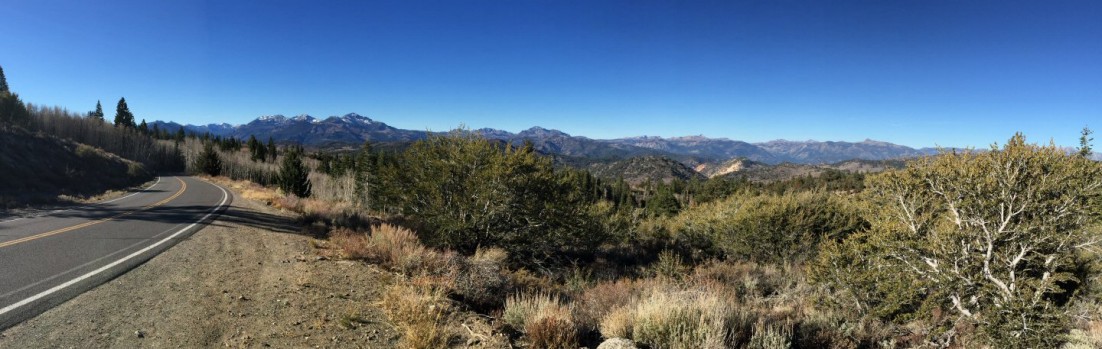
My last trip of this trout season to the foothills of the Sierra Nevada was like many before it. It offered solitude and a stillness that can only be found in the fall.

It is possible to spend time on most moving waters here — even those that are well stocked — without any company, and my usual arrival at sunup ensures that it’s just me and the fish for a few hours.

Such was the case on one of those streams, one that also sees a small fall run of spawning browns. I hooked only one of those browns this year, a big one that, after we eyeballed each other, promptly snapped my tippet and headed back downstream. Before and after I lost him, there were plenty of raceway rainbows that were willing to play.

When the sun finally warmed up the landscape enough, four gentlemen waded into the stream downstream from me, and slowly began to work their way upstream. I gave them a welcoming wave. Eventually, they were close enough that I could hear their conversation. Phrases drifted over the water…

“They biting?”
“Some, but that guy up there is getting five for every one of mine.” (‘That guy’ was me.)
“Wonder what he’s using?”
“It’s gotta be a nymph or something ‘cause I’m getting nothing on my Adams.”

During my few years of fly fishing I’ve learned to discern the experienced fly fisherman from those new to the sport. It was clear that despite their apparent age, two of the gentlemen had probably cast a fly rod only once before.

I can’t say whether it was the ego boost that comes with someone’s admiration of my catch rate or a more altruistic pay-it-forward attitude, but since I had long lost count of how many fish had wet my net, I offered my spot to the group. After assurances that I had caught plenty of fish, they gratefully accepted. I mentioned that black nymphs of almost any style might work, offered a bit of advice on depth, and the two more experienced guys helped the other two rig up. I think between the four of them they used four different types of indicators.

One of the gentlemen broke away to chat with me. All four gentlemen were over 70 years old. While two of them were more experienced, that experience was with bass or in Alaska, not so much in the Central Sierras. There was no bragging between us, a simple sharing of information and stories. One of their group was from South Africa and had never caught a trout. He did that morning and gave me one of the biggest smiles you might imagine.

I’d end up showing these guys where to find the fish on this stretch, explaining then showing that during a limited window — when the sun is at the proper angle on this stream — during which dry flies will get some attention.

All of us accepted each other in the common bond of fly fishing. While most fish were caught and released, there was a stringer produced and a few fish taken by one guy who was recently retired, but only after asking if we thought it okay. (He somewhat sheepishly explained that he wife had complained that through all his years of fly fishing, and all the money spent, that not once had he brought home trout for dinner.) There was no dissention, knowing that these were stocked fish that might not last through the winter.

When I left, there were smiles all around. We were friends that might have never met were it not for our shared hobby. It was a good way to end my season.

1 Comment

the conundrum of working-class guy’s fly fishing vehicle

Ask around, do a little research and you’ll likely find that the question “what’s the best vehicle for fly fishing” is often answered “truck.”

But I’m still paying into social security so others can fly fish when they want a working stiff. I need transportation that is, first and foremost, reliable, and just as important, economical. I have to spend money on gas to make money, and the less I spend upfront the better.

During better weather, the Honda CB750 and its 45+ miles per gallon is a fine option. But it’s difficult to load the necessary fly fishing gear, and the cooler of post-fishing beer, on a motorcycle. I’ve tried.

Being a bit obsessive about conducting research on anything that will cost more than $50, I’ve been thinking — probably too much according to those around me — about the vehicle that, in about 1½ to 2 years, will replace my current 2003 Honda Accord. Since I’ll likely buy a certified pre-owned car, it’s going to be something currently on the market. My current car gets 30 to 32 mpg most of the time, and on long trips to fishing venues, I’ve seen 34+ mpg. But over 80% of my driving is commuting to and from work.

I’ve debated the merits of various models, including sport utility vehicles and all-wheel-drive cars. A hybrid is out of the question; too heavy and not enough clearance for the occasional Forest Service road. Subaru is a commonly offered up make as an all-encompassing solution. But I’ve noticed two things: most Subaru owners talk about the sportiness of the ride, the go-almost-anywhere capability, but rarely praise their cars’ mpg, and it seems to be a roll of the dice when it comes to build quality. That might be said about any make, but that’s my experience.

Despite the fact that I’ve been a Honda owner for well over 20 years, I opened up my consideration to other options, particularly now that the mpg on midsize sedans is edging up.

But, and a bit ironically, it’s fly fishing that helped firmed up my decision. At least for now.

I’ve driven my Honda on a good many, only slightly improved, Forest Service roads. Sometimes for miles, over the relatively soft dirt along the Upper Owens River, for example, or over rocks on my way to the Little Walker River, and on washboard roads in the hills behind the cabin.

Still, the doggone car doesn’t squeak or rattle.

I’m hoping this will still hold true for my next car, until that someday when I can justify a dedicated fishing truck.


1 Comment

my early thanksgiving

Yesterday the shield on my helmet was dotted with mist. Clouds showed up early in the morning and again hover above today. Temperatures have noticeably dropped and the first reports of snow in the Sierras have filtered down to the lowlands. Tomorrow we’ll be making the annual trek to Camino, Calif., and the ranches that make up Apple Hill. It’s clear that fall has hit Northern California.

It’s a time of year that sparks in me some introspection. Though it’s far from over, there’s an almost instinctive looking back on the year; recalling the new friendships — however temporary they may be — as the days are filled with one activity or another. The opportunity for these friendships was the answer to a recent question, as I was beginning to adopt another hobby, if it might just be one hobby too many.

The answer is no. Whether motorcycling, fly fishing or shooting, a welcome sense of belonging emerges as I learn from, and about, those pursuing similar interests, or simply enjoy the camaraderie.

It may be a bit early, but that’s certainly a reason for thanksgiving.


3 Comments

grinding the nose in between what really matters

“We’ve been busy…” would be the applicable excuse to explain the lack of posts here, and it’s true in more than one way. The nose has certainly been to the grindstone, but thankfully interrupted by (multiple) visits from out-of-state family rarely seen south of the 47th parallel, too much food, copious beer tasting, and the celebration of one of those big steps down the path of life. The yard lies ignored.

Another road trip begins in just over 24 hours, an annual trek that’ll put us in the middle of a pretty fishy — and pretty — spot east and a smidge south of Yosemite. We’ve fished there before quite a few times, but this year, conditions seem to be a couple weeks ahead; more of what might be expected later in the month. The upside is that a small river not visited before may be a prime candidate this year.

At any rate, life’s been good lately, and now that we’re on the downhill slide into the holidays it’s hard to believe another year is closing fast.


2 Comments

will El Niño save the coming winter/next season?

We were fooled once before — the National Oceanic and Atmospheric Association (NOAA) predicted a wetter than normal 2012 winter for Northern California last fall — but the same agency’s Climate Prediction Center is now predicting a 50 percent chance that El Niño conditions will develop in the next few months. (The original NOAA synopsis is here.)

If it does, there’s likely to be flooding in this neck of the woods but next summer’s small stream trout season might look a bit more promising.

According to International Research Institute for Climate and Society Chief Forecaster Tony Barnston we’ll know soon enough:

The development of El Niño depends greatly on what happens in the coming two months. If we do not get at least some development by the end of August, then the chances of getting development later become much lower.”

Here’s to hoping for a snowpack that more than makes up for what was lacking this year.


6 Comments

not catching fish is no excuse to toss your bobber/spinner/PowerBait in my direction

Remember last week’s more rhapsodic post about finding solitude and fooling fish with dry flies? And then my comment about the contentedness found on that new stretch of river?

Well, the next day was a little bit different.

I knew that there’d be little or no solitude that day. This was a creek well know among the locals and regular visitors alike. A place to fill the freezer with hatchery trout or simply have fun catching.

An early riser because of work by design rather than nature, I was on the water at sunup to find a husband and wife beat me to one of the better locations. I fished downstream a bit and after landing a few fish, ventured closer to the couple when the husband abandoned a favorite run. Pleasantries were exchanged and after asking if it would be okay, I moved upstream of the couple. They were fishing with spinners and bait but our conversation reveled them to be well-rounded fisherfolks. Today they hoped to take a limit of fish, while other days on other waters they’d favor catching and releasing with a fly rod. Fish were landed amid enjoyable conversation peppered with suggestions of other worthwhile fishing venues. Limits caught, they departed about mid morning.

During this time, I’d settled in perpendicular to a nice deep section while two older guys began to cast bait into a pool just downstream of where I was fishing. To paint a picture, I was making quartering casts about 15 feet upstream and the roughly 30-foot drift of my flies put them 15 feet below my position before I’d recast. Ten feet below that point, these guys perched on the opposite bank.

Combat FishingThe fishing and catching was good for everyone for about an hour, then slacked off, though the trout were still responding well to flies, both on the surface and subsurface. Like the day before, a well-presented dry would lure a fish from the depths with good deal of drama and splashing that, of course, caught the attention of the other fishermen.

Then it happened. Plop.

A white and red bobber landed less than 5 feet away from me, right in the seam I was working. This would happen half a dozen times more, but since I was still hooking a fish now and again and my ‘competition’ wasn’t, I ignored the uncouth behavior.

However, when another fisherman took up position about 15 feet upstream and let his sunken ball of fluorescent PowerBait float to within a yard and a half of my feet (certainly sneaky if this was intentional), it became clear that these rude manners deserved a response.  But I’m not a confrontational person.  So…

Downstream but within sight of every one of the other fishermen were various pods of trout holding in pockets and depressions and behind rocks. With a new dropper tied onto a stimulator dry fly, I targeted the fish swimming closest to me and, one by one hooked, each. Slowly, I worked my way across the creek until I was casting against the opposite bank. The other guys weren’t catching, so they were watching. Like the day before, I enjoyed watching the reactions of each fish, with the ‘turn‘ telling me how I might adjust my presentation and hinting at where the fish expected to see food.

My response may not have had an impact on these guys (and yes, I knew there’d be others on this water), but after landing more than a dozen fish — then releasing them — while everyone else stood idly by sure made me feel better.


3 Comments

restoring environmental damage, one criminal at a time

I’ve always thought that lacking a contemporary ‘Australia’ to which convicted lawbreakers might be shipped, widespread use of chain gangs might be a better answer than sending less violent criminals to prisons in which privileges once used to encourage good behavior have become expected and perhaps undeserved perks. Sure, some states charge for the cost of incarceration, but work instead of cash would be better and more direct method of repayment.

This thinking resurfaced while I watched ‘Wild Justice’ on television a few nights ago. I’m convinced that there is no risk that the poachers, idiots and outright criminals suspects shown on ‘Wild Justice’ will learn much from their televised arrests; after all, ‘COPS’ has been on the air for 23 years and still the stock answer from nearly any suspect is either “they’re not my pants” or “only a couple of beers.”

A segment showing California’s Fish & Game wardens clear out a Mendocino County marijuana ‘grow’— with an estimated street value of $28 million, cultivated by surfers and a woman who claimed to have grown disillusioned when trying to reconcile the salary she was paid as a college graduate in corporate America with the money to be earned growing ganja — was a reminder of the often overlooked environmental damage inflicted by these criminal operations. This was a particularly nasty one; a gravity fed irrigation system delivered all sorts of chemicals to the grow, ultimately trickling downhill into the local watershed.

Toxic Marijuana

In addition to 300 pounds of pesticides, the cleanup of 335 California national forest marijuana grows (note this was only in national forests) in 2010 entailed the removal of 130 tons of trash, 5 tons of fertilizer and 260 miles of irrigation piping.

Even just the illegal grading of roads into these grows and the denuding of hillsides is now seen as having an impact on salmonids equal to that caused at the height of logging in Del Norte, Humboldt, Mendocino, Trinity and Siskiyou counties. The profit margin is huge, and the lure, for a mix of growers: Mexican nationals with or without cartel or gang connections, Emerald Triangle natives growing just enough without attracting law enforcement attention, and a network of smaller growers.

Much of it is grown on national and state forest and park land, and with no cost to use the land or siphon off the water that flows there, it’s a high-margin crop made more lucrative by a distribution network that’s grown with the state law allowing limited possession of marijuana for medicinal purposes and an apparent reduction in marijuana crossing the border. (A Mendocino County-commissioned study estimated that marijuana accounts for up to two-thirds of the local economy. It’s also estimated that three quarters of the marijuana sold in the U.S. is grown in the Golden State.)

Without taking a position on either the growing or use of marijuana (or the collision of state and federal laws), I can’t help but think that the folks who wreak this environment damage — suspecting that some of the home-grown variety may be self-styled environmentalists — might be better ‘re-educated’ in cleaning up of the mess they leave behind. Besides, they’ve already built hovels in which they can be housed during the clean up. But, if they want one, they’ll have to pony up their own cash for the hazmat suit.