fishing for words

(and tossing out random thoughts)


2 Comments

an annual one-day tour; many waters fished, some not

The Oldest Son and I kept tradition alive with the Annual One-Day Tioga/Sonora Pass Tour last week and found a few Sierra Nevada rivers and streams running a bit too high for easy fishing, despite the lack of snow this year.

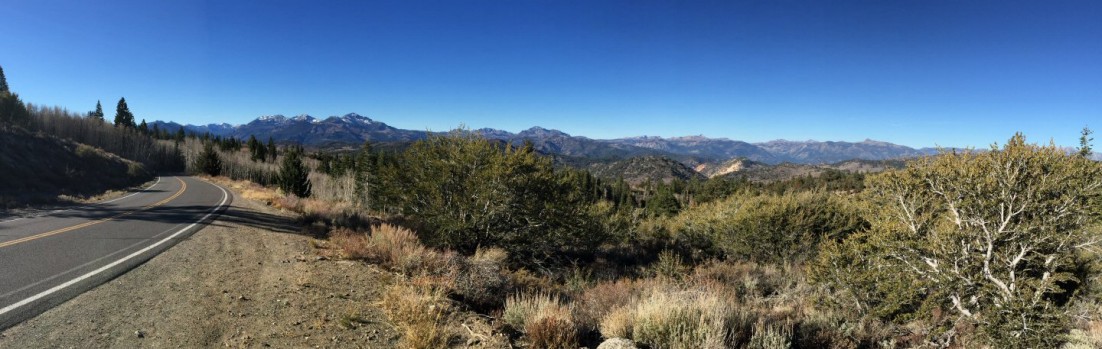
This excursion — passing through Yosemite’s high country and over two passes exceeding 9,000 feet — was marked this year by a deliberate slowing down. As always, the plan was to fish along the way. This time, however, there was an acceptance that fish would be there, or not, when we arrived. Perhaps it’s maturity. Perhaps overconfidence in my abilities. Whatever the case, it would open our eyes to new sights and new fishing possibilities.

The Tuolumne Meadows general store being assembled for the season.

The Tuolumne Meadows general store being assembled for the season.

We left the Family Cabin later than usual but quickly covered our longest continuous stretch of driving before arriving at Yosemite’s Big Oak Flat entrance station. Less than an hour later we pulled into the Tuolumne Meadows campground parking lot. A crew was stretching canvas over the wood frame of the campground’s general store. The meadows were already exposed and beginning to brown. The upside: it’ll probably be a relatively light mosquito season. But if you have any inclination to fish high-country streams or rivers, the season will be about a month head this year. Don’t be fooled; it was still cold.

We wadered up and spooked a few trout in one river, wrongly thinking that they had forgotten about fisherman during the winter. We explored a few other streams just past Tioga Pass. Reading a roadside monument, I learned of Bennettville, a mining town that never produced ore during its existence from the 1870s through 1933. It did, however, give birth to the Great Sierra Wagon Road, which later became Hwy 120 and the Tioga Pass Road.
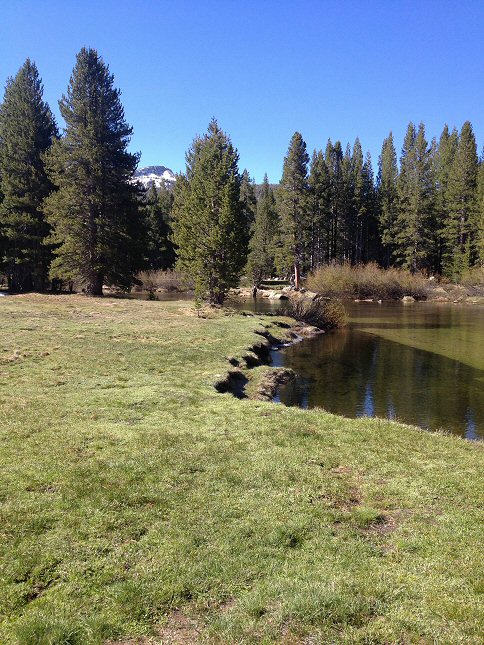
The Tuolumne River, with Sean in the far background.

The Tuolumne River, with Sean in the far background.

The morning spent, we headed down to the Tioga Gas Mart and after picking up a few bottles of Mammoth Brewing beer, stopped for a barbecue lunch.

A few more miles behind us, we stopped on the bridge over the Little Walker River. I judged it just on the verge of being fishable and expected Molybdenite Creek, which feeds into the Little Walker, to be in similar shape and worth the time to show Sean this favorite place for the first time. Disappointed to find two other fisherman, we hiked around them before dropping down to the creek.

The Bennettville Marker near Saddlebag Creek. The town is about a mile west.

The Bennettville Marker near Saddlebag Creek. The town is about a mile west.

My favorite spots on this creek are pools usually created by piles of brush or the ledge of a small waterfall. Eventually, I hooked a couple of wild fish, lost most on dry flies that were just a bit too big, but finally landed a nice brook trout. Downstream, Sean also hooked a nice brookie.

We worked our way downstream, exploring the confluence of the two creeks, then began the return upstream, revisiting suspect water. Sean landed another brook trout from the pool I had fished.

The other fisherman had left, leaving upstream water open. Through a thick stand of pines and aspen I found a curve in the creek that created a pool and nice looking tailout. Trees crowding the edge of the creek limited casting to short casts parallel to the stream. Reaching the tailout required letting a fly drift under an overhanging log. But it was too good to pass up. A few drifts netted a decent brook trout.

Once my focus was off the tail out, a small pod of fish working at the head of the pool came into focus. It was pretty clear they were stocked trout, and while their domesticated appetite might not present a huge challenge, their position did, requiring casting from a crouched position and underneath an overhanging birch branch. Sean joined me later, and despite losing three or flies between the two of us, it was a fun casting and fighting fish in close quarters.

On the way toward Sonora Pass, we skipped the raging West Walker in favor of the upper North Fork of the Tuolumne, on the west slope. There we’d find stock rainbows willing to hit stimulators well into the evening.

In the end, we fished places unfamiliar and usually unfishable this time of year.

The spirit of exploration spilled over to the next day…

More on that next week.


1 Comment

a week of fishing, part one: wherein I learn to slow down, enjoy Hot Creek and have fun with small dry flies

This year’s annual club trip to the Eastern Sierras — organized by yours truly — came a tad bit later this year, but its planning nearly nine months ago couldn’t anticipate the snowfall that wouldn’t arrive last winter. From afar I watched the guide reports and river flows, but all of that was forgotten two Sundays ago, once an amazingly fat brook trout slammed the first dry fly cast into a suspect pool.

This is a good time of year to be in the Eastern Sierras. Fewer people, perhaps only the hardier (and those without kids), remain to fish, hike and camp. Being a bit more mature, our group rents a couple of rustic cabins, though we do cook dinner ourselves (clam linguine one night). The days are often cloudless and, at an elevation of 7,000 feet, this expanse of high desert warms up fast. Temperatures swing the other direction just as fast, dropping to the mid-to-low 30s in the evening. Startlingly brilliant stars illuminate the clear nights.

Once over Sonora Pass, my first stop was on the Little Walker River. This small water is often overshadowed by its bigger brethren, the East Walker and West Walker rivers, which offer bigger and more fish. A year after discovering the charm of the Little Walker, and during my first turn as “fishmaster” for this trip, I fished this creek with the club’s outings chairman. We had a wonderful time finding wild brook, brown and rainbow trout exactly where they should be. Jim has since passed away, but the Little Walker reminds me of his broad smile.

Little Walker Brook Trout

It surprised me to see a brookie so big in the Little Walker.

It was with Jim that I first explored Hot Creek, one of the waters that would be frequented during the week. Since I’d have six full days to fish, and in light of Hot Creek’s popularity, the plan was to fish it during midweek. It was a sound philosophy; avoiding as many other fly fishermen as possible and hoping that reduced fishing pressure over a day or two would improve my chances.

Hot Creek Morning

Hot Creek Morning.

Hot Creek has been the marlin to my Santiago. It’s a spring creek with a high fish population, estimated to be 8,000 to 10,000 trout per mile. But these are highly educated trout that have probably seen every fly in the catalog. Throw in clear, low water and weeds that limit opportunities to small lanes and the chance of a drag-free drift, and this fly fishing heaven can become hellish, particularly late in the year. Most descriptions of Hot Creek include words that tend to scare me: “technical,” “attentive mends,” “drag-free drifts,” “multiple hatches.” That first visit with Jim five years ago didn’t dispel any of my trepidation, despite my landing two decent fish.

Although I was on the road Tuesday morning later than intended, I descended into the canyon well before the sun was fully on the water. A single fly fisherman had arrived before me. Reminding myself that there was no need to rush, I slowly and softly walked upstream, taking time to stop and watch the water. In the absence of light, the water was dark and unyielding.

Trusting to my experience that fish would be in a familiar spot, I finally stopped to cast a size 16 dark brown-bodied caddis trailing a smaller dropper (maybe size 22, or 24); a red-butt zebra midge type of fly made up during a fit of madness inspiration at the fly-tying vise. This was truly blind casting. There was a lane big enough to allow for a decent drift of about two feet. I kept my false casts short and out of view of the trout I hoped were there, and used a single-haul cast to finally lay the flies on target. The caddis dipped on my third cast and a good-looking 11 inches of brown trout went airborne. I don’t know if it’s the lack of depth in the creek, but I don’t think I’ve seen brown trout as acrobatic as those in Hot Creek.

Hot Creek Brown

Hot Creek Brown. Love that pectoral fin!

With the first fish to the net, my pulse finally began to slow and my body relaxed. My casting settled down. Two more fish made it to my net during the next hour, one a dark-hued rainbow of about 14 inches. There are bigger fish in Hot Creek, but any decent fish hooked, played through the mass of weeds, and landed, is still a pretty big deal in my book.

Soon the first few caddisflies and mayflies appeared in the air as sunlight began to warm the water. The sunlight also revealed pods of fish, some hovering between weeds, others just on the edge.

Hot Creek Rainbow

Yes it was dark, but this wild fish also has a dark cast to it.

I downsized my caddis fly to a size 22, hoping that it might get a look or two. It did, but only in passing. I would land a total of six fish that morning and walk out of the canyon feeling pretty good about it. But it was a conversation — with a friendly guy who toughs out his year splitting time between fly fishing the Eastern Sierra and running a scuba shop in Cabo San Lucas — that had me pondering a return in the evening.

But that’s another story for another time.


1 Comment

another part of the why there was no post last week

Rock Creek Sunrise

Heading up the canyon early in the morning, somewhere close to 10,000 feet.


2 Comments

(relatively) word-free Friday

Since pictures are worth a thousand words, and it would take many thousands to tell of the adventure and fun enjoyed last week with my brother’s family, below is a gallery of photos that tell the story than I could. The days were filled with swimming at the local lake, visiting a historic gold rush town and panning for gold, more fun — swimming, sliding, diving, building sand castles — at the lake, hiking, mini golf and a trip to Yosemite. Enjoy!

Due to loading issues, the gallery has been moved here.


3 Comments

continued: two brothers’ excellent fly fishing adventure (or, part two of a two-part payoff)

Finding willing wild fish in an unexplored small creek still brings out the kid in me; there’s unfettered excitment, a little bit of a booty dance (at least inside) and everything, no matter how inconsequential, adds to the splendor of the place.

It wasn’t easy going, and there were a few scrapes along the way, but we walked off that creek I won’t name happy that we took a chance on a stranger’s advice.

The younger brother and I were a bit at loose ends two Saturdays ago. We’d previously spent Thursday fishing a Skykomish River tributary with guide Derek Young and buddy Kirk, and Friday out again with Derek on and near the Snoqualmie River. We learned a lot and caught enough trout to feel a bit more confident on waters not too far from my brother’s house.

It didn’t take long for Mark to show symptoms of the addiction. Throwing out newly learned jargon, he suggested we do some ‘bluelining’ along the U.S. Route 2 (Steven’s Pass Highway) corridor. We were out the door and on the road with little clue where we might end up.

For the first 20 minutes or so, we pondered possibilities that were soon rendered unclear in the absence of a copy of the WDFW fishing regulations. Along this stretch of road there aren’t many places to pick up a copy of the regs. Then fate stepped in.

We’d come up on a wide spot in the road and a small, rustic store stocked with an odd collection of the types of goods that only campers might buy when lacking any other choices. The store owner, a bearded guy who looked the part in jeans and a plaid shirt, told me they didn’t have any fishing regulation booklets. He tries to keep a copy in the store for reference but it always seems to sprout legs and walk off.

[singlepic id=1256 w=300 h=402 float=right]

A downsteam look.

It’s certain that I’m not the first to do this, but I carefully formed my response to include a mention of ‘fly fishing.’ And that, as has happened before, opened the door.

The store owner leaned a bit closer and I could swear he cast a conspiratorial glance right and left before saying, “Then I can give you the story on what’s going on ‘round here.” Mark walked up to the counter sometime during the description of a creek not too far away and a semi-concealed access point. Walking out the door, Mark and I agreed that if the payoff was as described, we’d return to buy a drink or something as a token of thanks.

After another 15 minutes of driving on a well-graded Forest Service road, we found the secondary road as described. At the end of it we purposely parked the truck out of view from the main road. Gearing up was expedited by the nearby sound of the creek, and perhaps more so by the buzzing of a large number of bees circling the flowering vegetation.

Dropping over a small berm, it was immediately apparent that moving up or down this creek would require a lot more wading. It was small creek, and it was clear that my 7-foot, 6-inch 3 wt. might be a bit too much rod for this water.

Less adventurous fisherman wouldn’t have ventured far either upstream or downstream on this creek. Unlike the water we fished the two prior days, this creek doesn’t get the flows necessary to soften the ragged edges of what is probably basalt. We scrambled over these rocks when we could, carefully climbed where able, and took more cautious routes when warranted.

We had no problem finding the fish. My biggest problem would be deciding whether or not to replace the yellow stimulator that would be battered and a shadow of itself by the end of the day. It’s a question I never really mind facing. (I never replaced it.)

The point at which we first saw the creek was a plunge pool that emptied into a wider, shallower pool interrupted by large rocks sprinkled throughout. I took the first pool while Mark edged along the bank downstream.

Within the first few casts we’d both elicited frenzied strikes. In that first pool I landed what would be the biggest cutthroat of the day, maybe close to 11 inches, a fish I believe my brother caught again near the end of our day. These trout were that hungry.

[singlepic id=1258 w=600 h=448 float=right]

Younger brother with one of the bigger cutties of the day.

It wasn’t what might be called ‘crazy fishing.’ The average fish was seven to eight inches, but they set themselves apart from bigger fish I’ve caught with beautiful, though darker, coloration. And each pool, seam or eddy had to be rested once the first fish had been played in that section of water; sort of ‘stick-and-move’ fly fishing. The upside was the abundance of good-looking water.

I enjoyed pointing out promising pockets to Mark just as much as I think he did finding fish where he might not have expected. Frankly, I’m still amazed every time that happens.

[singlepic id=1259 w=600 h=400 float=right]

Beautiful. Aggressive. Fun.

We spent more than three hours enjoying some of the most strenuous fly fishing I’ve ever experienced in my short time in the sport. More prepared fly fisherman would have loaded a day pack with lunch and fished this creek all the way to its confluence with the South Fork of the Skykomish River. Maybe next time.

This time around we enjoyed a treat alongside the highway, at the store where this all began, quietly letting the day’s events burn into our memory.

[nggallery id=86]


10 Comments

Pat and Mark’s (and Derek and Kirk’s) excellent fly fishing adventure (or, part one of a two-part payoff)

Since day one of my fly fishing career, I’ve been a proponent of hiring a guide to get the “lay of the land,” and though unlucky enough to start fly fishing later in life, I started fly fishing when I could afford to hire a few of these professional trout bums. This however, was one of those times that hiring of a guide paid multiple dividends, even after the guiding was over.

The trip in question centered around two goals: get my brother, Mark, who’d fly fished for the first time last year, on waters local to his home in Washington state, and for a second time attempt to get a close up look at west slope cutthroat trout. To make the most of my short visit, I again turned to Derek Young (Emerging Rivers Guide Services) for help. Frankly, I don’t believe it was a coincidence that I hired Derek two years ago for a float down the Yakima River with my father and that Derek was subsequently selected as the 2011 Orvis Endorsed Fly Fishing Guide of the Year. Regardless, Derek fits my expectations of a guide: someone with strong local knowledge and unfettered enthusiasm for both the fishing and the fish; the type of person with whom one can forge a connection in a mutual passion for fly fishing.

No one would have expected in the days leading up to my flight that the Seattle area would experience record-breaking temperatures. My flight into Sea-Tac International that Wednesday morning would afford my first view of the Space Needle. By the time I was standing on the arrivals sidewalk, most the sky was blue and the sun intense enough that the fleece was tucked away.

I had planned my flight to arrive at an hour late enough that beer tasting on the way to my brother’s house would be socially acceptable. We ended up at Elysian Fields for Cuban and Reuben sandwiches (and beer) after a stop at Georgetown Brewing, then visited Black Raven Brewing before unpacking and prepping for fishing the next day. That afternoon, during the usual pre-planning conversation, Derek proposed accommodating our two goals with two half days of fishing.

[singlepic id=1231 w=600 h=450 float=right]

Our first look up this Skykomish Tributary.

That’s how my brother and I ended up wet wading a tributary of the Skykomish River with Derek, who had invited friend and all-around good egg Kirk Wener (the man behind the Unaccomplished Angler blog and author/illustrator of the “Olive the Woolly Bugger” books). I’d met Kirk a few years ago in asking that he sign copies of the Olive books for my nephews. Kirk had mentioned the possibility of fishing together sometime on the Snoqualmie Forks, but he’s a busy man and, for lack planning on my part, it never came to pass.

[singlepic id=1240 w=600 h=364 float=right]

Mark working a pool on his way downstream.
(Photo copyright © 2012 Derek Young. Used with permission.)

This Skykomish tributary is one of those rivers that immediately impresses with a feeling of remoteness, even though it’s relatively nearby as the crow flies. But we’re not crows, and the desire to get more than a few steps away from the easily accessed and more heavily fished stretches required a bit of leg work. The hike up a hillside, through rain forest and over fallen trees was an effort not made easier by a big breakfast at the Sultan Bakery, but worth the reward — an uncompromised river and view. The drive to our destination on Highway 2 was under scattered clouds, most of which dissipated as the day wore on.

After laying out a game plan, Mark, Derek and I headed upstream. We left Kirk fishing a nice pool that would produce a surprise and the biggest fish of the day (though not a trout). The walk upstream was punctuated with admiration of the beauty of this place and Derek’s insight into what we’d be fishing and where. As agreed, Derek began shadowing and educating Mark while I attempted and occasionally succeeded to get a decent drift.

If you’ve read this blog before, you’d know that my introduction to fly fishing didn’t involve much in the way of dry flies. But since there would be witnesses, I wanted to man up this trip; I’d live or die by the stimulator Derek had selected. Usually I’d like to say my casting was the result of experience and practice, but sometimes I wonder if using a rod at the higher end of the spectrum not only aids one’s casting but also infuses the user with additional confidence. Whatever the case, the Helios 2 (a disguised test rod) was sweet, and more often than not the fly landed near the designated target.

[singlepic id=1235 w=600 h=400 float=right]

Dry flies, baby, dry flies…

There was plenty of fishy water and fish where they might be expected. With good fly placement and a bit of luck, some of those fish — small rainbows, or perhaps steelhead progeny — were found. Those who know me might call it playing to one’s strength, but I’ve increasingly come to appreciate small wild trout. On the right rod, they offer a fight that, ounce for ounce, compares favorably to any of their larger brethren, and usually are more than obliging to forgive my poor presentation of a dry fly. The fish in this part of the Skykomish River system didn’t disappoint.

[singlepic id=1237 w=600 h=450 float=right]

Derek offering the assist.

It was clear from my occasional glance upstream that Mark was getting the hang of casting. I was even a bit envious of his tight loops. Despite a secret hope that my initial casting instruction had served my brother well, I had to agree with Derek’s appraisal that Mark just might be a “natural.” It was about this time I noticed, about 50 yards downstream, a peculiarly heavy bend in Kirk’s rod.

[singlepic id=1238 w=600 h=450 float=right]

Kirk providing photographic evidence of his ‘surprise.’
(Photo copyright © 2012 Derek Young. Used with permission.)

Mark and I fished upstream, leapfrogging each other as we fished suspect pools, riffles and seams. We each landed fish. There was no real competition between us this day, but if there was, it’s clear that Mark’s enjoyment and wonder trumped the number of fish I landed. Then again, I did manage that one really nice fish.

[singlepic id=1239 w=600 h=450 float=right]

That nice fish.

The adventure continues next week…


More photos:
[nggallery id=86]


6 Comments

the excuse for no post

My brother and I were here…

A Skykomish River Tribtutary

Mid morning on a Skykomish River tribtutary, with lots of fishy water.

…fishing…

Brother fish a tributary of the Skykomish.

My brother fishing…

…with Kirk “Unaccomplished Angler” Werner and Orvis guide Derek Young, for this…

Wild Rainbow on Skykomish Tributary

Healthy wild rainbow, who was right where he should have been.


3 Comments

we’re chasing fish today

Hopefully, today will be a second day of exploration of waters somewhere on the map below. The best outcome will include fishable water, wild fish and solitude.

Where We Will Be

Where we’ll be, fishing or otherwise.


6 Comments

we didn’t know it should have been scary at the time

This post brought to you by the writing prompt† “My Outdoor Scary
from the Outdoor Blogger Network (OBN).

Lembert Dome

The Target: Lembert Dome, 900 feet of granite.

In all fairness, my dad didn’t see it coming. I blame it on the thin air or the simple joy of being outdoors in God’s country.

For more than a few years, my brother, my sister, and I eagerly anticipated a week or more of camping in the Tuolumne Meadows campground. These trips were filled with hiking, fishing, campfires, hiking that was sporadically interrupted by fishing, and that general freedom engendered by nature’s wide-open spaces.

Many hikes started in the campground or nearby, which meant a starting elevation of at least 8,500 feet and often closer to 9,500 feet. Many of the trails were obvious or followed rivers or streams, and were usually marked on the USGS maps dad packed with the space blankets, water, lunches, snacks and other supplies. Some hikes were long and generally flat, others shorter but a bit tougher on the shorter legs of kids. The trail to Lake Elizabeth gained about 1,000 feet in elevation over 4.5 miles. Getting to Gaylor Lakes required rising 600 feet in what seemed like the first mile of the three. (Gaylor Lakes supposedly offered great fishing, but the inhalation of swarms of mosquitoes that rose with every step on the surrounding marshes cut the trip short.)

Lembert Dome — a 900-foot tall mass of granite — towers above the nearby Tuolumne River. From the meadows one can often see tiny people standing on top. Then, one summer, me, my dad, my brother and my sister saddled up and began an ill-fated hike that would take us to the top of the dome on a relatively easy trail, but one that grows steeper as it ascends the backside.

The trail cut through a forest and over a few streams as it traced the lower edge of the dome, then looped toward the back the dome. All the while we gained elevation, but it’s the last fourth of the 2.8 miles that asked the most of our legs. This climb started with a clear demarcation of the alpine zone. Trees became fewer and shorter, some stunted, and soon we stood on granite. Then it got a bit tricky, with some rock scrambling and careful footwork required before we reached the top.

Half Dome Back When 1

Yes, we made it... (This is the original, unaltered photo. Scroll down for a better colorized version.
And where the heck did I get that belt buckle?)

Standing on top of this massive granite dome, where the air seems just slightly thinner, the deep greens of the meadows and trees contrast with a sky of eye-straining blues and snow-capped mountains reaching 11,000 feet or more. We lingered and marveled; maybe a bit too long.

Not exactly the best boots for hiking.

The hike had taken a little bit longer than expected and dad was a tad anxious about getting back to camp dome before dark. From where we stood, the face of the dome didn’t look too steep. It also looked like a shortcut.

We didn’t know that there was a surprising amount of glacial polish and exfoliation, cracks parallel to the surface that develop with expansion and contraction‡. Our Sears Roebuck and Co. boots would have been more at home on a flat construction site and offered limited grip. (You might know these boots; versions are still sold today under the Diehard brand — the ones with white leather crepe sole with a tread best described as small rolling hills.) Baseball-sized rocks and small BBs of decomposed granite tumbled beside us as we picked our way down.

We’d also find out that the stitching and rivets in our jeans didn’t offer much traction. It wasn’t easy to walk down the steep granite, so we controlled much of our descent with the seat of our pants. Literally. We slid on our bums. I think our pants gave up their last threads that day.

We did make it down Lembert Dome that afternoon and my brother and I hiked back to camp with just a bit of bravado. Dad, no doubt, and probably my sister, were relieved.

We were too young to be appropriately terrified worried that day. Now that age has tempered my bravado, when I think about this, I’m suitably scared for that young man. But I’m always glad that he had this adventure.

Half Dome in Color

...and here we are with the color slightly adjusted. (Forgot that Mark was ever so small.)

Looking out from Lembert Dome

Us kids looking out from atop Lembert Dome. Not so scary...

Us on Lembert Dome

My brother, my son, and I made it back in 2011.
This time there'd be no sliding down Lembert Dome's face.


† This prompt was issued a few days ago, but nothing immediately think came to mind, which I chalk up to a lack of adventurousness the preparedness taught to me by the Boy Scouts.
‡ There is no general agreement among geologists as to the exact cause of this phenomenon.