fishing for words

(and tossing out random thoughts)


2 Comments

an annual one-day tour; many waters fished, some not

The Oldest Son and I kept tradition alive with the Annual One-Day Tioga/Sonora Pass Tour last week and found a few Sierra Nevada rivers and streams running a bit too high for easy fishing, despite the lack of snow this year.

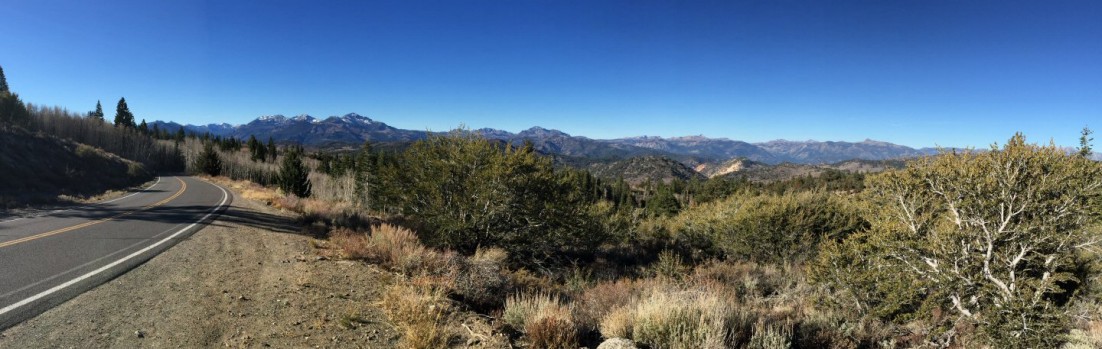
This excursion — passing through Yosemite’s high country and over two passes exceeding 9,000 feet — was marked this year by a deliberate slowing down. As always, the plan was to fish along the way. This time, however, there was an acceptance that fish would be there, or not, when we arrived. Perhaps it’s maturity. Perhaps overconfidence in my abilities. Whatever the case, it would open our eyes to new sights and new fishing possibilities.

The Tuolumne Meadows general store being assembled for the season.

The Tuolumne Meadows general store being assembled for the season.

We left the Family Cabin later than usual but quickly covered our longest continuous stretch of driving before arriving at Yosemite’s Big Oak Flat entrance station. Less than an hour later we pulled into the Tuolumne Meadows campground parking lot. A crew was stretching canvas over the wood frame of the campground’s general store. The meadows were already exposed and beginning to brown. The upside: it’ll probably be a relatively light mosquito season. But if you have any inclination to fish high-country streams or rivers, the season will be about a month head this year. Don’t be fooled; it was still cold.

We wadered up and spooked a few trout in one river, wrongly thinking that they had forgotten about fisherman during the winter. We explored a few other streams just past Tioga Pass. Reading a roadside monument, I learned of Bennettville, a mining town that never produced ore during its existence from the 1870s through 1933. It did, however, give birth to the Great Sierra Wagon Road, which later became Hwy 120 and the Tioga Pass Road.
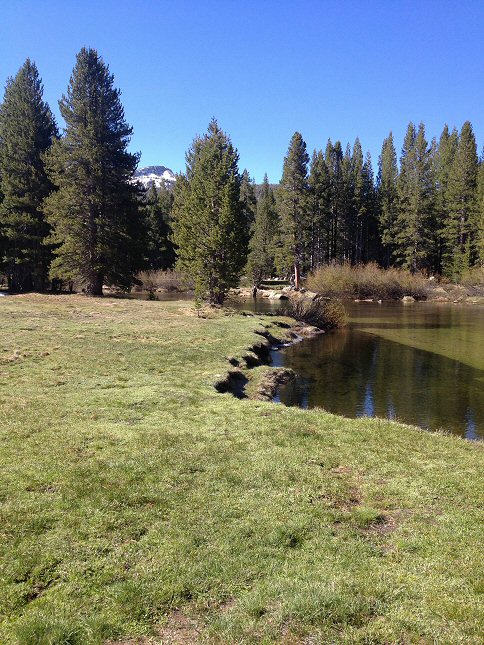
The Tuolumne River, with Sean in the far background.

The Tuolumne River, with Sean in the far background.

The morning spent, we headed down to the Tioga Gas Mart and after picking up a few bottles of Mammoth Brewing beer, stopped for a barbecue lunch.

A few more miles behind us, we stopped on the bridge over the Little Walker River. I judged it just on the verge of being fishable and expected Molybdenite Creek, which feeds into the Little Walker, to be in similar shape and worth the time to show Sean this favorite place for the first time. Disappointed to find two other fisherman, we hiked around them before dropping down to the creek.

The Bennettville Marker near Saddlebag Creek. The town is about a mile west.

The Bennettville Marker near Saddlebag Creek. The town is about a mile west.

My favorite spots on this creek are pools usually created by piles of brush or the ledge of a small waterfall. Eventually, I hooked a couple of wild fish, lost most on dry flies that were just a bit too big, but finally landed a nice brook trout. Downstream, Sean also hooked a nice brookie.

We worked our way downstream, exploring the confluence of the two creeks, then began the return upstream, revisiting suspect water. Sean landed another brook trout from the pool I had fished.

The other fisherman had left, leaving upstream water open. Through a thick stand of pines and aspen I found a curve in the creek that created a pool and nice looking tailout. Trees crowding the edge of the creek limited casting to short casts parallel to the stream. Reaching the tailout required letting a fly drift under an overhanging log. But it was too good to pass up. A few drifts netted a decent brook trout.

Once my focus was off the tail out, a small pod of fish working at the head of the pool came into focus. It was pretty clear they were stocked trout, and while their domesticated appetite might not present a huge challenge, their position did, requiring casting from a crouched position and underneath an overhanging birch branch. Sean joined me later, and despite losing three or flies between the two of us, it was a fun casting and fighting fish in close quarters.

On the way toward Sonora Pass, we skipped the raging West Walker in favor of the upper North Fork of the Tuolumne, on the west slope. There we’d find stock rainbows willing to hit stimulators well into the evening.

In the end, we fished places unfamiliar and usually unfishable this time of year.

The spirit of exploration spilled over to the next day…

More on that next week.


7 Comments

first time fly fishing with the wife (or, rolling the dice on being out-fished)

I never pushed fly fishing on my wife, but she’s always supported my pursuit of the sport and listens attentively to accounts of all my adventures. She usually believes the fish are as big as I say.

Then, a few months ago she took me by surprise, asking if I would show her how to cast a fly rod. I’ve had welcome opportunities over the years to help teach, or at least acquaint, a few folks with fly fishing. In addition to assisting with the club’s novice class, it could be said I didn’t teach too many bad habits to my brother and my son, both of whom went on to have some success.

After an involuntary thought that “those who can, do, but shouldn’t necessarily teach,” I agreed to take my wife out for some casting. Good weather offered an opportunity and we spent just under an hour going through the basic motions.

A few weeks later, during a discussion of our weekends, I reminded her that I’d be teaching the novice class on an upcoming Saturday. She asked if there might be room. There was, and soon she had reserved a spot. She learned a lot and suffered through some frustration.

It is nice to have someone to take a photo.

Sure is nice to have someone along to get photographic evidence.

We’d be at the cabin a week after the class, and while a friend would be with us and side trips were planned, it was expected that I’d slip away to chase a few trout. Although we packed extra rods, reels and my spare waders and wading boots, it wasn’t until we stopped at Bass Pro and purchased a license for my wife did the reality sink in that she actually might join me.

Firmly believing that the best way to hook someone on fly fishing is to get into a fish on a fly rod, our destination the next morning was a stocked stream not too far from the cabin. We test-fit the waders at home and knew they would work well enough. My wife set up the rod and reel on her own, we clipped on our wading staffs and headed to the stream. I think it was after a dozen steps or so that my wife began referring to my old wading boots as “clown shoes.” (Admittedly, they were a bit big, but did the job that day.)

My wife doesn’t much like water — it’s for drinking and bathing and that’s about it — but she didn’t flinch much when we began wading. While waders provide a barrier between the wearer and the wetness of the water, one still “feels” the water. I reassured her that in water this cold, after a bit of time, she’d be too numb to notice.

Just before the first strike...

Just before the first strike…

This is a stream best nymphed, with limited dry fly action some afternoons. Offering a running commentary on what I was doing, I rigged up two standard nymphs below an indicator. I explained and demonstrated where to cast (and hooked a fish in the process), and talked about how the trout would be looking for a close approximation of a real insect drifting near a current seam.

The morning was sprinkled with encouragement and advice. My wife’s casting, more like lobbing under the tree limbs above, improved. Her patience was impressive. After the first take of the day, it was more than an hour before a second bump. She wasn’t the only one casting to ghosts. I could count my strikes on one hand.

About midmorning we shifted downstream about 10 feet. The fish in this stream, though raised in a hatchery, move throughout the day, typically following the movement of the shadows. Close to noon, there’s more sunlight than shadows on the water, forcing any trout in the area into a narrow and definable seam. Downstream, I switched to a dry/dropper setup and was sight casting to a decent looking fish. Good placement and presentation earned a solid strike, and I landed my second and last fish of the day. Photo taken and trout released, the focus returned to getting the wife on a fish.

There’s no telling what changed — the temperament of the fish, the depth or general presentation of the flies — but suddenly my wife could lay out a cast, manage the line and fool a fish. A trout was hooked on the second or third strike, offered a dramatic leap and was gone. In between a few more strikes we worked on line management and talked about setting the hook. A few more strikes were missed.

Karen's First Fly Fish

Getting the “hero shot” took some dedication with an uncooperative, slippery fish. But she did it.

Then it all came together.

It was good to get excited about a fish on the line, even if it wasn’t my line. Limiting my advice to keeping the rod tip up and letting out line when the fish demanded it, I set my rod down and carefully moved downstream of the missus. I calmly instructed her to bring the fish head first into the net. For one heart-stopping moment the 12-inch rainbow would have flopped out were it not for my cat-like ninja reflexes luck.

Yes, my wife did receive a proper fly fishing baptism, falling into the water a few times. (No water over the waders and nothing broken.) Tangles were minimal and, amazingly, not one fly was lost the entire day. I do worry, however, that had she hooked (and landed) all the fish that hit her flies, she would have out-fished me.

Ask my wife why she stepped up to try fly fishing and you’ll get some sentimental nonsense that it’s another way to spend time with her husband. That day, in a cool stream away from everyday worries, after landing a trout, she told me of a new understanding of why I enjoy fly fishing.

While we’re not running out to buy her new gear, I’m now optimistic that there’s a greater chance of fly fishing any suspect water we pass during our travels.


3 Comments

on becoming one of those guys

Opening day of the general trout season in California is this Saturday.

But I won’t be on the water. I will instead sacrifice the first opportunity to be skunked on my favorite stream for the greater good. (Very Vulcan of me, right?)

The first two years after I picked up a fly rod — some seven years ago — I would start preparing for the new trout opener a few weeks after the closing of the previous season.

I do still care about the trout opener. It opens wading access on the west slope of the Sierra usually long before the passes to the eastside are cleared. Being on the water at the earliest legal minute had become tradition. Even back when I was throwing hardware, it wasn’t about filling the freezer; it was simply about being out there, working the rust out of skills unused during the winter. Four seasons ago I accepted the invite of a fellow forum contributor to join him opening day in chasing down backcountry trout. He would provide the four-wheel drive truck, I provided flies. It was a day filled with good friendship, great weather and beautiful country unseen by most. Unfortunately, any trout that may have been in the half dozen streams we visited remained unseen.

The biggest influence in my changed opening day perspective is also one of the bigger rewards that have come with fly fishing. Notwithstanding the excitement of a big Eagle Lake rainbow taking me into my backing, I’ve find an unquantifiable pleasure in helping bring others into the sport. My contributions to the club’s novice fly fishing class aren’t huge, but the enthusiasm imparted by the instructors, including myself visibly, sparks something in the students. The payoff often comes a few weeks or months later, when one of those students, all smiles, presents a photo of the fish caught because of something learned in class.

So, while I’m not retired, but I’ve become one of those guys for whom the trout opener only marks the point in time that most trout water is wide open to fishing. I’m lucky enough to have a place in the Sierra foothills available to me most any time, and I have grown content to head up the week after the opener, often to find welcome solitude on most rivers and streams. I have also taken to the challenge of finding the ‘smarter’ fish left behind after the crowds of opening day.

When I finally do make that first cast for trout this year, it’ll be later, but for good reason.


2 Comments

with the proper attitude fly fishing keeps one young (or, once I was but the learner; now I am the master.)

If the headline got you here, great. But let’s first clear the air…
I’m not the master; I’m more of a jack of all trades and master of none.

My last trip of this trout season to the foothills of the Sierra Nevada was like many before it. It offered solitude and a stillness that can only be found in the fall.

It is possible to spend time on most moving waters here — even those that are well stocked — without any company, and my usual arrival at sunup ensures that it’s just me and the fish for a few hours.

Such was the case on one of those streams, one that also sees a small fall run of spawning browns. I hooked only one of those browns this year, a big one that, after we eyeballed each other, promptly snapped my tippet and headed back downstream. Before and after I lost him, there were plenty of raceway rainbows that were willing to play.

When the sun finally warmed up the landscape enough, four gentlemen waded into the stream downstream from me, and slowly began to work their way upstream. I gave them a welcoming wave. Eventually, they were close enough that I could hear their conversation. Phrases drifted over the water…

“They biting?”
“Some, but that guy up there is getting five for every one of mine.” (‘That guy’ was me.)
“Wonder what he’s using?”
“It’s gotta be a nymph or something ‘cause I’m getting nothing on my Adams.”

During my few years of fly fishing I’ve learned to discern the experienced fly fisherman from those new to the sport. It was clear that despite their apparent age, two of the gentlemen had probably cast a fly rod only once before.

I can’t say whether it was the ego boost that comes with someone’s admiration of my catch rate or a more altruistic pay-it-forward attitude, but since I had long lost count of how many fish had wet my net, I offered my spot to the group. After assurances that I had caught plenty of fish, they gratefully accepted. I mentioned that black nymphs of almost any style might work, offered a bit of advice on depth, and the two more experienced guys helped the other two rig up. I think between the four of them they used four different types of indicators.

One of the gentlemen broke away to chat with me. All four gentlemen were over 70 years old. While two of them were more experienced, that experience was with bass or in Alaska, not so much in the Central Sierras. There was no bragging between us, a simple sharing of information and stories. One of their group was from South Africa and had never caught a trout. He did that morning and gave me one of the biggest smiles you might imagine.

I’d end up showing these guys where to find the fish on this stretch, explaining then showing that during a limited window — when the sun is at the proper angle on this stream — during which dry flies will get some attention.

All of us accepted each other in the common bond of fly fishing. While most fish were caught and released, there was a stringer produced and a few fish taken by one guy who was recently retired, but only after asking if we thought it okay. (He somewhat sheepishly explained that he wife had complained that through all his years of fly fishing, and all the money spent, that not once had he brought home trout for dinner.) There was no dissention, knowing that these were stocked fish that might not last through the winter.

When I left, there were smiles all around. We were friends that might have never met were it not for our shared hobby. It was a good way to end my season.


1 Comment

think not, do (and why I think one can trust their feelings…after a bit of real-world learning)

I don’t remember how it was learned. There has been a lot of trail and error, fishing trips and advice from guides and fly fishing friends. It certainly wasn’t during my first year of fly fishing, when it was all new and mysterious — and happiness was fooling a single wild trout. Mistakenly filled with a dream of never being skunked again, all virgin water held promise, particularly without the knowledge that is only gathered with time on the water. Maybe, at first, this knowledge is founded upon a dog-eared book authored by Whitlock, Humphreys, Cutter or Rosenbauer. But over time, those written words merge with experiences to become more instinct than reason.

Only lately did it become clear — while reflecting on fishing an Eastern Sierra river a bit more than a few weeks ago — that my approach to water, at least assessment of it, was without conscious thought that day. A first trout that came to the net early that morning would be the only fish for a period of time longer than I liked. But there was a lot of water to fish. It wasn’t too long before the burble of the river, the lowing of cattle and the rhythm of casting encouraged giving in to just being there and trusting in my strategy.

I no longer feel frustration (I’ll admit to a bit of irritation) when the net remains dry and the fish don’t respond to sound tactics. Digging a bit deeper often reveals a smidgen of an idea that I may be employing the appropriate tactics, just not in the right place. If asked, I usually can’t describe the right place, but I’ll know it when I see it.

I saw that right place that morning on the Upper Owens River, but it wasn’t until long after the fact did I recognize my knowing that it was the right place. At the moment, it simply felt right. It was a small bend where the water tumbled over and through a few polished rocks, with enough speed to carve underneath the bank a small undercut. Above this bend, a confluence of two braids would funnel any food to where fish should be waiting.

What those books don’t tell you, and can’t if they hope to find new readers, is that as insight is accumulated, at sometime it’ll be a gut feeling telling you that you’re in the right place, at the right time, casting the right fly with the right technique. With a lot of luck, you may even feel that a drift is so right that a hook up is almost — almost — guaranteed. That day half a dozen trout from that bend would end up in my net.

It took some thinking about that day before I realized that it was following a feeling, a learned intuition perhaps, and that not overthinking worked out pretty well.


Leave a comment

a week of fly fishing, part two: a personal challenge (or, an unfamiliar approach to familiar waters)

There are times when the catching is good, but the fishing still unsatisfying. I was felt this way on Hot Creek, just a bit, during this last club trip to the Eastern Sierra.

I may not eagerly jump out of bed on a work day, but by nature — likely because I’m in tune with nature on most fishing trips — I’m an early morning fly fisher.

It’s a strategy that works for me. It puts me on the water long before almost anyone else. Nymphs work well for me in the twilight of the morning. The darkness lends the fish in my net a a mysterious, ghostly quality.

But this last trip, after that aforementioned conversation with the guy from Cabo, I thought it was time to change it up.

That’s what put me on Hot Creek about mid afternoon on a Thursday.

It was nicer than I expected, with a mid week crowd comprised of a single fisherman and myself, and the normally frustrating winds almost nonexistent. Caddis coated the bushes. An errant mayfly dipped up and down in the air.

I’d been told that a certain crane fly imitation would work well. I didn’t have one. The hoppers that were suggested didn’t get even a glance from fish clearly seen to be eating. For a time I watched the graceful and economical movements of a pod of trout, rising to feed and falling back to the bottom. Obviously, there was something that I couldn’t see bringing them to the surface.

Like most any water, Hot Creek comes with its own piece of counseling: go small. And in the afternoon, dry flies.

Normally I’d head upstream and work my way down, but after a friendly conversation with older gent already fishing (and giving him a size 20 caddis for use as an indicator above a trailing something about size 22-24), I decided to stick and move as I worked my way up the creek.

I rigged up in similar fashion, with a black caddis trailing a size 24 parachute Adams. This time of year, tactics at Hot Creek are often dictated by the abundant weed growth. A soft footfall serves one well, and I carefully picked my way around bushes while watching the “lanes.” In the past, I bypassed these areas under the pretext of one excuse or another. (My casting isn’t good enough, I won’t get a long enough drift, too many people, etc.)

It wasn’t too long before I saw that first nose, more of a bump in the water, a tell-tale sign of a feeding trout.

I cast well upstream. It took a few more casts, but with some skill luck, a good drift put the fly where it needed to be.

Hot Creek Brown/Small Fly

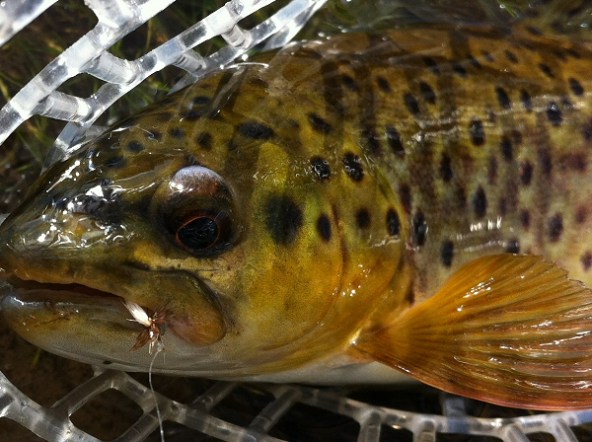
It still amazes me that a nice Hot Creek brown like this can be landed on so small a fly.

I’d repeat this more times than I care to recall but was rewarded with eight beautiful trout, mostly browns, all of which were no less than 13”. The biggest and prettiest crowded about 24” of beauty into 15” of fish.

Next year, I think this place will deserve an entire day of my attention.


1 Comment

a week of fishing, part one: wherein I learn to slow down, enjoy Hot Creek and have fun with small dry flies

This year’s annual club trip to the Eastern Sierras — organized by yours truly — came a tad bit later this year, but its planning nearly nine months ago couldn’t anticipate the snowfall that wouldn’t arrive last winter. From afar I watched the guide reports and river flows, but all of that was forgotten two Sundays ago, once an amazingly fat brook trout slammed the first dry fly cast into a suspect pool.

This is a good time of year to be in the Eastern Sierras. Fewer people, perhaps only the hardier (and those without kids), remain to fish, hike and camp. Being a bit more mature, our group rents a couple of rustic cabins, though we do cook dinner ourselves (clam linguine one night). The days are often cloudless and, at an elevation of 7,000 feet, this expanse of high desert warms up fast. Temperatures swing the other direction just as fast, dropping to the mid-to-low 30s in the evening. Startlingly brilliant stars illuminate the clear nights.

Once over Sonora Pass, my first stop was on the Little Walker River. This small water is often overshadowed by its bigger brethren, the East Walker and West Walker rivers, which offer bigger and more fish. A year after discovering the charm of the Little Walker, and during my first turn as “fishmaster” for this trip, I fished this creek with the club’s outings chairman. We had a wonderful time finding wild brook, brown and rainbow trout exactly where they should be. Jim has since passed away, but the Little Walker reminds me of his broad smile.

Little Walker Brook Trout

It surprised me to see a brookie so big in the Little Walker.

It was with Jim that I first explored Hot Creek, one of the waters that would be frequented during the week. Since I’d have six full days to fish, and in light of Hot Creek’s popularity, the plan was to fish it during midweek. It was a sound philosophy; avoiding as many other fly fishermen as possible and hoping that reduced fishing pressure over a day or two would improve my chances.

Hot Creek Morning

Hot Creek Morning.

Hot Creek has been the marlin to my Santiago. It’s a spring creek with a high fish population, estimated to be 8,000 to 10,000 trout per mile. But these are highly educated trout that have probably seen every fly in the catalog. Throw in clear, low water and weeds that limit opportunities to small lanes and the chance of a drag-free drift, and this fly fishing heaven can become hellish, particularly late in the year. Most descriptions of Hot Creek include words that tend to scare me: “technical,” “attentive mends,” “drag-free drifts,” “multiple hatches.” That first visit with Jim five years ago didn’t dispel any of my trepidation, despite my landing two decent fish.

Although I was on the road Tuesday morning later than intended, I descended into the canyon well before the sun was fully on the water. A single fly fisherman had arrived before me. Reminding myself that there was no need to rush, I slowly and softly walked upstream, taking time to stop and watch the water. In the absence of light, the water was dark and unyielding.

Trusting to my experience that fish would be in a familiar spot, I finally stopped to cast a size 16 dark brown-bodied caddis trailing a smaller dropper (maybe size 22, or 24); a red-butt zebra midge type of fly made up during a fit of madness inspiration at the fly-tying vise. This was truly blind casting. There was a lane big enough to allow for a decent drift of about two feet. I kept my false casts short and out of view of the trout I hoped were there, and used a single-haul cast to finally lay the flies on target. The caddis dipped on my third cast and a good-looking 11 inches of brown trout went airborne. I don’t know if it’s the lack of depth in the creek, but I don’t think I’ve seen brown trout as acrobatic as those in Hot Creek.

Hot Creek Brown

Hot Creek Brown. Love that pectoral fin!

With the first fish to the net, my pulse finally began to slow and my body relaxed. My casting settled down. Two more fish made it to my net during the next hour, one a dark-hued rainbow of about 14 inches. There are bigger fish in Hot Creek, but any decent fish hooked, played through the mass of weeds, and landed, is still a pretty big deal in my book.

Soon the first few caddisflies and mayflies appeared in the air as sunlight began to warm the water. The sunlight also revealed pods of fish, some hovering between weeds, others just on the edge.

Hot Creek Rainbow

Yes it was dark, but this wild fish also has a dark cast to it.

I downsized my caddis fly to a size 22, hoping that it might get a look or two. It did, but only in passing. I would land a total of six fish that morning and walk out of the canyon feeling pretty good about it. But it was a conversation — with a friendly guy who toughs out his year splitting time between fly fishing the Eastern Sierra and running a scuba shop in Cabo San Lucas — that had me pondering a return in the evening.

But that’s another story for another time.


10 Comments

Pat and Mark’s (and Derek and Kirk’s) excellent fly fishing adventure (or, part one of a two-part payoff)

Since day one of my fly fishing career, I’ve been a proponent of hiring a guide to get the “lay of the land,” and though unlucky enough to start fly fishing later in life, I started fly fishing when I could afford to hire a few of these professional trout bums. This however, was one of those times that hiring of a guide paid multiple dividends, even after the guiding was over.

The trip in question centered around two goals: get my brother, Mark, who’d fly fished for the first time last year, on waters local to his home in Washington state, and for a second time attempt to get a close up look at west slope cutthroat trout. To make the most of my short visit, I again turned to Derek Young (Emerging Rivers Guide Services) for help. Frankly, I don’t believe it was a coincidence that I hired Derek two years ago for a float down the Yakima River with my father and that Derek was subsequently selected as the 2011 Orvis Endorsed Fly Fishing Guide of the Year. Regardless, Derek fits my expectations of a guide: someone with strong local knowledge and unfettered enthusiasm for both the fishing and the fish; the type of person with whom one can forge a connection in a mutual passion for fly fishing.

No one would have expected in the days leading up to my flight that the Seattle area would experience record-breaking temperatures. My flight into Sea-Tac International that Wednesday morning would afford my first view of the Space Needle. By the time I was standing on the arrivals sidewalk, most the sky was blue and the sun intense enough that the fleece was tucked away.

I had planned my flight to arrive at an hour late enough that beer tasting on the way to my brother’s house would be socially acceptable. We ended up at Elysian Fields for Cuban and Reuben sandwiches (and beer) after a stop at Georgetown Brewing, then visited Black Raven Brewing before unpacking and prepping for fishing the next day. That afternoon, during the usual pre-planning conversation, Derek proposed accommodating our two goals with two half days of fishing.

[singlepic id=1231 w=600 h=450 float=right]

Our first look up this Skykomish Tributary.

That’s how my brother and I ended up wet wading a tributary of the Skykomish River with Derek, who had invited friend and all-around good egg Kirk Wener (the man behind the Unaccomplished Angler blog and author/illustrator of the “Olive the Woolly Bugger” books). I’d met Kirk a few years ago in asking that he sign copies of the Olive books for my nephews. Kirk had mentioned the possibility of fishing together sometime on the Snoqualmie Forks, but he’s a busy man and, for lack planning on my part, it never came to pass.

[singlepic id=1240 w=600 h=364 float=right]

Mark working a pool on his way downstream.
(Photo copyright © 2012 Derek Young. Used with permission.)

This Skykomish tributary is one of those rivers that immediately impresses with a feeling of remoteness, even though it’s relatively nearby as the crow flies. But we’re not crows, and the desire to get more than a few steps away from the easily accessed and more heavily fished stretches required a bit of leg work. The hike up a hillside, through rain forest and over fallen trees was an effort not made easier by a big breakfast at the Sultan Bakery, but worth the reward — an uncompromised river and view. The drive to our destination on Highway 2 was under scattered clouds, most of which dissipated as the day wore on.

After laying out a game plan, Mark, Derek and I headed upstream. We left Kirk fishing a nice pool that would produce a surprise and the biggest fish of the day (though not a trout). The walk upstream was punctuated with admiration of the beauty of this place and Derek’s insight into what we’d be fishing and where. As agreed, Derek began shadowing and educating Mark while I attempted and occasionally succeeded to get a decent drift.

If you’ve read this blog before, you’d know that my introduction to fly fishing didn’t involve much in the way of dry flies. But since there would be witnesses, I wanted to man up this trip; I’d live or die by the stimulator Derek had selected. Usually I’d like to say my casting was the result of experience and practice, but sometimes I wonder if using a rod at the higher end of the spectrum not only aids one’s casting but also infuses the user with additional confidence. Whatever the case, the Helios 2 (a disguised test rod) was sweet, and more often than not the fly landed near the designated target.

[singlepic id=1235 w=600 h=400 float=right]

Dry flies, baby, dry flies…

There was plenty of fishy water and fish where they might be expected. With good fly placement and a bit of luck, some of those fish — small rainbows, or perhaps steelhead progeny — were found. Those who know me might call it playing to one’s strength, but I’ve increasingly come to appreciate small wild trout. On the right rod, they offer a fight that, ounce for ounce, compares favorably to any of their larger brethren, and usually are more than obliging to forgive my poor presentation of a dry fly. The fish in this part of the Skykomish River system didn’t disappoint.

[singlepic id=1237 w=600 h=450 float=right]

Derek offering the assist.

It was clear from my occasional glance upstream that Mark was getting the hang of casting. I was even a bit envious of his tight loops. Despite a secret hope that my initial casting instruction had served my brother well, I had to agree with Derek’s appraisal that Mark just might be a “natural.” It was about this time I noticed, about 50 yards downstream, a peculiarly heavy bend in Kirk’s rod.

[singlepic id=1238 w=600 h=450 float=right]

Kirk providing photographic evidence of his ‘surprise.’
(Photo copyright © 2012 Derek Young. Used with permission.)

Mark and I fished upstream, leapfrogging each other as we fished suspect pools, riffles and seams. We each landed fish. There was no real competition between us this day, but if there was, it’s clear that Mark’s enjoyment and wonder trumped the number of fish I landed. Then again, I did manage that one really nice fish.

[singlepic id=1239 w=600 h=450 float=right]

That nice fish.

The adventure continues next week…


More photos:
[nggallery id=86]


6 Comments

the excuse for no post

My brother and I were here…

A Skykomish River Tribtutary

Mid morning on a Skykomish River tribtutary, with lots of fishy water.

…fishing…

Brother fish a tributary of the Skykomish.

My brother fishing…

…with Kirk “Unaccomplished Angler” Werner and Orvis guide Derek Young, for this…

Wild Rainbow on Skykomish Tributary

Healthy wild rainbow, who was right where he should have been.


4 Comments

my very best Goldilocks impersonation and the chance encounters of fly fishing

Last week in a nutshell: Trout weren’t caught where expected; a good many others landed where only a few were caught before. One river was frustrating; another too low; one just right. Fellow fly fishermen were met and their company enjoyed on the water.

Some folks won’t understand the almost 200 miles traveled to catch and release the trout I finally found. But a quiet sense of urgency seems to settles in after the summer solstice, an urgency that leads to miles of driving before sunup.

With water in many Sierra rivers, creeks and streams low this year, this urgency demanded a trip, however quick, to the Walker River Basin. It’s a watershed I’ve visited less than I should, considering the beauty of the country traveled distracts from the time it takes to get there. Breakfast is light and handy, the air cold and crisp as I crest the Sonora Pass. Horizon-to-horizon cloud cover dulls the day.

Morning commute traffic means something entirely different here. Before reaching the high desert of the Eastern Sierras, the two lanes of Hwy 108 winds through forests of pines and aspens near the Leavitt Meadow Campground, and though its twists and turns demand slower speeds, both lanes are usually vacant. But not this morning.

Thanks were muttered to the mechanic who last worked on my brakes as a cowboy sidled alongside to suggest it best that I pull to the side of the road and wait. I did and prayed just a little as a herd of cattle gave me the close up and personal experience I never wished to have, as well as one of those encounters that makes a journey all the more memorable.

A few miles more and two hours after my departure, an internal debate of where to fish the East Walker River was quickly settled by the absence of vehicles near the “miracle mile.” After a few wrong turns (caution is warranted driving a sedan on these dirt turnoffs), it was time to gear up. A lack of competition other fishermen tends to eliminate a subconscious desire to rush this process, and I stood there looking like a sausage standing on end while wishing another angler “Good morning.”

East Walker Brown

The single East Walker brown that came out to play…and on a red-butt zebra midge tied by yours truly.

His accented response was explained in the resulting conversation. He was visiting from France, working his way up the Sierras, and with admiration in his voice told me he enjoyed a quite a time on Hot Creek the day before. We talked techniques, and in a bit of name dropping I mentioned that three-time French Fly Fishing World Champion Pascal Cognard had recently spoken at a club meeting. (The French team has been ranked #1 by the International Fly-Fishing Federation for a number of recent years.) I mangled Pascal’s last name but once it was clear I was talking about competitive fly fishing and who I talking about, my new friend told me that he had competed against Pascal. Small world.

We spent a bit of time within sight of each other and I spent time watching his strategy. That French nymphing brought the first fish to the net within half an hour before I wandered downstream.

The East Walker has become my nemesis. It’s never not given up a fish and admittedly I haven’t spent much time fishing it. This day I poked and prodded likely pools, riffles and runs, with only one small brown to show for four hours of effort. Hungry and a bit frustrated, it was time to retrace my route, with stops at the Little Walker and West Walker rivers.

Though “little” is in its name, the Little Walker was too low for my tastes since I was hoping to fish stretches holding the wild trout that live there. It was back down another dirt road to the highway.

Bank on West Walker River

Rewarded will be a nice cast to within a foot or so of this bank on the West Walker…

The idea of unknown possibilities kept at bay a creeping despondency that was nourished by the still overcast sky, an unwetted net and the aches that come with age exertion. The West Walker is typical of the rivers in the Eastern Sierra…you might miss it if you didn’t know it was there. It winds through high desert terrain, below banks that conceal its course. Parking the car alongside the handful of trucks emblazoned with one military insignia/motto or another, I loaded up and headed out the half mile to a bend that seemed to interest a handful of anglers.

The number of fishermen made it a less than optimal situation, but my eye was drawn to flashes on the surface, near the tail of the bend and just below a lone fly fisherman. I walked quietly to a position downstream and behind him. Our conversation began when he stopped to replace a lost fly. He’d arrived at the nearby U.S. Marine Corps Mountain Warfare Training Center only two days ago, heard that the fishing was “on” and now stood on the shore of the West Walker in his fatigues.

He was enjoying himself. Though stocked rainbows, a long pod of fish had stacked up against the opposite bank, next to reeds and in deeper channels, and were earnestly feeding on the surface. Every other cast was welcomed with a bump, slash and, best of all, a solid strike. I was invited to join in and set up on a small point just downstream.

West Walker Rainbow on a Dry Fly

The reward.

The next three hours were filled will double hook ups and an inevitable comparison of our fish, talk of flies and home, and rain, wind and sun. Good fishing makes triumph seem easier in the face of a challenge, and despite powerful wind gusts — gusts that didn’t help casting but allowed the sun to shine — we continued fishing. Sidearm casts two feet off the water got flies close enough to feeding lanes. We never exchanged names but were fast friends in fly fishing that day.

Breaking my rule of never leaving willing fish, I headed back over the pass. My sister and her family were joining me for a three-day weekend, and though fishing is a big part of my time in those mountains, it had been a while since they’d been to the cabin and there was family fun to be had; fun that would be a bonus on top of that day on the three Walkers.