Let’s be clear. Fishing small high-country streams means the trophies taken home are usually limited to skinned knees, a sore back or scratches inflicted by any one or multiple species of vegetation.
Those who ask how the fishing was probably won’t understand that the trip is more than just fishing. It’s fishing that entails a walk that, longer than expected, become a hike; the stalking of trout so skittish its remarkable they aren’t afraid of the bugs they eat; and the creation of memories that draw a fisherman back time after time.
Where I fish, at elevations of 6,000-plus feet in the Sierra Nevadas and often above 8,000 feet, there are incredible opportunities to sink back into forests most notable for the lack of human visitation. In the small creeks and rivers found under lodgepole and western white pines, red firs, mountain hemlock and aspens, wild trout live a hardscrabble life during a summer that rarely lasts more then eight weeks. The small size of these trout truly belies their spirit.
But that’s not why they don’t end up in a framed photo on my wall. These trout are so darn small that holding a fish in one handle while using the other to fiddle with camera’s macro setting invariably results in a photo that’s too fuzzy to be called “arty” of a fish that would be a snack for what’s traditionally deemed a trophy trout.
But since so many of these high-country trout to obligingly rise to any of the customary trout flies, seemingly regardless of size, the outcome of a photo op can be a bit unpredictable.
the photo that shall not be framed
However, the one photo that will never be framed I also hesitate to share in the blogosphere. Because the fish is so small? Because the photo is so blurry? Yes to both questions.
…but mostly because I don’t know what the heck it might be it’s not a trout.
From the South Fork of the Tuolumne River: Pikeminnow? Squawfish? Hardhead? Your guess?
P.S. I’ve since upgraded to a better and waterproof camera to compensate for my lack of photographic skill.
There seems to be a general consensus in the fly fishing community that if you haven’t broken a rod, smashed a reel or torn your waders, you aren’t fishing hard enough or often enough. There may be some truth to this idea. If so, I have to make up for lost time.
Speaking of lost…
It was one of those warm spring days that finally pushed the long, hard, fishless winter to the back of my mind and encouraged thoughts of the season ahead. I’d started early, as usually, setting up a personal roadside staging area behind my Honda, where I pieced together a 5 wt rod, strung line through the guides and tied on those nondescript nymphs that suggest food to fish in the twilight before dawn. I stood on the old rug to slip on waders and boots. Throwing on the vest, I was ready for the short walk from the road down to the creek.
There’s nothing I like better than mornings alone on the creek, when the lack of sunshine renders polarized lenses useless and tilts the odds in favor of the trout. I waded to the opposite shore, from where I could cast towards cut banks and larger fish holding there.
The sun rose. The fishing was good. So was the catching. By noon the body count was well into double digits. Nymphs had been replaced with dry flies.
As usual, things began to slow down during the middle of the afternoon. One last cast led to one more last cast. Then another. And another. Almost without thinking, I’d cast, watch a fish rise, wait a second, then set the hook and bring it to the net. That’s why I nearly fell over when that last fish peeled line off my reel as it raced upstream. This was one of the big ‘uns I thought.
We danced for a good fifteen minutes. Upstream and downstream; into weeds and around boulders. I don’t know whether this particular trout was finally too tired, graciously decided reward me with a close up look, or wanted a closer look at his adversary, but soon we were at arm’s length.
I reached toward my back and grabbed…nothing. Apparently, and unknowingly, I lost my net — formerly attached to a magnetic net holder — sometime during the late afternoon.
No net and a big fish can be bad news. I never saw that fish and I won’t even estimate its length. Let’s just say he’s now referred to as the one of many that got away; an energetic fish that gave me the fin just when I thought the fight was over.
Write up over at Eat More Brook Trout about a ‘small gesture’ tied to fly fishing that will go towards relief efforts in Japan: http://bit.ly/hM9S7t
Wine, fly fishing flicks, demos and gear not too far away from me at the Grand opening of the Leland fly fishing ranch. Best of all, it’s free (except for the films): http://bit.ly/SaiKi
Take a gander at Eastern Sierra guide Tom Loe’s winter ride…it’ll get you to the Upper Owens River in style, with lunch and cold drinks:
The thought last weekend was to get away for a rare five-day retreat, spending some time at the family cabin, entertaining ourselves with visits to wineries in nearby Murphys, squeezing in a bit of fly fishing on one of the few open rivers in the Sierra foothills and generally stepping away — far away — from the everyday.
We had enjoyed three weeks of spring-like weather prior to our departure, but the moment we publicly announced our plans, Mother Nature decided she knew better.
[singlepic id=1076 w=300 h=199 float=center]
A better use of snow.
The drive that got us up to Hwy 108 was easy enough, with stops along the way for lunch and gwaking at Bass Pro. It was after the last stop at Covers Apple Ranch that Mrs. Nature gave us fair warning with steady snowfall as we wound the seven miles to the eastern (and higher) edge of Twain Harte. By the time we reached town, the inches of snow that frosted the familiar with a fresh coat of newness also dictated extreme caution.
While I don’t mind clearing the white stuff to pull into the driveway or the nearly two feet of snow that that muffled and covered the world outside the next morning; I didn’t like the resulting power outage, the excavation of that 60-foot driveway a second and third time, and the increased release of water in the only nearby and fishable tailwater. Though we were thankful for the propane-fired heater, stove and water heater, the lack of power for 48-plus hours wasn’t fun. It was dark by 6:00 p.m. and it’s difficult to read, much less tie flies, by candlelight. Fishing was out of the question the next day as flows on the Stanislaus rose in 40 hours from less than 250 cfs to nearly 1,100 cfs.
We surrendered about 42 hours after our arrival. In that time I learned the value of a snow blower after shoveling the driveway three times, clearing an estimated accumulation of four feet of snow. (My arms agreed with rusty mathematics that suggested I moved over 1,900 cubic feet of the stuff.) Proving that Mother Nature maintains a healthy sense of irony, we were greeted by blue skies just as that last of the gear was packed into the car.
[singlepic id=1082 w=600 h=399 float=center]
Mother Nature, The Joker. The skies cleared after nearly four feet of snow snuffed out the power and we went about departure preparations. (More photos below.)
However, we both enjoyed being in a winter wonderland for a while, spending one afternoon tucked into The Rock resaurant with a good draught of Smithwicks ale, a few appetizers and a cozy view of dime-sized flakes floating to earth. I personally enjoyed introducing The Wife, for the first time in her life, to real, heavy snowfall. We also learned that the Prius can do well enough in the snow.
I don’t begrudge Mother Nature for cutting our trip short with piles of snow; it’s the resulting runoff that’ll keep the trout happy and make for excellent Sierra fishing in the late summer and fall.
I responded to Mr. Rosenbauer’s podcast of a week ago, “Gear Maintenance in the Off-Season and Ten Tips for the Aging Angler,” with a personal anecdote that there are indeed exercises that could help the aging angler. Though I have yet to be officially recognized for my longevity, a gym membership put to good use during the last year or so seems to have improved my balance during wading, something I attribute to core exercises, namely crunches, bridge, planks and rotational movements.
Admittedly, as a generally lazy meditative lot, exercise may be foreign to most fly fishermen, and the most widely practiced workout is casting, which coincidently builds up muscles used to also hoist a beer or scotch.
More of what we saw during our shortened stay at The Cabin last weekend:
[nggallery id=77]
To the chagrin of some folks I’m not retiring like other bloggers we know, but I am “dropping the ball” this week to spend a little time in the Sierra foothills. It comes down to simple logistics. The family cabin is truly that; a few rooms insulated only by a couple of inches of siding, a simple affair with no connection to the Internet.
That’s not to say it’ll be time away from the everyday without sacrifice. There is a plan afoot to fit in some fly fishing — regardless of weather forecasts that include snow at elevations not too far from where we’ll be chasing wild trout.
I won’t jinx this unusual winter trip with any details, except to say that even The Wife has taken notice of my itch to fish and freely volunteered that I might visit one of the few open western Sierra foothill rivers. Maybe the feverish tying of flies and a continuous parade of fly fishing television shows gave me away.
It’s been more than a year since I’ve tested this tailwater. For the most part, I’ll be going subsurface, mainly through riffles and tailouts. Though this time of year it’s the more imaginative fly fishing technique nymphing that’s more effective bringing up the fish, with some luck late afternoon might include a decent blue-winged olive mayfly hatch.
To anticipate one question; no, I won’t be taking the new rod. Even it were fished, there be steelhead in this river and the one fish that broke me off in 2009 suggests that it’s better to carry a rod with a little more backbone.
Hopefully, I’ll be back with more than a tale of a riverside hike.
I’ve been a dad for more years than you’d think and with that has come amazement that the number of candles on my birthday cakes made it to double digits.
Sure, everyone my age grew up without seat belts, car seats, and medications without child-proof lids. Many of my contemporaries rode bikes without helmets, ate sandwiches made with white bread and drank drinks made with real sugar.
Personally, I’m more amazed that I and my siblings survived family vacations in the great outdoors.
I can’t figure out if dad was fearless, just wasn’t being smart or placed such importance on exposing his kids to the outdoors that the risks outweighed the rewards. Maybe it was the fact that we didn’t have innumerable television documentaries underscoring man’s inability to win in a one-on-one battle with nature. Whatever the reason, we were lucky.
There are photos that I won’t share here of me in diapers, in the wilds of Yosemite Valley. That might have been where it all began, but the memories are foggy.
Where we camped for many years, long ago...
What I do remember are the multiple summers we spent in Tuolumne Meadows. At 8,600 feet elevation the weather was changeable. This made day hikes, already an adventure thanks to steep elevation gains and decomposing granite, unpredictable.
While there’s debate among my family as to the name of the lake that was the destination on one ill-fated hike, it’s clear that dad had pushed the limits on that cold and overcast day. With the distance of the hike limited by the length of my youngest brother’s legs, I’m guessing the hike in took no more than a couple of hours. Much of the trail wound in and around trees before rising and emerging onto a wide meadow. Crossing the meadow put us on the shore of a lake nestled up against granite peaks. Back then we carried spin fishing gear, and it wasn’t more than a few casts before a trout made one of the most dramatic, leaping strikes to swallow dad’s Mepps Agila. Small as the fish was, dad stumbled back in his surprise at the strike.
Just about then or shortly thereafter (my memory was muddled by the excitement), the gray of the sky gave way to small granules of something best described as light hail or heavy snow. Not being as keen on fishing, my sister and brother were huddle with mom near what little shelter was offered by a wind-stunted tree. “Jerry,” my mom said, “I think it’s time to go.” Nearly 40 years later I can understand that when fishing, time flies by but those same minutes are painfully slow to pass when you’re shivering in the high country and miles from the remotest fingers of civilization. Grudgingly, dad decided it was better to leave the fish for the sake of his children and, perhaps, his marriage.
The first time we pitched a tent at the Tuolumne Meadows Campground, where, by the way, there are no public showers; my dad’s solution was to take advantage of what nature had to offer. He proudly explained to us that we’d be using biodegradable soap. (It was a novelty back in the 1970s.) Our water source would be the oh-so convenient Tuolumne River. A river that originates from two forks — the Dana Fork and the Lyell Fork — both of which originate from the huge snowpack in the high peaks of the Sierra Nevada. There’s something about bathing in water that only 24 hours ago was in its frozen form. Yet another time we dodged hypothermia.
Then there were the bears. We knew they were there. We saw them occasionally during the day. It’s the times we didn’t see them that still give me chills. There were mornings we’d wake up and dad would show us the bear tracks through our camp; tracks that weren’t there yesterday and must have been made during the night, when I stepped out of the tent for a trip to the bathroom and could have become a tasty midnight snack for one of Yogi’s cousins.
The fateful faithful Sierra cup.
Those mornings dad would tempt fate yet again by preparing breakfast on the flattop griddles that years ago were standard equipment in every national and state park campsite. These griddles were nothing more than flat plates of steel welded to a grill, on top of a three-sided steel box, and naturally were exposed to the elements all year long, accumulating sap, rust and the occasional animal or bird dropping. Dad’s ritual involved stoking the wood underneath the grill with the idea of sterilizing it, then throw on bacon to lube it up before tossing on eggs and toast. While it’s entirely possible he did manage to sterilize the griddle, I can help but wonder if some of the “seasoning” entailed small bits of rust and other things.
In that vein, I also remember being so proud of our Sierra cups. My brother and I would loop them under our belts, and like little men, dip them into the clear streams to quench our thirst. Try that nowadays without worrying.
These are only snapshots of my childhood adventures in the wilderness, and there are other, less dangerous memories of other hikes, more fishing and just being a kid in the great outdoors. Those I’ll save for another time.
I was lucky to spend so much time in the great outdoors. All of these adventures never fail to bring a smile to my face.
For a few weeks now it’s either been raining like cats and dogs or bitter cold. At least for this neck of the woods, where anything below 40 degrees is uncommon. A day ago it was -18 degrees in the in the Sierra Nevada’s Long Valley Caldera, a little volcanic crater of roughly 200 square miles that I’m not likely to fish at such temperatures. If I do, it’ll be via snowmobile and with a supply of Glen Morangie.
It’s good weather to mark on the new year’s calendar the days that’ll be dedicated to fishing. They’re adding up nicely.
It’s not that I’ll be sitting on my hands until the general trout season reopens. There’s a fly rod to be built and flies to be tied. We’ll finish the rod by early February during a series of Saturday sessions. Fly tying will include giving guidance to a son who wants to learn. Then there are trips to plan.
I think it was about three years ago that the realization set in that there was pleasure to be found in the planning of fishing trips. Planning can be a pain in the arse, sometimes literally, because the Internet has opened the doors to a crushing abundance of information; then it took a while to learn to let go of the niggling worries about the actual outcome of a trip.
So, rather than wantonly throw out New Year’s resolutions that are likely to remain unachieved, my inclination is to etch things in wet cement as soon as possible. Things were set in motion this year by that preference and petitions for early planning from some of the folks who’ve participated in the club-sanctioned trip I lead in the Eastern Sierra.
Lest anyone think that there’s an inherent selflessness in these acts, the record should be set straight. Part of my willingness to teach Sean to tie flies is rooted in the self-serving belief it’s high time that he lose his own flies. It’s with as much resignation as can be mustered that I’ll inform The Wife that I must again act as ‘fishmaster’ for the club’s Eastern Sierra trip, quietly omitting the multitude of benefits it offers.
Most fly fishermen will ascribe good fishing and great scenery to favorite fishing venues. The Eastern Sierra excellently fits that bill and hopes are high that this year it will be even better. The snowpack is in great shape and water levels are good; both point to fantastic things in the fall. For those who’ve never been, the attraction of the Eastern Sierra can be modestly measured by the six folks who’ve already committed to a trip that doesn’t take place for another nine months. Those benefits that need not worry my wife: good food, home-brewed beer and great fishing far away from clocks and everyday concerns.
This year my volunteerism will extend to kindly offering to aid a fellow fly fisherman to get acquainted with Crowley Lake. We’ll spend our first day on the lake with a guide I’ve employed a few times each of the last several years, as an introduction to Crowley for my friend and an opportunity to update my knowledge of current conditions. During the subsequent days there might just be an occasion or two to spend more time on the lake fishing from my friend’s boat. As you know by now, in no way did this influence my desire to help.
Now that researchers at NASA have discovered “alien” life in our own backyard — arsenic eating bacteria — it’s not so far fetched that the Eastern Sierra won’t be so pleasant for fishermen…
NASA announced that a team of astrobiologists have found a type of microorganism in Mono Lake, California, USA, Earth that can use the usually poisonous element arsenic to reproduce and grow. Indeed, this little bacteria build parts of itself by replacing phosphorus with arsenic in its cells and DNA.
The discovery of this organism threatens the thought that we could forever saunter carefree in this neck of the woods.
Now we have to worry about our own Smog Monster — the antagonist in 1971’s Godzilla vs. The Smog Monster that fed upon the toxins humanity inflicted upon earth — rising up. It may be inevitable that these little buggers will make a bee line for local creeks, where arsenic could be present years after mining for gold released the arsenic sulphides often found in conjunction with the precious metal.
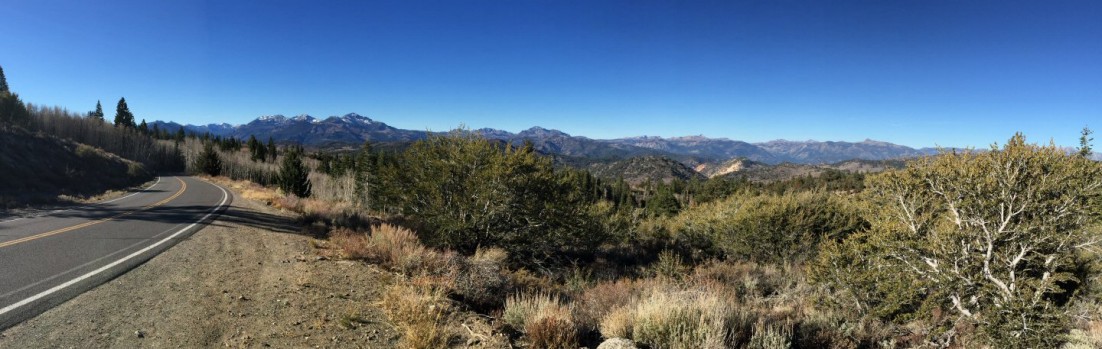


 I think it was about three years ago that the realization set in that there was pleasure to be found in the planning of fishing trips. Planning can be a pain in the arse, sometimes literally, because the Internet has opened the doors to a crushing abundance of information; then it took a while to learn to let go of the niggling worries about the actual outcome of a trip.

 fishing for words