January’s promise to get out and fish earlier, more often and in different places now echoes with so much emptiness that the unthinkable is the only resolution.
Yes, I will be chasing trout this weekend. Memorial Day weekend.
The events and circumstances that kept me closer to home haven’t been unpleasant. They just didn’t include trout. Staying home last weekend included free and unrestricted quantities of barbecue and wine, not really a bad thing.
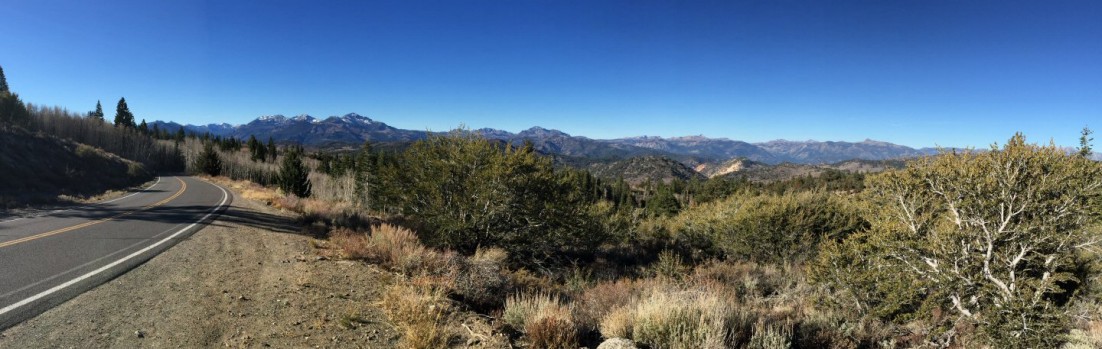
This is the first and possibly one of the few times to get to the cabin this summer, and despite the Sierra Nevada and its foothills being infested with a couple thousand campers and anglers, I’m going. With fishing reports read and flows checked, plans are firming.
An eyewitness account from a fellow fly fisherman suggests that a target river and one of its tributaries will still be high and muddy for a few days. But that bad news lends some optimism that little R Creek may have the water needed for guilt-free fishing for its wild rainbows. It’s a ten-mile dirt road drive to this little gem, so while in the area it’ll make sense to explore other blue lines on the map and not too far away.
It’s a certainty that a few high mountain streams will be walked, likely with the oldest son. A few will be familiar, others offering an opportunity to explore. Generally, this trip will be characterized by a philosophy that hiking a few thousand feet, maybe a mile or two, will leave the crowds behind.
Hopefully I’ll be the guy you won’t see this weekend.
The only reason I haven’t curled up in a fetal position and yielded to California’s 500-year drought is there’s at least a few days of trout fishing on the horizon.
It’ll be good news and bad news situation. The good news being that low water will allow access to most streams and rivers during my limited time fishing this month. The bad news is that the water may be gone when I can next venture into the Sierras.
But the stories that truly illustrate the far-reaching impact of The Great Drought are smaller in scope and often just as alarming.
Spring fishing in the Sierra Nevadas usually means fewer people and rattlesnakes. This year, at least the rattlesnakes will be more numerous.
Wildlife experts from the high Sierra to Southern California report that snake sightings are up, largely due to the warm, dry weather that has gripped much of the West. Rattlesnakes, like many animals, have been drawn out of their wintertime dormancy earlier this year because of the mild conditions that have accompanied the drought, experts say.
Reproduction declines have been noticed since 2007, before the drought, Meese said, but recent counts have shown even steeper declines. A statewide survey of tricolored blackbirds, known for their red shoulder patch with a bright white stripe, was recently concluded and the results are due out in three weeks.
At issue for the birds is a lack of insects since female birds require insects in their diet to form eggs. Also, young birds require insects during the first nine days of life, when they cannot digest plant material. Meese contends that the effects of the drought have created lower populations of insects, as well as less-extensive wetlands from which blackbirds can feed.
…the warm, dry winter threw cherry trees off their game all over the state. California usually delivers the nation’s early season cherries, but with yields down around a third of what they usually are you can expect to pay a whole lot more at the market.
What the trees want is a wet, chilly winter with fog that keeps the daytime temperatures under 55 degrees.
But, clearly, the trees aren’t getting what they want.
California honey prices are being pushed to new highs. California was at the top of the list of honey-producing states a couple of years ago. Not anymore. This third year of drought could cut production to its lowest since 1981.
Suction dredge mining remains an issue for our rivers but, apparently, now is the time to shut down those machines and pick up a pan in the search for gold. Accessibility is creating a mini-gold rush in the Sierra foothills.
If there’s a silver lining, it’s that the severity of this drought has shifted the discussion on fracking.
Fracking a single oil well in California last year took 87 percent of the water consumed in a year by a family of four, according to the Western States Petroleum Association, an industry lobbying group. That amount — a modest one by national standards, the oil industry argues — has become an increasingly delicate topic since a drought was officially declared early this year in the state.
The drought, combined with a recent set of powerful earthquakes, has provided the momentum for about a dozen local governments across California, the third-largest oil producing state, to vote to restrict or prohibit fracking in their jurisdictions, as concerns over environmental effects and water usage have grown.
At the same time, a bill that would declare a statewide moratorium on fracking has been gathering support in the State Senate, a year after a similar effort failed.
The frail nature of our infrastructure — arrogantly designed to fight Mother Nature’s wisdom — is certain to be tested in the many months between now and the next rainfall. A switch to ignoble warm water species might salve the itch to fish, but at what cost to one’s pride?
A few weeks ago in preparation for the coming trout season, I decided it was time to replace the line on my 5 wt. rod. I won’t say that I’m cheap, but this line had served well during its all-too-long life. It wasn’t as if it had developed any hinges or cracks, but last September the welded loop broke and I used a nail knot and monofilament to create a new loop-to-loop connection, then finished the season without having to replace it. But while I’m not a great fly fisherman and don’t demand perfection in my equipment, a floating line that doesn’t float is a bit of a problem.
When I first set up this rod and reel, I used line purchased at a club auction. It was a great deal for a name brand line. Truthfully, I’ve since wondered how long it might have been in the club inventory. It would be hoped that it spent it’s time in a house closet; where the temperature was regulated and exposure to ultraviolet light limited, but it more likely spent its time in a garage, baking during the summer.
This was a plain fly line, nothing special. Its entire length was that vibrant green that makes outsiders question how fly fishermen catch anything. In my pre-fly fishing life I too wondered how fish didn’t see that bright, large-diameter line, not knowing then that there was nine feet of leader and tippet that I couldn’t see, to which a fly was attached.
I’m getting a late start this season, so replacing the line wasn’t imperative. The real decision was where I might get it replaced. I don’t have many choices in fly shops around here. I could drive an hour into San Francisco. There’s a new fly shop in the city, a shop within a shop, apparently, owned and operated by a guy well known in local fly fishing circles. I haven’t been there yet, but hear it’s pretty nice.
There’s another shop south of me, not too far away and across a toll bridge. But like many local fly shops, it is one that seems to be only surviving, not thriving. It’s in the suburbs, not near any fly fishing destination, not in a convenient location and not in a high-traffic area. More than that, it seems that inventory is lacking. I understand it’s a business and inventory is money, and no business owner wants money sitting on the shelf. However, the last time I spent a significant amount of money in this shop was a few years ago, when I found a pair of the previous season’s waders on sale and was lucky they fit. I was apprehensive that this shop would offer much choice in the way of line.
The other option was to head north, a little farther, but not an unreasonable distance. Luckily, my wife had suggested making a day of it, stopping at a new brewery, having lunch and casually exploring places we’d never stopped before. And this sporting goods store has a pretty good reputation for a wide selection of fly fishing gear and accessories.
It’s a well-stocked store, divided into clear sections dedicated to conventional and fly fishing, as well as hunting. I was greeted the moment I walked in but left alone to ponder a myriad of fly lines. Without counting, I’d guess that between the different brands, types of line and specific applications for each of those lines, I was presented with at least 60 choices.
I nymph a lot and boxes of lines dedicated to this tactic were printed with key words and phrases such as “easy mending,” “extra powerful turnover” and “high flotation tip.” Camouflage lines are neat, but I was hooking fish with the bright green line, so why change?
After just about the right amount of time had gone by, the salesman who had greeted me sauntered up.
“So, have you picked one out yet?”
“No, there’s quite a selection to go through.” I had narrowed my choice to two selections, grabbed the appropriate boxes and asked him directly, “I’ve got this one fly line here. It claims it’ll do everything I want and will slice through the wind for the longest cast possible. The truth is I don’t cast much more than 20 or 30 feet, unless on a lake. That’s the way it is where I fish.”
He didn’t jump into a sales pitch, but instead countered my question. “Where do you fish?”
We ended up discussing streams and rivers in the Sierra Nevada Mountains, and exchanged stories as fly fishermen often do. Obviously, this painted a good picture about my line needs. He told me of some of his favorite water and experience in aiding with the development and testing of fly line for one company. I tend to believe that most fly fishermen are pretty honest except when it comes to the fly that’s working that day, but I was a bit suspicious, and steeled myself for the hard sell.
Still I stood there with the two fly lines in each hand, each the same brand I use on my 4 wt. rod. In one hand was the special-purpose, “highly textured” line; in the other was a standard weight-forward line for half the price. “What do you think?” I asked.
He replied, “All you need is this basic line. It’ll do everything you want and even stuff they don’t print on the box. The other line is only what you want when casting into wind.” Then he whispered, “Really, that basic line will do just as well, it just takes a bit more skill.”
I felt a bit embarrassed that he’d recommend the lower-priced line when I had walked in prepared to spend much more. I made up for it with the purchase of some flies, extra tippet, beads and other items for which I don’t have an immediate need, but will eventually use.
I don’t know if this guy is paid on commission or not. Perhaps he’s evidence that there is such a thing as an honest fly fisherman.
There’s a fear that can creep over me in the company of other fly fishermen. Those who know me personally are likely to agree there’s a touch of restraint in my personality. Blending into a crowd is specialty learned during middle school; let’s spin it as a well-honed survival skill. Thankfully, in the years since, I have been able to put myself out there with the backing of friends and colleagues, though I still haven’t totally abandoned my introversion.
It was a recent podcast that made me realize that perhaps that fear coincides with the niggling thought that I may be a lazy fly fisher.
But I will hike to the fish. There was no hesitation last summer to march three miles into high-altitude lakes for brook trout no longer than the spread of my hand. I also tie flies. I built a fly rod. And it’s no problem getting up early to spend the day driving the 240-mile loop that takes me over Tioga Pass and Sonora Pass, alongside high-elevation streams and lakes as well as high-desert rivers.
I still feel a bit unworthy among my fly fishing peers. When others are describing the physical skill it took to lay a dry fly in front of a big trout 40 feet away, across four different currents and through 30 mile-per-hour crosswinds, I have no response. Oh, I’m catching fish to be sure. Just with less effort. It’s called nymphing; often under an indicator or dry fly.
It’s not that I’m apprehensive of trying different techniques. I’ll swing small wet flies, cast dries as far as I can — maybe 20 feet accurately — and chuck streamers when an opportunity presents itself.
Thinking about it, after being hammered by messages in blogs, podcasts and online forums that nymphing is inelegant (it is), too productive to be considered a real challenge and more akin to lure fishing than fly fishing, it occurs to me that nymphing, in fact, requires a bit more creativity than other tactics.
Why?
Nymphing often requires visualizing where your fly is and what its doing; rarely can you see it like a dry fly. It takes some thinking to set the depth at which that bead-head fly might be presented to fish hugging the stream bottom.
Observational skills are much more important. With dry flies you can rely on visual cues. When swinging flies, the take is abrupt and obvious. Nymphing, however, requires keen observation of subtle clues: the movement of the rod tip, the twitch of a strike indicator, even a suspicious flash of color. It takes skill to discern a take from your fly bumping simply into a rock or snag or hanging up on weeds.
What I’m trying to imply is that there’s another level of mental dexterity involved in nymphing and not required of other tactics. All tactics benefit from some knowledge of fish habits, hydrology and entomology and basic situational awareness.
Nymphing, however, requires imagination.
Guess that’s why it works so well for a day dreamer like me.
One of the best things about being willing to travel for food is that the allure of food…or wine or beer…can be the thing that motivates.
The release of monthly wine selection, which we elected to pick up rather than expanding our carbon footprint with door-to-door delivery, led to a last-minute decision to take a road trip last Friday that would loop through the Sierra Nevada foothill towns of Murphys and Jamestown. The last-minute part was a decision to make it a day trip rather than pack, unpack, then pack again for a short weekend stay at the cabin.
Tulips at Ironstone Winery
Departure time that often dictates one’s route, and since we’d first stop in Murphys, timing put us in Stockton for breakfast. Yes, that Central Valley town, in the middle of some of the most productive farmland in the world. Yet is isn’t the prototypical farming community. Stockton is a city of 300,000.
When the real estate bubble burst, homes built on cheap agricultural land in and around Stockton — almost within commuting distance of San Francisco — were left empty. Without customers, businesses closed and shopping centers went dark. The construction industry that built both residential and commercial properties collapsed, increasing the rolls of unemployed. Income and property and sales tax revenue fell.
But Stockton is a city with a deep freshwater port handling over $1 billion in product shipment annually. It is home to the prestigious University of Pacific and its 7,000 students. During the boom years the city gained a new ballpark, a city activities center, at least one new hotel, an ice rink and a lovely marina. It’s been described as a slice of Los Angeles minus Hollywood.
Our stop for breakfast was at a restaurant within Stockton’s Miracle Mile Improvement District, three blocks south of UOP. Karen found the Midtown Creperie on our ever-present travel companion, Yelp. Years ago I spend half a week in New Orleans and Midtown Creperie offers any almost Disneyesque décor, and though dark, is complete with Mardi Gras beads at each place setting. The mood set, it was the King Cake crepe for me, with dark chocolate sauce substituted for the white chocolate glaze. Karen ordered an omelet with spinach, sausage and tomato with country potatoes. Per our usual strategy in a new place, we split our meals.
Apparently, I haven’t learned my lesson when it comes to trying a place for the first time, particularly one that specializes. The King Cake crepe was good, but with too much going on — apples, cream filling, chocolate sauce and multicolor sugar crystals — it was tough to judge the foundation of the dish, the crepe itself. It was good, to be sure, but I’d say the great presentation didn’t match the flavor. The omelet was good but the sausage was less present than I would usually hope.
After a 30-minute walk down Pacific Avenue and its eclectic mix of shops, we were headed to Ironstone Vineyards, the home of one of Karen’s favorite everyday wines. Outside planters around the winery always filled with the best-looking plants, and being spring, they were filled with flowers. We’re not extravagant with wine club memberships, but it is nice to walk in and taste all we want without a fee, so we did. A case of Karen’s favorite walked out with us.
We hadn’t planned for lunch, but after walking the grounds at Ironstone and up and down Murphys’ Main Street — and the result of my interest in the beers at Alchemy Market — we ended up at the Alchemy Café next door. My wife had suggested sharing a beer — gotta love her — and I suggested a small appetizer. That didn’t quite work out as expected.
We’d been to Alchemy Café before, and split the Thai Chicken Salad, which was more than enough. The idea was to just have small plate to nosh on. Karen ended up with a nice lamb soup. I ordered the Crispy Fried Calamari and forgot about the awesome and complimentary Alchemy’s Famous Gold Nugget Cheese Bread.
Despite its awesomeness, Karen won’t touch Alchemy’s bread. She doesn’t like cheese. But that’s okay. I got the whole serving of this spicy, heavenly goodness. It’s a foundation of ciabatta bread spread with a fluffy mix of salted butter, corn kernels, chopped green onions, minced serrano chiles, minced garlic, chopped cilantro, shredded white cheddar cheese and Parmesan cheese, the baked until golden brown.
Had I remember the bread would come, I’d have skipped the calamari. However, I’m glad I didn’t.
Then there was the beer. Both the Alchemy Café and the associated Alchemy Market offer a good selection of beer, along with a long list of local and not-so-local wines. I tend to gravitate to local brews, and most local offering on the list that day was Knee Deep Brewing Co.’s Batch 135 from Auburn. To my tastes, it was a bonus that Batch 138 uses Simcoe hops in addition to three unnamed “C” hops (likely Cascade, Chinook, Columbus or Centennial). It was a good light but hopped up beer, though the Simcoe only served up a pine aroma and wasn’t too dominant in the drinking.
It’s clear that nature’s dewatering of California this year will leave the trout that can be found skittish and stressed. I suppose that only the most thoughtful fishermen will leave them well enough alone as the summer wears on, or perhaps cross to the dark side of warm water species.
Opening Day may mark the beginning of the few weeks during which decent trout fishing may be found not too far away, while fish mortality is at a minimum. After that, it’s unlikely you’ll find solitude at a high alpine stream, creek or lake. The same climate change pushing wildlife to higher altitudes will similarly affect their human hunters.
This summer and fall — when still-flowing rivers will only offer skinny water — will be seasons of small fly rods and even smaller flies. A few small wild trout fisheries I hold dear (and of which I also hold a delusion that only I know about them) won’t withstand much molestation, meaning I’ll also be somewhere else.
It’s been proposed that “heroic measures” will be needed to save California’s salmon runs. As the weather warms up and naturally flowing water is scarce, it’ll be just as heroic to leave alone those fish that have nowhere else to go.
Though it’s a remote possibility that the proposal by Silicon Valley venture capitalist Tim Draper to divide California into six states would make it over the many required hurdles — from gathering signatures of 807,615 registered voters to put the measure on the ballot to final congressional approval — it presents a conundrum for a native Californian.
This is a big state, one of diversity. Every once and a while that diversity bubbles to the surface; one example is the Jefferson state movement that is revisited every decade or so. Boards of supervisors in Modoc and Siskiyou counties, which are near the Oregon border, approved measures in support of the Jefferson state declaration. Tehama County, one county south of Modoc and Siskiyou, has placed a similar measure on the ballot.
California is one of the few places where five major climate types can be in close proximity. From my home, it’s a four-hour drive to the high Sierras, the Humboldt redwoods or the southern coastline. The same goes with fishing: steelhead to the north, Striped bass to the east, trout to the northeast and southeast, saltwater fish to the west.
Setting aside all the pros and cons about and difficulties of creating smaller California state, it raises the possibility, just to fish for trout in place I enjoy, that I’d have to buy three separate licenses. Saltwater fishing could require a fourth. This may be an accepted part of living in smaller states, but not something I look forward to.
One upside might be the possibility that the proposed state I would live in, “North California,” could regain its water rights. I’m sure we’d set a fair price for all that water needed down south.
With our latest rain, I’m hoping it won’t be 1975 all over again. Then and now, precipitation was routed around California by a high pressure ridge for months. December of that year was the beginning of two years of drought conditions. Our reservoirs are now lower than at the same time in 1977, which was preceded by two dry years. Jerry Brown was governor back then; irony or conspiracy?
Without non-stop rain through the rest of our rainy season the coming summer will be one of dirty cars and brown lawns. Communal showering may become de rigueur, perhaps followed by an uptick in births.
Back then I wasn’t fishing as much as I do now. There are a few small streams — only shared with the most trusted — that will go unvisited this year. It’s a given that low reservoirs will push more fisherman to moving waters that remain open which, more likely, will be tailwaters.
Automatic readings last Thursday show the snowpack in the Sierra Nevada is now at 15 percent of normal, up from 12 percent on Jan. 30. At this rate, we only need 28 storms of similar magnitude to reach normal levels. And that still won’t be enough.
I do enjoy living in California. I love our many outdoor options. I live in a suburb of the Bay Area, in a balance of choice and means. But I have a love/hate relationship with our “big city,” San Francisco.
San Francisco was the seventh most visited city in the United States last year, for good reason — cool summers of fog-kissed sunshine, a history that lives on through landmarks such Golden Gate Bridge, Alcatraz Island, Coit Tower and Fisherman’s Wharf. Lending to its picturesque quality are steep rolling hills patrolled by cable cars and dotted by a mix of architecture styles such as Italianate, Mission, Queen Anne, Stick/Eastlake, Craftsman, Art Deco and Streamline Moderne. Parks are sprinkled about, including the Conservatory of Flowers, Japanese Tea Garden and the San Francisco Botanical Garden. Culture abounds with art museums and performing arts. The sciences are represented at the California Academy of Sciences, the Morrison Planetarium and Steinhart Aquarium.
Wandering through neighborhoods like North Beach, Chinatown, Telegraph Hill and SoMa on a sunny day rank among some of my favorite experiences in The City. Christmas can be made more special with a visit to Union Square and a walk by Macy’s holiday windows displaying SPCA cats and dogs looking for forever homes. Personally, I enjoy carspotting and rarely is there not a sighting of a Ferrari or Tesla or the occasional Aston Martin, Bentley, Rolls Royce or Pagini. (BMWs, Audis, Mercedes-Benzes and Porsches are too commonplace.)
San Francisco is also most densely inhabited large city in our state and the second-most densely populated major city in the United States; second only to New York City. High-rise office buildings blot out the sky and create dark canyons that can be 10 degrees cooler. Our visit last weekend was marked by warmish temperatures, which likely gave rise to the rather pungent odors one might expect during a rainless winter.
Some people wanted champagne and caviar when they should have had beer and hot dogs. – Dwight D. Eisenhower
But we will travel for food, which lured us once again across the Bay. Intellectually, I understand the need for and benefits of mass transit; but deep inside I harbor an irrational fear of missing a scheduled stop. (Yes, I know there will be another bus or train, but that means giving up control of my schedule.) However, I’ve become accustomed to the hour-long ferry ride and have recently adopted the mantra “walking is good.”
Walk we did. To get where we were going, we’d skirt the Tenderloin just above SoMa. The situational awareness I’ve been working on, unfortunately, meant I wouldn’t miss that guy relieving himself in the gutter on Turk Street. More than once we walked through a repellent cloud of “skunk” originating from green stuff, not the black and white animal.
In truth, it was more akin to hiking for food and beer, and lunch at Show Dogs Fine Sausages was the reward on the first leg. House-made hot dogs, sausages and condiments, and beer on tap. What’s not to love? And love it we did. Maximizing our opportunity to taste Show Dogs’ offerings, we split a House Maple Pork sausage and Fried Chicken Sandwich, a pint of 21st Amendment’s seasonal Fireside Chat — a nice, rich and semi-dark English-style ale tweaked with spices — and a side of fries. The maple pork sausage was an experience I’d gladly repeat, even without the sprinkling of bacon. The proportion of maple to pork was perfect. Think of that time at breakfast when your sausage rolled into a bit of syrup. The twist for me was the deliciousness of the fried chicken sandwich, it was outstanding. Sure, it’s fried, but the house-made lemon cayenne aioli, coleslaw, pickled ginger and well-matched bun make it something quite special. The fries weren’t as special, but were perked up by the house-made habanero ketchup.
We’d walk another mile or so to pick up something Karen had ordered, then it’d be another mile to Cellarmaker Brewing Co.’s taproom. But it was one o’clock, and the taproom wouldn’t open until two. So, without thinking, began to head to the Ferry Building.
A few blocks later Karen thought to check the ferry schedule. The next ferry wouldn’t leave until 3:45 p.m. Apparently, God wants us to have beer. And Cellarmaker delivered.
Cellarmaker is small, with a ten-barrel brewery and a twelve-tap tasting room inside a former garage in SoMa. It opened last October with four beers and has since expanded it lineup with a rotation of beers. We settled into the cozy taproom and upon learning that some taps were dry, ordered up five ounces of each available beer. It was nice to see that each glass was pre-wetted with chilled water before filling (I expect that it was distilled water).
We ended up with glasses of Coquette, Simcoe Galaxy IPA, Jagged Little Pale Ale, Coffee and Cigarettes and Kelly’s Blackout Stout. All were good enough to order again, but I fell in love with piney goodness of the Simcoe Galaxy. It reminded me of Skagway Brewing’s Spruce Tip Blonde, which is brewed with spruce tips. The Simcoe Galaxy is not, but the herbal, piney and almost earthy fragrance (of the Simcoe hops?) comes forward and lingers. This is an aroma-heavy beer with a light hazy yellow color and a surprising lightness. Karen was fonder of the easy-drinking Jagged Little Pale Ale, a clean almost-IPA. Coffee and Cigarettes stood out for its aggressive aroma of espresso and burnt malt backed up by a lingering smokiness.
I’m a fan of saisons/farmhouse ales, but Cellarmakers Saison Francisco wouldn’t be released for another week; however the Coquette, a grisette, was a good stand-in. This is in the style of a working-class beer: a light, slightly tart, low alcohol wheat saison about as pale as it comes. Envision sitting down and enjoy a pint after mowing that one-acre lawn on a hot summer day.
We ended up walking just over six miles this day. Nothing like enjoying good food and all that beer without gaining too much weight.
 As a native Californian, most of the drought news is the “usual” hue and cry about


 fishing for words