fishing for words

(and tossing out random thoughts)


1 Comment

no longer just fair-weather fishing

I’d never thought of myself as a fair-weather fisherman until last month. The truth is that the timing of my fishing trips — most of which take place within a few hours drive of our cabin in the Sierra foothills — is more often dictated by the level of water and the appetites of the trout in it. There are plenty of sources for information that will give you an idea of what might be expected when you get where you’re going, but usually doesn’t match up with the reality of being there.

Last month I had left the cabin on an outing that began like any other early-morning trip over Sonora Pass. I left before sunrise, the roads were vacant and it was about 40 degrees F. The general idea was to visit previously unvisited areas of a nearby watershed, with no specific plan in mind.

The elevation of the cabin is about 3,600 feet, where autumn is generally makes its presence known in a pleasant manner. Leaves are beginning to change and there’s a nip in the air. Short sleeves are still comfortable most of the now shorter daylight hours.

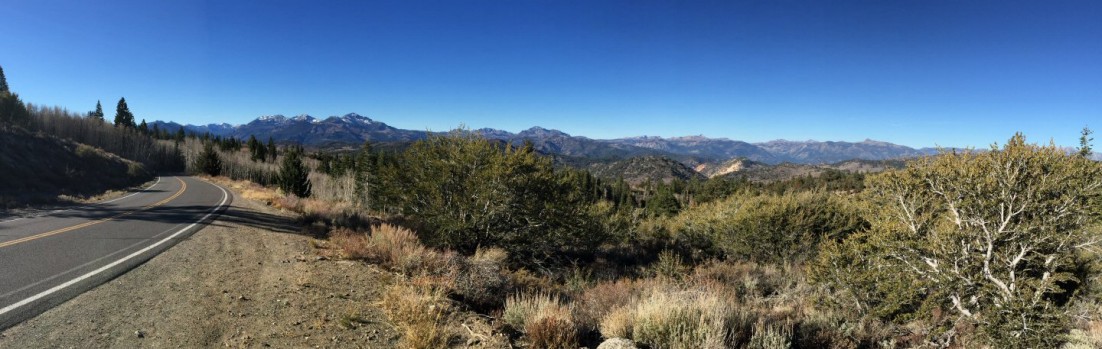
The temperature fell as I began to climb toward the pass, and blotches of yellows and reds more frequently peeked out from behind the evergreens. By the time I arrived at Kennedy Meadows (elevation 6,700 feet), it was about half an hour past sunrise, but in the shadows of this piñon-juniper forest, it was 27 degrees. In 10 more miles I climbed another 3,000 feet, emerged from the tree line, and the temperature would rise about 25 degrees.

I have a fondness for the high country — because its beauty is one of stark contrasts, in some ways harsh but fragile in others, with dwarfed pines scrapping out an existence against a background of granite — and this dramatic variation in temperatures is one of the most observable influences on that beauty. The simple expansion of water as it becomes ice slowly breaks down granite. The melting of that ice, and snow, as well as a general weathering of the landscape, breaks that granite into pieces that, through weather and the activities of insects and animals, can be mixed with decomposed plant matter to create a thin and rocky soil. It’s truly amazing that such infertile soil supports numerous conifers of all shapes and sizes.

The descent on the east side of the mountains leads down to the high desert, where desolation of this shrubland is interrupted by strings of trees, usually aspens in the canyons and pines elsewhere, following the course of the rivers and streams of the Walker watershed. The sun gathers strength here, but this morning its power would be contested by a layer of cold air that had established a foothold during the night.

River-Side Ice

River-side ice at 26 degrees that morning.

There’s always that time, between emerging from the artificial environmental cocoon of a vehicle and before the cold really starts to bite, that the air temperature never seems that cold. When I pulled alongside likely looking water, it was 26 degrees. I had given serious consideration to the idea it would be chilly, but now worried I hadn’t considered it seriously enough.

So with the thought that I had come too far and retreat wasn’t an option, I began the layering that I hoped would suffice. This was comprised of fleece pants under the waders, a wind-proof wading jacket over a fleece sweatshirt that was on top of my long sleeve shirt, and a well-worn, wide-brim canvas hat. Later I’d realize that my fingerless fishing gloves would have been a welcome addition.

As long as I kept moving, I avoided the long shadows that persisted as the sun hung low along its autumnal path. The water was 58 degrees, at the low end at which trout will be active, so I didn’t linger too long in one spot and moved frequently to cover as much water as possible.

This was an entirely new experience. My breath hung in the air, lingering as puffs of white. Skim ice crunched underfoot. My guides iced up within fifteen minutes. It was cold. So cold that I almost — almost — hoped that wouldn’t have to plunge my hand into the water to unhook a fish.

I would leave this first spot about an hour later, skunked but feeling that for that brief time, more than ever, that I couldn’t escape being part of nature.


Leave a comment

don’t know what to expect this trip

It’s been a bad year for water in California. The April opener was one of the best in years thanks to low water levels.

Next week we’ll see for ourselves what Eastern Sierra rivers and lakes look like four months later.

One guide recently referred to Bridgeport Reservoir as a “pond.” Bridgeport is so low that its outflow into the East Walker River has been tainted by algae — algae that usually floats closer to the surface of the reservoir — and now the river is regularly off color and weedier than usual. Lake Sabrina in the Bishop area is so low that the front (manmade) lake no longer exists. The level of Crowley Lake is better than might be expected, but low enough to concentrate fish in the deepest areas.

The route taken by myself and guys from the club will be dictated by the Rim Fire. Hwy 120 remains closed. An expectation that the fire might not be fully contained until Sept. 20 doesn’t lend any clarity as to when it might open.

That’s not a big issue for me. I usually head over Sonora Pass via Hwy 108, with stops at the West Walker River, Little Walker River or Molybdenite Creek.

Thankfully, there will be water to fish when we settle in at Tom’s Place Resort (which certainly isn’t the resort you might think it is). The Upper Owens is supposed to be in good shape. The Middle Owens is flowing at an unseasonably high level. I may head to the high country, visiting alpine lakes and streams where I hope the fish are already preparing for a long winter.

However it works out, there will be lies told over beer and good grub.


Leave a comment

fly fishing through Glass

“High tech” used to refer to the latest silica nano matrix rod or the lightest reel made of unobtainium. Not anymore.

While Google’s Glass has launched with less-than-useful third-party apps — “Glassware” — tied into CNN, Evernote, Facebook, Tumblr and Twitter, the real breakthrough is yet to come.

For better or worse, a glimpse into the future.

Google Glass Fly Fishing App

Google Glass Fly Fishing App (click on image for larger view)


7 Comments

first time fly fishing with the wife (or, rolling the dice on being out-fished)

I never pushed fly fishing on my wife, but she’s always supported my pursuit of the sport and listens attentively to accounts of all my adventures. She usually believes the fish are as big as I say.

Then, a few months ago she took me by surprise, asking if I would show her how to cast a fly rod. I’ve had welcome opportunities over the years to help teach, or at least acquaint, a few folks with fly fishing. In addition to assisting with the club’s novice class, it could be said I didn’t teach too many bad habits to my brother and my son, both of whom went on to have some success.

After an involuntary thought that “those who can, do, but shouldn’t necessarily teach,” I agreed to take my wife out for some casting. Good weather offered an opportunity and we spent just under an hour going through the basic motions.

A few weeks later, during a discussion of our weekends, I reminded her that I’d be teaching the novice class on an upcoming Saturday. She asked if there might be room. There was, and soon she had reserved a spot. She learned a lot and suffered through some frustration.

It is nice to have someone to take a photo.

Sure is nice to have someone along to get photographic evidence.

We’d be at the cabin a week after the class, and while a friend would be with us and side trips were planned, it was expected that I’d slip away to chase a few trout. Although we packed extra rods, reels and my spare waders and wading boots, it wasn’t until we stopped at Bass Pro and purchased a license for my wife did the reality sink in that she actually might join me.

Firmly believing that the best way to hook someone on fly fishing is to get into a fish on a fly rod, our destination the next morning was a stocked stream not too far from the cabin. We test-fit the waders at home and knew they would work well enough. My wife set up the rod and reel on her own, we clipped on our wading staffs and headed to the stream. I think it was after a dozen steps or so that my wife began referring to my old wading boots as “clown shoes.” (Admittedly, they were a bit big, but did the job that day.)

My wife doesn’t much like water — it’s for drinking and bathing and that’s about it — but she didn’t flinch much when we began wading. While waders provide a barrier between the wearer and the wetness of the water, one still “feels” the water. I reassured her that in water this cold, after a bit of time, she’d be too numb to notice.

Just before the first strike...

Just before the first strike…

This is a stream best nymphed, with limited dry fly action some afternoons. Offering a running commentary on what I was doing, I rigged up two standard nymphs below an indicator. I explained and demonstrated where to cast (and hooked a fish in the process), and talked about how the trout would be looking for a close approximation of a real insect drifting near a current seam.

The morning was sprinkled with encouragement and advice. My wife’s casting, more like lobbing under the tree limbs above, improved. Her patience was impressive. After the first take of the day, it was more than an hour before a second bump. She wasn’t the only one casting to ghosts. I could count my strikes on one hand.

About midmorning we shifted downstream about 10 feet. The fish in this stream, though raised in a hatchery, move throughout the day, typically following the movement of the shadows. Close to noon, there’s more sunlight than shadows on the water, forcing any trout in the area into a narrow and definable seam. Downstream, I switched to a dry/dropper setup and was sight casting to a decent looking fish. Good placement and presentation earned a solid strike, and I landed my second and last fish of the day. Photo taken and trout released, the focus returned to getting the wife on a fish.

There’s no telling what changed — the temperament of the fish, the depth or general presentation of the flies — but suddenly my wife could lay out a cast, manage the line and fool a fish. A trout was hooked on the second or third strike, offered a dramatic leap and was gone. In between a few more strikes we worked on line management and talked about setting the hook. A few more strikes were missed.

Karen's First Fly Fish

Getting the “hero shot” took some dedication with an uncooperative, slippery fish. But she did it.

Then it all came together.

It was good to get excited about a fish on the line, even if it wasn’t my line. Limiting my advice to keeping the rod tip up and letting out line when the fish demanded it, I set my rod down and carefully moved downstream of the missus. I calmly instructed her to bring the fish head first into the net. For one heart-stopping moment the 12-inch rainbow would have flopped out were it not for my cat-like ninja reflexes luck.

Yes, my wife did receive a proper fly fishing baptism, falling into the water a few times. (No water over the waders and nothing broken.) Tangles were minimal and, amazingly, not one fly was lost the entire day. I do worry, however, that had she hooked (and landed) all the fish that hit her flies, she would have out-fished me.

Ask my wife why she stepped up to try fly fishing and you’ll get some sentimental nonsense that it’s another way to spend time with her husband. That day, in a cool stream away from everyday worries, after landing a trout, she told me of a new understanding of why I enjoy fly fishing.

While we’re not running out to buy her new gear, I’m now optimistic that there’s a greater chance of fly fishing any suspect water we pass during our travels.


3 Comments

on becoming one of those guys

Opening day of the general trout season in California is this Saturday.

But I won’t be on the water. I will instead sacrifice the first opportunity to be skunked on my favorite stream for the greater good. (Very Vulcan of me, right?)

The first two years after I picked up a fly rod — some seven years ago — I would start preparing for the new trout opener a few weeks after the closing of the previous season.

I do still care about the trout opener. It opens wading access on the west slope of the Sierra usually long before the passes to the eastside are cleared. Being on the water at the earliest legal minute had become tradition. Even back when I was throwing hardware, it wasn’t about filling the freezer; it was simply about being out there, working the rust out of skills unused during the winter. Four seasons ago I accepted the invite of a fellow forum contributor to join him opening day in chasing down backcountry trout. He would provide the four-wheel drive truck, I provided flies. It was a day filled with good friendship, great weather and beautiful country unseen by most. Unfortunately, any trout that may have been in the half dozen streams we visited remained unseen.

The biggest influence in my changed opening day perspective is also one of the bigger rewards that have come with fly fishing. Notwithstanding the excitement of a big Eagle Lake rainbow taking me into my backing, I’ve find an unquantifiable pleasure in helping bring others into the sport. My contributions to the club’s novice fly fishing class aren’t huge, but the enthusiasm imparted by the instructors, including myself visibly, sparks something in the students. The payoff often comes a few weeks or months later, when one of those students, all smiles, presents a photo of the fish caught because of something learned in class.

So, while I’m not retired, but I’ve become one of those guys for whom the trout opener only marks the point in time that most trout water is wide open to fishing. I’m lucky enough to have a place in the Sierra foothills available to me most any time, and I have grown content to head up the week after the opener, often to find welcome solitude on most rivers and streams. I have also taken to the challenge of finding the ‘smarter’ fish left behind after the crowds of opening day.

When I finally do make that first cast for trout this year, it’ll be later, but for good reason.


2 Comments

on “the movie” and stuff

I was correcting a co-worker who thought “A River Runs Through It” involved the pursuit of bass…

…and after suppressing my laughter, then dispensing a quick education on the differences between bucketmouths and trout; a thought occurred to me. The credits for the movie list more than a dozen categories of fish wranglers. The fish were farm-raised stunt doubles, “harmlessly tethered” and not hooked. So, did these fish earn SAG…um…scale?

Death from above?

I’m not much for bass, likely because bass haven’t had much more to offer me besides more refusals than I care to count…

…now there’s another seventh reason to avoid Peacock Bass, at least in the Brazilian Atlantic Forest. Researchers at the Universidade Federal de Pernambuco have discovered a new species of porcupine that lives in one the country’s most endangered forest ecosystem. It lives in trees. (I don’t know about you, but I have had things fall on me while fishing. Thankfully, nothing alive…yet.) This species joins the six known porcupine species in the region…


10 Comments

a not-so-rugged Bass Pro woman

Would a Rugged Eddie Bauer Man or his more “metro” cousin want a Bass Pro Woman?

On the water, particularly from a distance, there’s an unsexy equality brought about by waders that usually don’t fit well, a vest that bulges in all the wrong places and hats that should shelter a small family. Longer hair might be a giveaway, but I’ve met a fair share of more liberal men on the water, so don’t trust that as a sign of gender. It seems this is slowly changing, at least on the waders front.

Bass Pro Lingerie Email

The email.

But yes, in the inbox the other day, that was an email from Bass Pro Shops with a subject line reading, “Shop Our Valentine Lingerie.” Nothing like a pink camisole trimmed in Realtree® camo… (Please, let’s keep the jokes clean.)

The occasions that found me visiting the Manteca, Calif., Bass Pro Shops store, it has only been a because it’s a convenient stop on the drive to the Sierra foothills (and because there aren’t any good, easily accessed fly shops along the route). I only pass by the women’s clothing department on the way to pick up some tippet or leader, and I’ve never seen any lingerie on display, but it’s clear the retailer is taking aim at indoor recreation.

However, I don’t think lingerie will do a great job of wicking away moisture under breathable waders.


1 Comment

a week of fishing, part one: wherein I learn to slow down, enjoy Hot Creek and have fun with small dry flies

This year’s annual club trip to the Eastern Sierras — organized by yours truly — came a tad bit later this year, but its planning nearly nine months ago couldn’t anticipate the snowfall that wouldn’t arrive last winter. From afar I watched the guide reports and river flows, but all of that was forgotten two Sundays ago, once an amazingly fat brook trout slammed the first dry fly cast into a suspect pool.

This is a good time of year to be in the Eastern Sierras. Fewer people, perhaps only the hardier (and those without kids), remain to fish, hike and camp. Being a bit more mature, our group rents a couple of rustic cabins, though we do cook dinner ourselves (clam linguine one night). The days are often cloudless and, at an elevation of 7,000 feet, this expanse of high desert warms up fast. Temperatures swing the other direction just as fast, dropping to the mid-to-low 30s in the evening. Startlingly brilliant stars illuminate the clear nights.

Once over Sonora Pass, my first stop was on the Little Walker River. This small water is often overshadowed by its bigger brethren, the East Walker and West Walker rivers, which offer bigger and more fish. A year after discovering the charm of the Little Walker, and during my first turn as “fishmaster” for this trip, I fished this creek with the club’s outings chairman. We had a wonderful time finding wild brook, brown and rainbow trout exactly where they should be. Jim has since passed away, but the Little Walker reminds me of his broad smile.

Little Walker Brook Trout

It surprised me to see a brookie so big in the Little Walker.

It was with Jim that I first explored Hot Creek, one of the waters that would be frequented during the week. Since I’d have six full days to fish, and in light of Hot Creek’s popularity, the plan was to fish it during midweek. It was a sound philosophy; avoiding as many other fly fishermen as possible and hoping that reduced fishing pressure over a day or two would improve my chances.

Hot Creek Morning

Hot Creek Morning.

Hot Creek has been the marlin to my Santiago. It’s a spring creek with a high fish population, estimated to be 8,000 to 10,000 trout per mile. But these are highly educated trout that have probably seen every fly in the catalog. Throw in clear, low water and weeds that limit opportunities to small lanes and the chance of a drag-free drift, and this fly fishing heaven can become hellish, particularly late in the year. Most descriptions of Hot Creek include words that tend to scare me: “technical,” “attentive mends,” “drag-free drifts,” “multiple hatches.” That first visit with Jim five years ago didn’t dispel any of my trepidation, despite my landing two decent fish.

Although I was on the road Tuesday morning later than intended, I descended into the canyon well before the sun was fully on the water. A single fly fisherman had arrived before me. Reminding myself that there was no need to rush, I slowly and softly walked upstream, taking time to stop and watch the water. In the absence of light, the water was dark and unyielding.

Trusting to my experience that fish would be in a familiar spot, I finally stopped to cast a size 16 dark brown-bodied caddis trailing a smaller dropper (maybe size 22, or 24); a red-butt zebra midge type of fly made up during a fit of madness inspiration at the fly-tying vise. This was truly blind casting. There was a lane big enough to allow for a decent drift of about two feet. I kept my false casts short and out of view of the trout I hoped were there, and used a single-haul cast to finally lay the flies on target. The caddis dipped on my third cast and a good-looking 11 inches of brown trout went airborne. I don’t know if it’s the lack of depth in the creek, but I don’t think I’ve seen brown trout as acrobatic as those in Hot Creek.

Hot Creek Brown

Hot Creek Brown. Love that pectoral fin!

With the first fish to the net, my pulse finally began to slow and my body relaxed. My casting settled down. Two more fish made it to my net during the next hour, one a dark-hued rainbow of about 14 inches. There are bigger fish in Hot Creek, but any decent fish hooked, played through the mass of weeds, and landed, is still a pretty big deal in my book.

Soon the first few caddisflies and mayflies appeared in the air as sunlight began to warm the water. The sunlight also revealed pods of fish, some hovering between weeds, others just on the edge.

Hot Creek Rainbow

Yes it was dark, but this wild fish also has a dark cast to it.

I downsized my caddis fly to a size 22, hoping that it might get a look or two. It did, but only in passing. I would land a total of six fish that morning and walk out of the canyon feeling pretty good about it. But it was a conversation — with a friendly guy who toughs out his year splitting time between fly fishing the Eastern Sierra and running a scuba shop in Cabo San Lucas — that had me pondering a return in the evening.

But that’s another story for another time.


2 Comments

what we saw while not writing a post last week

Falls Comes to the Eastern Sierra

Falls Comes to the Eastern Sierra

Clouds Over Crowley

Clouds Over Crowley Lake


2 Comments

(relatively) word-free Friday

Since pictures are worth a thousand words, and it would take many thousands to tell of the adventure and fun enjoyed last week with my brother’s family, below is a gallery of photos that tell the story than I could. The days were filled with swimming at the local lake, visiting a historic gold rush town and panning for gold, more fun — swimming, sliding, diving, building sand castles — at the lake, hiking, mini golf and a trip to Yosemite. Enjoy!

Due to loading issues, the gallery has been moved here.