
Ji Yong-Ho's Shark 6.
Read about the artist here.
Ji Yong-Ho's Shark 6.
Read about the artist here.
I’m not the philosophical fly fisher. I fish to catch…despite knowing it’s called fishing, not catching.
I care for my gear, ensuring that loosing that bigger-than-expected trout can only be blamed on my lack of skill bad luck.
And I tie flies to replace those that have proven to be effective.
March has become the month of anticipation. The worst of winter is probably past, spring’s ahead with another season of trout fishing; either fishing alone, with my sons, with club members, or with a fellow fly fisherman just met on the stream. The Sierra Nevada streams in which the flies I tie will float or sink…and sometimes float when they should sink and sink when they should float…won’t be open to trout fishermen for another 58 days, 5 hours, and 42 minutes.
But fly tying isn’t a cure for the itch to fish. It’s merely a distraction.
I tend to use subsurface flies, or nymph, a lot. Last summer I discovered that a certain nymph designed by a certain guide produced quite a few fish for me on a certain river.
I’m not a great fly tier. Those who call fly tying an “art” haven’t seen some of my attempts. And by no means was I able to dissect a fly and end up tying a suitable duplicate.
Until now. The key: nail polish.
Any fly tier with more experience would appropriately laugh at my discovery, but for me it was the lost ingredient in this fly’s recipe. I’ve never dabbled with nail polish in fly tying ‘cause I never used any fly recipes that called for it.
But that thin, clear coating of polish that brings out the rainbow, almost opalescence, of the flash tied on the base of black thread. Cool stuff.
Now it’s only 58 days, 5 hours, and 41 minutes until Opening Day. But there are plenty more flies to tie. A few to lose in the bushes behind me, a few to share with family and friends, and at least one to tie for that bigger-than-expected rainbow.
This snarky little item recently graced my inbox (with a friend suggesting it might be the ultimate evolution of the float tube.):
I was going to build the Gazebo on the edge of my dock down by the lake but I thought…I might just as well build the deck with floats on it and I can then take it out fishing too…has a 15,000-pound capacity.
The deck is 18 feet x 18 feet with 12 plastic foam filled dock floats that are 4 feet x 4 ft feet x 18 inches high, and the Gazebo is a 10-foot hexagon with a table and chairs.
Inside, under the table is my trolling motor so I can take it out to my favorite fishing hole. The trolling motor is remote controlled so I can fish outside and operate the motor. On top of the table I have a Lowrance fishfinder with depth sounding sonars and temp gauge. I have two electric winches with 40-pound anchors.”

With our Opening Day 72 days away, things are looking pretty good. The Sierra snowpack appears to be in fair shape, particularly on the Eastside. New flies have been tied. Gear’s ready.
But wait. It gets better.
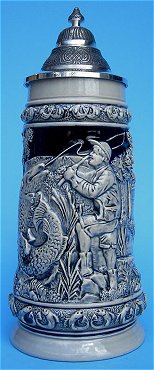 One beverage of choice for the post-fly fishing adventure has been deemed to be a great source of stuff that’ll improve bone health.
Researchers at the nearby University of California, Davis (and now friends of fly fishermen everywhere), have published a study showing that beer contains a large amount of dietary silicon (Si). Thankfully, better-tasting many microbrews seem to be the best source of the mineral.
UCD researchers tested 100 commercial beers for silicon content and organized the results according to beer style and source. According to the study, published in the Journal of the Science of Food and Agriculture, India Pale Ales (IPAs) offer the best bet at boosting bone mineral density (BMD) with a silicon content averaging 41.2 parts per million (ppm). Ales offer an average of 32.8 ppm. Lagers like Budweiser, PBR, Coors, and Molson aren’t worth drinking offer only half as much silicon as IPAs, at a relatively feeble 23.8 ppm. Since boosting BMD protects against osteoporosis, does more beer drinking equal more time on the water in retirement? We’d like to think so.
Note of Warning
It’s pretty obvious that except when bass fishing or brownlining it would be counterproductive to consume beer prior to stumbling around boulders in a favorite stream. Less obvious is that one should leave the beer behind during winter fly fishing. Beer freezes fairly easily. That’s where the whiskey comes in.
[Article: “Silicon in Beer and Brewing.” Troy R. Casey and Charles W. Bamforth. Journal of the Science of Food and Agriculture, Published Online: February 8, 2010 (DOI: 10.1002/JSFA.3884); Print Issue Date: February 2010]
Fly fishing’s strip and dip concept makes it way into fine dining with Heinz’s redesigned ketchup packet.
Heinz’s Ketchup Packet 2.0 offers the option of dipping into the container or stripping off the top edge for the more traditional squeeze.
I’m all for options. After all, I’ve been known to pad my chances of hooking a trout by with a dry/dropper combination. (For the fly fishing challenged that’s both a floating dry fly and, tied to it, a sinking nymph.)
The world’s a better place.

Middle school students everywhere are asking if this new design offers greater accuracy and velocity when stomped in the hallway of their choice.
Yes, each.
I’m a big fan of the thin green line that protects our natural resources so it’s to be expected that an appreciative smile crossed my face when a Google alert linked me to the following from KearneyHub.com:
VALENTINE (Nebraska) — A Nebraskan’s taste for trout has left him up a dry creek for a year and $6,523 poorer.
Timothy Bare, 53, of Valentine was caught possessing 249 trout. The legal possession limit is eight.
A Cherry County judge revoked Bare’s Nebraska fishing and hunting privileges for one year and assessed him $5,875 in damages, $600 in fines and $48 in court costs.
The investigation began Sept. 13 when Valentine police officers contacted Frank Miller, a Nebraska Game and Parks Commission conservation officer, about fish found in a large trash bin. The investigation led to Bare’s home.A search of a freezer in the garage revealed 249 trout, five undersized largemouth bass, two perch, a channel catfish, a bluegill, seven salmon steaks and a package of processed wild game, authorities said.
Bare’s fines included penalties for the undersized bass. He pleaded guilty Monday.
Nebraska fishing regulations generally allow anglers to catch four trout daily. Some state lakes and city ponds across Nebraska have an eight-trout daily bag limit under a special regulation.
Anglers, however, may not possess more than eight trout.
A Nebraska Resident Fishing License: $26.00
The Fine for 249 Trout in Possession: $6,523.00
This Bozo Getting Caught: Priceless
It seems that danger, actually its consequences, have become all too unfamiliar to children who’ve always had parents within whispering distance.
So it’s reassuring that common sense seems to be taking root in some quarters.
From The Mommy Files blog on sfgate.com:
Play with a pocket knife. Break glass. Throw things from a moving car. Drive a nail. Find a beehive. Glue your fingers together with superglue.
Many parents would forbid their kids from doing these activities. They’d keep the superglue locked in a box where little fingers could never find it.
But Gever Tulley thinks these are exactly the sorts of things children should be doing (with adult guidance and supervision, of course). From these “dangerous” experiences, Tulley says, children learn how the world works. They learn about safety and how to assess risk. They gain responsibility.
I grew up in the ’60s and ’70s, before the creation of ‘Kinderkords’ and ‘helicopter parenting.’ (Back when you knew “If I have to stop this car…” or “Wait until your dad gets home…” came with tangible consequences.)
Despite a lack of electrical outlet covers — and a similar lack of common sense to not stick metallic objects in those electrical outlet — I’m still around. I threw rocks and my brother’s still around. (Yeah, I dinged the back of his head pretty good.) Until middle school was too far away, I rode my bike one and a half miles round trip, nearly every day possible. Even today I’m often found swinging a small hook dangerously close to my right ear while precariously perching on a moss-ridden boulder. It’s called fly fishing.
I’ve asked, knowing that it’s tough going out there for any young person, if fear of the unknown, danger or injury (mental or emotional) could a partial contributor to the phenomenon of the boomerang child? Maybe. Consider statistics from a Time magazine article form last fall.
But in the 1990s something dramatic happened, and the needle went way past the red line. From peace and prosperity, there arose fear and anxiety; crime went down, yet parents stopped letting kids out of their sight; the percentage of kids walking or biking to school dropped from 41% in 1969 to 13% in 2001. Death by injury has dropped more than 50% since 1980, yet parents lobbied to take the jungle gyms out of playgrounds, and strollers suddenly needed the warning label “Remove Child Before Folding.” Among 6-to-8-year-olds, free playtime dropped 25% from 1981 to ’97, and homework more than doubled.
I can’t imagine never falling off a jungle gym. I should know. I did it often enough. Heck, back then we even jumped out of swings at the highest point of the swing. On purpose.
Most anyone who’s dealt with children on a semi-regular basis knows that there’s a fine line between protecting and nurturing.
nur-ture (‘nər-chər): 1. training, upbringing; 2. something that nourishes; 3. the sum of the environmental factors influencing the behavior and traits expressed by an organism. (Not a mention of protecting.)
Here’s to hoping my brother and wife are putting into practice the teachings of The Dangerous Book for Boys.
P.S. Mr. Tulley is the author of Fifty Dangerous Things (You Should Let Your Children Do) — a book that also might just end up on my gift-giving list.
The DVFF Crab Feed (& Officer Installation) ’10 is in the history books.
We enjoyed pasta, garlic bread, salad, various beverages (adult and otherwise), the honored entrée and three different cakes for dessert. The crab seemed sweeter this year and, as usual, our dining companions and conversation enjoyable. We told fishing stories, ate too much Cancer magister (The scientific name doesn’t sound as tasty, does it?), and anxiously awaited the raffle results. No catch and release crab eaters in this crowd.
Lulled into a semi-comatose state by full bellies and bottles of Sierra Nevada Pale Ale, the business part of the meeting began. As asked, I’m taking pictures as our outgoing president thanks the various volunteers who manage the many worthwhile club programs and events. I join the rest of the board members and officers as we receive recognition for a year of service and most of us remain at the podium to be introduced as the 2010 contingent.
Then came funny warm feelings of surprise, shock, gratitude, and appreciation.
While like everyone else I enjoy the occasional recognition, much of what I do – again like many other people – I don’t do for recognition. It’s done because it’s something I can do or needs to be done, something I can improve upon, and hopefully something I enjoy.
Back to those feelings…rather than struggle to write prose that doesn’t sound prideful, I’ll let a picture do the talking. A big thank you to the Diablo Valley Fly Fishermen for the recognition!

