It’s been a bad year for water in California. The April opener was one of the best in years thanks to low water levels.
Next week we’ll see for ourselves what Eastern Sierra rivers and lakes look like four months later.
One guide recently referred to Bridgeport Reservoir as a “pond.” Bridgeport is so low that its outflow into the East Walker River has been tainted by algae — algae that usually floats closer to the surface of the reservoir — and now the river is regularly off color and weedier than usual. Lake Sabrina in the Bishop area is so low that the front (manmade) lake no longer exists. The level of Crowley Lake is better than might be expected, but low enough to concentrate fish in the deepest areas.
The route taken by myself and guys from the club will be dictated by the Rim Fire. Hwy 120 remains closed. An expectation that the fire might not be fully contained until Sept. 20 doesn’t lend any clarity as to when it might open.
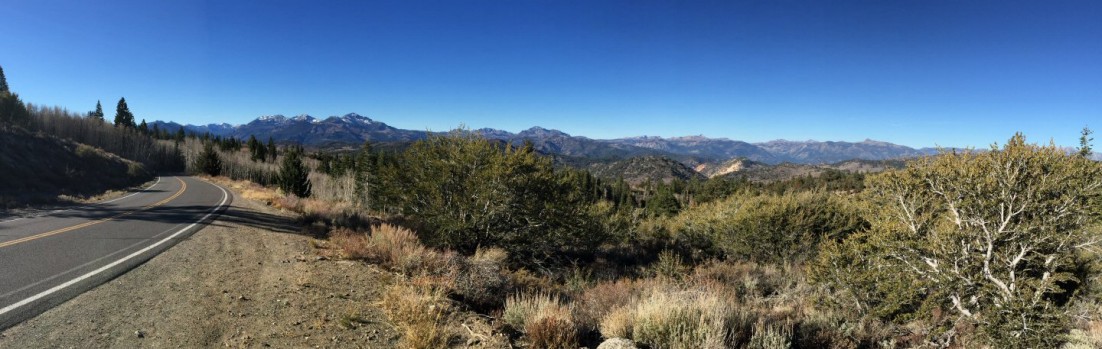
That’s not a big issue for me. I usually head over Sonora Pass via Hwy 108, with stops at the West Walker River, Little Walker River or Molybdenite Creek.
Thankfully, there will be water to fish when we settle in at Tom’s Place Resort (which certainly isn’t the resort you might think it is). The Upper Owens is supposed to be in good shape. The Middle Owens is flowing at an unseasonably high level. I may head to the high country, visiting alpine lakes and streams where I hope the fish are already preparing for a long winter.
However it works out, there will be lies told over beer and good grub.
It was long ago decided that this blog was to be guided by a few simple rules; that it would be family focused and friendly, devoid of rants or advice, and mostly my space to write about the misadventures of my life.
Today, however, things are bit somber.
CalFire Rim Fire Incident Report
California’s fire season is shaping up to be one of historic proportions. The Rim Fire still raging near Yosemite Valley is one of 11 major fires currently burning in our bone-dry state. Those are only “major” fires. During the last few weeks, about 150 fires were sparked by lightning strikes. CalFire figures show that through the middle of August, 4,715 separate fires have burned the state — beating by a wide margin the historical annual average since 2008 of 3,000 fires. The Rim Fire is now the largest fire in the recorded history of the Sierra Nevada and, as of today, the 5th largest wildfire in California’s history.
In this moment, all eyes are understandably on the immediate danger to lives and property. Prayers are being said for the firefighters. This is devastation on an unimaginable scale.
As a fly fisherman, I can’t help but ask questions about the long-term impact on the many streams and rivers now stripped of bankside vegetation, and the fish in their waters. The extent of ecological damage won’t be understood for a long time. The intensity of the blaze — flames reportedly reached 100 to 200 feet as they shot up canyons — left nothing behind. While the Groveland Ranger District of the Stanislaus National Forest, the area predominately affected by the Rim Fire, has gone through cycles of intense wildfires, those fires have burned only small areas. (Decades of fire suppression and logging can be blamed.) Conjecture is that the Rim Fire, however, may have denuded up to a 1,000 acres.
The northern edge of the Rim Fire crossed the Clavey River, one of the longest undammed rivers in the Sierra Nevada, a designated wild and scenic river, and home to native coastal rainbow trout. The fire burned along extended stretches of the South and Middle Fork of the Tuolumne River as well as Cherry Creek, all waters known for fishing, whether stocked or wild fish. Many other but lesser known streams, streams I’ve found wild populations of trout, also fall within the boundaries of the Rim Fire.
The Clavey River
Relatively little is known about the effect of fire on fish populations. An admittedly hasty search of the Internet offers some insight. It’s clear that the effects of fire on fish populations can be complex, with dependency on the length of the event, size of the habitat, the home range of the fish, specialization of spawning habitats and the type of fish. Of course, most studies cite salmonid fishes (trout, salmon, chars, freshwater whitefishes and grayling) as the taxonomic group slowest to recover after a fire.
That said, the effect of fire on native salmonid populations can be highly variable, with extinctions observed in some isolated small headwater streams, but a quick rebound when a species’ home range extends to multiple tributaries within a single watershed.
In affected rivers, streams and lakes, fires can most notably affect water temperature and water chemistry as well as the local invertebrates, amphibians and fish. No longer shaded by trees and brush, water temperature can rise, reducing the solubility of dissolved oxygen. Absorption of ash can increase the water’s pH and impact nutrient levels in aquatic systems. Studies document five- to 60-fold increases in phosphate, nitrate, and ammonium concentrations in streams affected by fires that have swept through larger watersheds. Conditions in these waters returned to normal with a few weeks, but were later impacted by rain flushing additional ash and soil through the watershed.
It’s likely that the smallest streams will have most dramatically impacted by the fire. Though most people dance around the issue, this has been another drought year for California, and water levels are so low that any longish exposure to the fire may have “cooked” many of those small streams.
Nature, however, can be resilient; as long as we don’t get in the way. Anyone who’s visited Mt. St. Helens National Volcanic Monument can attest to that.
A beetle native to the Sierras, which has infrared receptors allowing it to detect fire, could be first on scene to feast on the blackened trees. They, in turn, will draw birds. New growth will sprout, creating forage for small mammals and, eventually, deer and bears.
Sure, deceit is rampant in fly fishing. A common non-answer answer to “What fly you using?” might be, “Well, they’re looking at dries, taking some nymphs too, but streamers might work.” And it’s always delivered with a grin.
That same grin might go along with a tale about the latest and great gear gotten at a great price, but often left unsaid is the “where” of that purchase. While I pondered the gift certificates on my desk and personally wrestled with this question of “where” the last few weeks, it dawned on me that me and my generation maybe the last one with truly equal footing in the pre- and post-Internet world.
My nearest fly shop is about 17 miles away, not too far. It’s a modest affair and on the surface, like many fly shops, seems to have had its struggles over the years. Inventory can still be hit or miss.
The Orvis gift certificates on my desk, however, made the choice between shopping online and visiting a brick-and-mortar shop both a logistical and a financial decision. The closest store, in San Francisco, closed last year. I could shop online, but wading boots were on my list, and just as much as I wouldn’t buy a fly rod without casting it first, I generally don’t buy anything that will be worn without test fitting. I also detest the drawn out process of buying, returning and awaiting shipment of a replacement item.
That’s why the wife and I ended up at the Roseville Orvis store, 80 miles away from home, a weekend ago.
We made a day of it, stopping to walk in Discovery Park along the American River, just above its confluence with the Sacramento River. The weather was great and the river was dotted with boats of anglers searching for the first salmon of the Central Valley season.
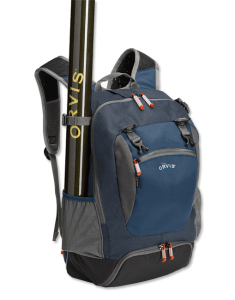
We found the Orvis store after realizing it had moved and, feeling a bit like a dork, I carried my waders and socks on the walk to the store. The waders gave me away as soon as I entered the store, and soon I was set with new rubber-soled wading boots. (My old felt boots are still serviceable, but will be relegated to a back role and waters known to be invasive species free.) A small chest pack was selected and a day pack ordered. More than a few flies made it into the bag.
I enjoyed the friendly banter with Frank – comparisons of fishing experiences, hints and suggestions of waters that deserve a visit – something that’ll never be matched online. And there was no cost to fondle wiggle test rods on my wish list.
Fuel to Get There:
$18.45
Entrance Fee at Discovery Park:
$5.00
Lunch at Smashburger:
$10.52
Plenty of New Fly Fishing Gear:
Don’t Ask
Personal Service from Guy Who Actually Uses the Gear:
Following up its good news/bad news report on Lake Tahoe, the California Office of Environmental Health Hazard Assessment paints a bleaker picture in its August 2013 Indicators of Climate Change in California.
To sum it up, analysis of monitoring data and scientific research from throughout the state outlines the effects of climate change: The spring runoff in the Sierra Nevada has declined over the last century. The period of time when winter temperatures in the Central Valley are cold enough for the development of fruit and nut tree flowers has been decreasing since 1950. River runoff declined during the 20th Century:
River Runoff
Percent Decline
in 20th Century
Sacramento River System*
9%
San Joaquin River System
6%
Kings River
6%
Kern River
8%
Mokelumne River
7%
Trinity River
8%
Truckee River
13%
Carson and Walker rivers
5%
*includes the Sacramento River and major tributaries, the Feather, Yuba and American rivers.
Changes in average temperatures have led to die-offs of native vegetation at the lower range of various species’ elevation range (during the last six decades Sierra Nevada conifers have clearly retreated upslope) and is pushing about half of the small mammals in Yosemite National Park to higher elevations. The annual acreage burned by wildfires in the state increased since 1950, with the three largest fire years occurring during the last 10 years. The acidity in the coastal waters around Monterey Bay is increasing at a rate greater than that in the open ocean near Hawaii. The average annual temperature in mountain lakes, including Lake Tahoe, has risen over the last few decades.
And butterflies are emerging earlier during the spring in the Central Valley.
Yet, there’s no real trend that can be discerned from the data. The rise in the sea level rise along the California coast is bucked the global pattern and has be relatively constant during the last two decades.
The good news is that the clarity of Lake Tahoe improved last year. The bad news is the whys. Precipitation in 2012 was only 71% of average and there was a lack of “deep mixing” during the winter.
While the lack of precipitation means pollutants flowing into the lake, the lake will lose shoreline with any prolonged drought.
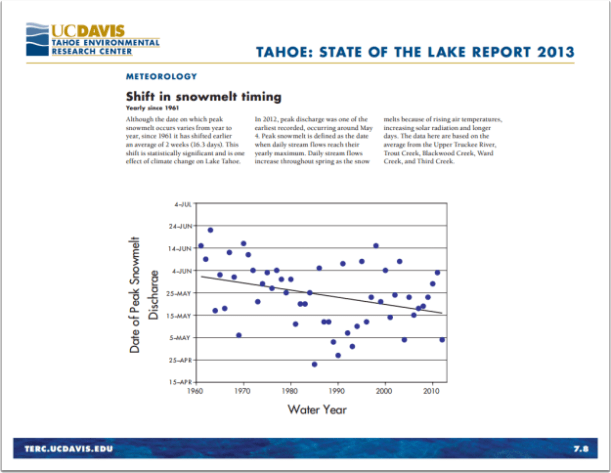
And, maybe you’d fish those rivers, streams and creeks a bit earlier in the year. Snow in the Tahoe Basin is melting nearly a month earlier than it did in 1960.
The lack of deep mixing – cool surface water sinking and forcing nutrients deeper in the lake to the surface, also know by fishermen as “turnover” – suppresses algae growth, which would otherwise cloud the water — but that also means warmer water temperatures. The annual average surface temperature of Lake Tahoe last year was nearly 53 degrees – the highest ever recorded.
“While Lake Tahoe is unique, the forces and processes that shape it are the same as those acting in all natural ecosystems. As such, Lake Tahoe is an analog for other systems both in the western U.S. and worldwide.”
You can read the relatively short report update here.
“If there is one thing the history of evolution has taught us it’s that life will not be contained. Life breaks free, it expands to new territories and crashes through barriers, painfully, maybe even dangerously, but, uh… well, there it is.”
— Dr. Ian Malcolm, Jurassic Park
Sometimes life just throws a curveball. Two weeks ago it felt like every curveball was followed by another.
So, I abandoned the original plans to sandwich a cabin visit with the sister and family between two full days of fishing and just go with the flow.
That meant the two-and-a-half hour drive to Twain Harte stretched out to about four, interrupted by a longer than usual stop at Bass Pro.
It also took longer than usual to coax that first trout to take a fly in a nearby stream.
Back at the cabin, I whiled away some time reading and generally taking it easy.
The sister, her husband and two sons taller than most everyone pulled in about noon Friday. Soon enough we were beating the heat at Twain Harte Lake. A visit to the cabin is a mixed blessing during hot weather; the lake offers respite, complete with an old-school snack shack with burgers, fries, milkshakes and snow cones. The cabin, however, and despite a lack of insulation, seems to retain all the heat of the day well into the evening.
The nephews goaded their parents into the usual swim to a platform near the center of the lake, then a swim to “The Rock.” Then back. I admired their energy from shore, dipping my feet in the water and reading. The afternoon was completed with a visit to the snack shack.
Normally the only overexertion on my vacations entails scrambling over boulders and under downed trees in search of trouts that sometimes aren’t there. Saturday I opted for an easy, sure thing, fishing a well-stocked creek that’s often pounded by the put-and-take crowd. This day I’d be alone for well into four hours, targeting specific fish and trying to coax dry-fly takes.
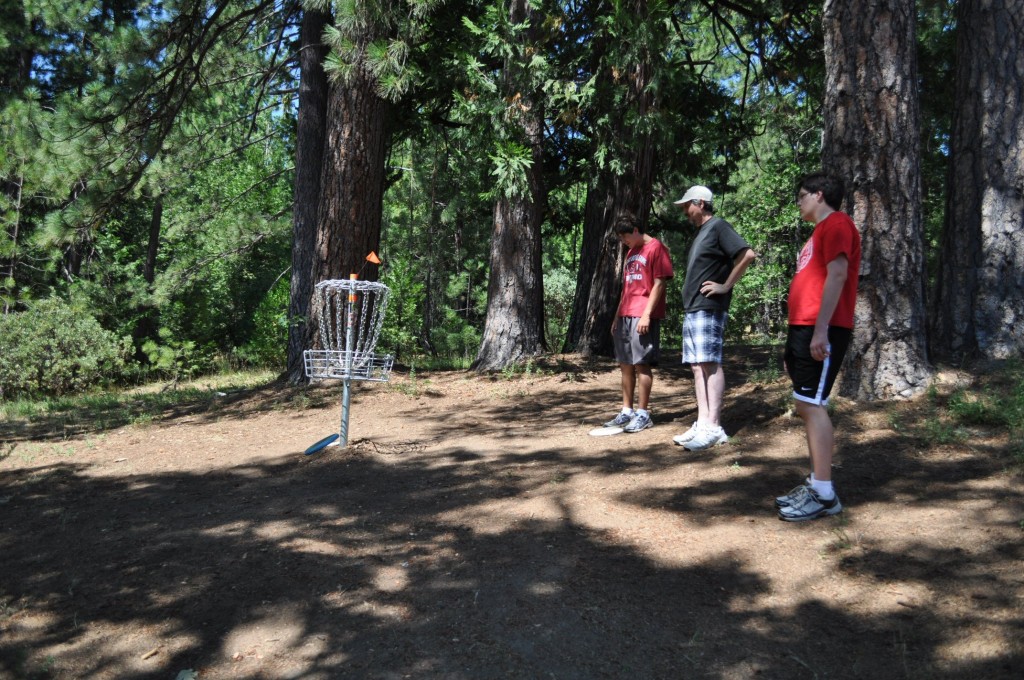
I found my cabin mates finishing up the breakfast clean up when I returned about mid-morning. They planned to hit the local disc golf course, and I figured I’d lug my camera along. I’ve come to realize that I don’t have a lot of hero shots of myself during fishing, hiking, motorcycling, etc., so I’m trying to step in to take a few photos for folks when I can.
The boys pondering Luci’s shot. Missed by that much.
This disc golf course is purely a volunteer effort that gets some financial support from the local community, and it’s nice to see younger folks join in the creation of something positive. The course winds its way through a now fallow traditional golf course, over an irrigation ditch and under a flume.
My nephew Nicholas plays Ultimate Frisbee and might be expected to be the odds-on favorite, and while Tom, his father, will deny his intense completive streak, it quickly became clear that the rest of us were there to, pretty much, watch a one-on-one match. On the fourth basket (hole) another player gave us another disc, allowing me to participate. Like the amateur I am, there was a lot of wasted effort spent on power when form was more important. I later learned that my arm isn’t as young as it used to be. There was no use keeping track of my score; I was always one stroke behind Tom or Nick. And where either of them could curve a Frisbee around an obstacle, my choice was limited to going straight through if I could or give it a very wide berth. The competition would end with Tom winning by a stroke. I believe Tom also won our game of mini golf that evening.
The afternoon was again spent on the beach, with swimming, conversation, tossing of the Frisbee and a return to the snack shack.
Proving that there’s not competiveness in their family, Tom and Nick returned to the disc golf course the morning before our departure for a grudge friendly rematch. Nick recovered some dignity with a win.
This short trip was a welcome, unscripted getaway.
Nathin launching one from the first tee.
Nathan letting one loose behind Lyons Canal.
Tom scoring on the first hole, aka basket.
The boys pondering Luci’s shot. Missed by that much.
Luci showing that form honed after years of playing disc golf. That or ballet.
Tom working out of the ‘rough.”
Nick in the rough. (It looks worse than it really was.)
This should not have been so easy. Having a love/hate relationship with the wizard behind the curtain that makes this blog run, I was totally expecting to embark on an adventure without end, one marked by wrong turns, erroneous Internet advice and little support when I finally decided to restart this blog with a clean slate. Instead, it took less than four hours last weekend to get things back up and running. Well, most of it.
To provide some background, during the last few months I’ve become better acquainted with my host’s support staff than I ever wanted to be. Invariably, each email began with some mention of “excessive usage.” First it was brute-force attacks, then a wonky plugin.
Next came fear. Fear that the next post would spike my usage, earning a prolonged shut down of my site. Fear that I’d lose every post and image uploaded since 1997.
Then I got over myself. The wife had been patiently listening to my grunts, ramblings and cursing for much too long. It was time to do something. Anything.
Most anyone will first search Google, through which you will find contradictory advice on how to handle restarting a self-hosted WordPress blog from zero. After too much time spent looking for the right advice, I just dove in, accepting that it’d either be a surprising success or fantastic failure. I backed up the data, wiped the directory clean, reinstalled WordPress with a new theme, and imported the previously backed up data.
And here we are, up and running. Mostly.
All the words are back. The photos, not so much. (I blame much of the increase in CPU and memory usage on a gallery plugin previously employed, a plugin that became bloated when commercialized.)
The biggest benefit is that everything under the hood is current and up to date. It’ll be a few weeks before all of the photos are restored, but I figure that few folks are interested in my history.
After all, blogs are generally about moving forward, one new post at a time, aren’t they?


 We found the Orvis store after realizing it had moved and, feeling a bit like a dork, I carried my waders and socks on the walk to the store. The waders gave me away as soon as I entered the store, and soon I was set with new rubber-soled wading boots. (My old felt boots are still serviceable, but will be relegated to a back role and waters known to be invasive species free.) A small chest pack was selected and a day pack ordered. More than a few flies made it into the bag.


 fishing for words