I held it off as best I could, tried to put some of my favorite waters out of my mind. In the end it was hope, more than gasoline, that propelled me over Sonora Pass a couple of weeks ago.
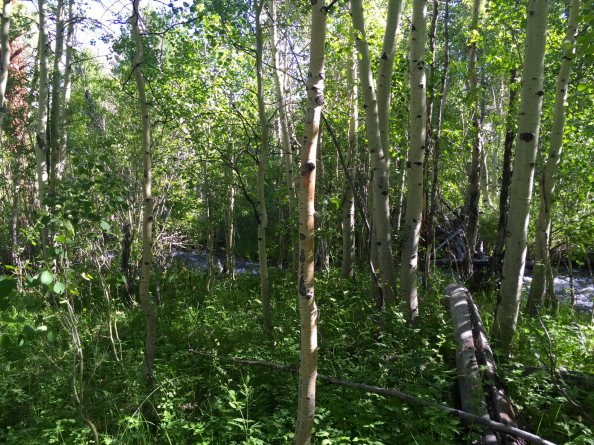
Over the years I’ve spent many days walking the banks of babbling creeks in the Eastern Sierras. The first to give up wild trout – Molybdenite Creek and Little Walker River – top my list. This is where I landed by first sizable wild rainbow trout.
Moon Over the Little Walker River
I can’t think of these places and others like them without an intensifying need to return. These are familiar places become less so if not visited every year. Often it’s the memory that fades. Sometimes nature exerts its will on the landscape.
It was clear that this would be the first year in a while that runoff from more abundant – but still not plentiful – snowpack would make many rivers and streams unfishable. But a limited amount of vacation time, and hope, were enough of an excuse to make the trip.
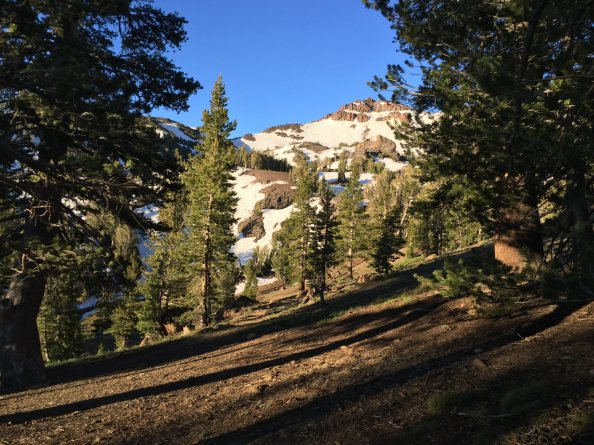
Sonora Pass with more snow than last year. Still not enough.
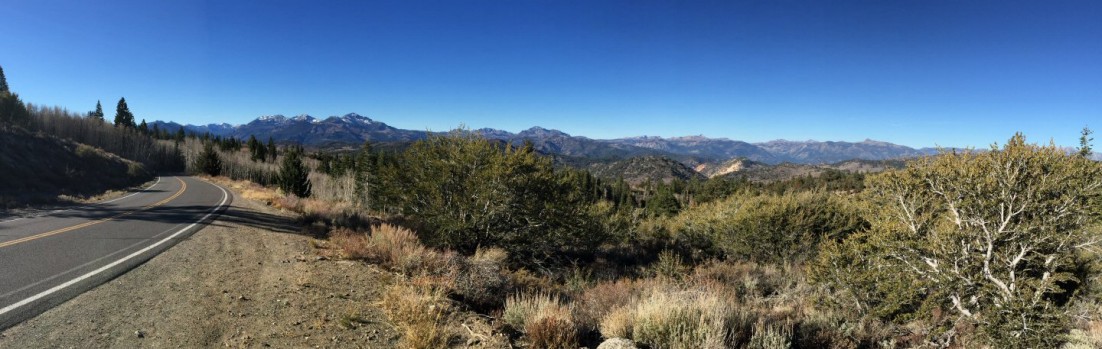
I came in from the west across Sonora Pass, early enough that morning to be alone for the 20 miles between Kennedy Meadows and the Pickel Meadow Wildlife Area. It’s a serpentine road that demands attention, a ribbon of relatively new asphalt that twists and turns, rising through stands of pines to wind-scoured fields of granite before dropping into the starkness of the Eastern Sierra.
Six miles beyond the Sonora Pass summit but before my descent into Pickel Meadows, Hanging Valley Ridge comes into view. The morning sun is still low and the ridge still casts a shadow over much of the meadow. From my vista point, distance masked any audible anger, but the torrent of water working itself into a lather over Leavitt Falls offered a clue as to the difficulty to come.
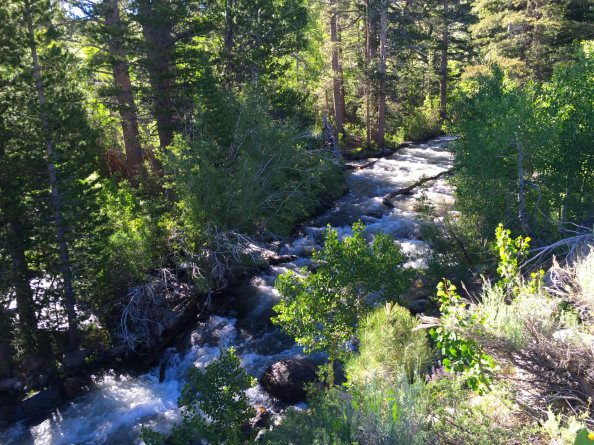
The first glimpse of the West Walker River was both encouraging and discouraging. It was good to see high waters scouring the river bed and suggesting good summer fishing to come. It also hinted that there’d be little fishing and likely no catching in any of the Walker watershed’s moving waters.
See the path, right there?
This day there would be more hiking, exploring and simply being in the mountains. Contrary to the anger on display as water crashes against rocks, the sound is soothing. Delicate flowers sway in winds that predictably funnel through most mountain canyons.
It was a day without fishing, but not wasted.
Sonora Pass with more snow than last year. Still not enough.
Leavitt Falls
Looking out to the West Walker River from the Leavitt Falls overlook.
It was in the shade of a concrete canyon that we reminisced over breakfast about those last few days in San Diego. It was a visit without an itinerary but nonetheless full. Balboa Park. A working lunch and dinner. Coronado Island.
The trip last week was free of monetary worries; part of a package to celebrate my having worked 30 years with the company. Whether it was a perk or disruption, the rest of my co-workers would join us for a day at the office and the celebration that evening.
Karen and I were on the road early that Wednesday, weaving through the normal early-morning traffic. Highways 680, 24, 980 and 880 got us to Oakland International Airport in good time. My past airport experiences had been marked by apprehension and anxiety. For me, arriving 15 minutes early equates to being on time; on time is late. Airports bring too many unpredictable variables into play. I didn’t like it and constantly imagined missing a parking lot shuttle or flight.
We arrived at the airport more than two hours before our flight, allowing time for a leisurely breakfast. It made me feel like a real traveler. I was relaxed, in fact.
And my wife had a plan. Her mother was a stewardess back when that job title wasn’t outdated, but the knowledge she imparted still applies today. My wife would take a window seat, and I’d take the aisle seat. As long as the flight wasn’t completely full, this might, deviously, deter anyone from taking the seat between us. It worked. No more than 70% of the seats were occupied, allowing us to enjoy some elbow room.
The flight was comfortable. The first landing attempt waved off, the second attempt turbulent but successful. The weather was clear and San Diego almost seemed to sparkle.
I was originally under the impression that my boss, the company owner, would be our chauffer. But I was handed the keys. He’d be our navigator. Along the way we were regaled with tales of his family’s history in San Diego. The first relative arrived in the late 1800s. During his youth, he wasn’t allowed south of Broadway. Our hotel, Hotel Palomar San Diego, was just north of the old Woolworths, where he never had a sandwich.
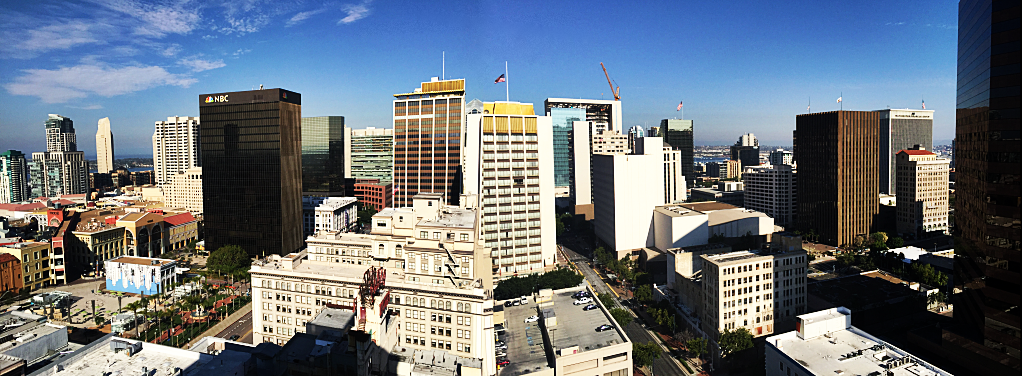
What would be the view from our room on the 18th floor of the Palomar.
San Diego is one of the more puzzling cities I’ve visited. Its waterfront is wide open, as most are. But a few blocks in, it’s a mashup of old and new, with older buildings’ blank walls facing a street for two or three blocks. Often, only a single door or parking garage entrance hints that there is something behind the featureless edifice. While development of the city’s Gaslamp Quarter does seem offer a mix of people living, working, shopping and dining, most areas don’t.
This isn’t helped by the many, multi-lane one-way streets. I read somewhere that one-way streets encourage greater car speeds and discourage pedestrian and bike traffic. This seemed to be the case in the one-thousand block of Fifth Avenue, our home base for three days.
If our stay is any indication, San Diego has some of the best weather anywhere in the country. After our quick tour and dropping the boss off at the office (farther up Fifth Avenue), we ended up in Balboa Park. We took a quick tour of an anemic display of California native plants, the headed toward the Spreckels Organ, lucky enough to quickly find a parking stall.
More people than you’d expect for a Wednesday walked up and down the sidewalks. Balboa Park’s landscaping isn’t easily described. From any single location one might see five or more different species of trees. Lawns lush by California standards give way to xeriscaping, planted with succulents from around the world. There was a remote familiarity to it. This is what I grew up with in the San Gabriel Valley.
Karen had suggested The Prado for lunch. (I silently mulled over feelings that any restaurant with a name that starts with “The” could quickly empty my wallet.) Located in the House of Hospitality, it’s at the center of Balboa Park and was built for the 1915-16 Panama-California Exposition. The building echoes the Spanish Colonial Revival style apparent throughout the park, though there is an argument that, being an architectural stylistic movement that arose in the United States during the early 20th century, it’s wrong to connect it with Panama.
We were seated immediately and our server was almost doting. Splitting the entrée, as we often do, limits the choices bit – it’s well known that Karen doesn’t eat cheese (I do) – but we agreed upon steak tacos.
Often it’s the entirety of a meal that makes it better than good and that was the case with this meal. The rice and beans were better than most, the steak cooked well but still tender, and the tortillas were more flavorful than their thinness would suggest.
It was a delicious start to a trip that would end up offering much good food, fantastic weather and a lesson in slowing down.
Having been indoctrinated into fly fishing at an advanced age, there’s not enough time left for me to become that ‘old timer’ who can dispense advice between cigars and streamside naps. This is fine with me; I don’t like cigars and naps only make me grumpy.
What I don’t like is this getting older business. That I even know about and have a personal acquaintance with patellar enthesopathy is unsettling. It’s bad enough that there is no quick remedy for this ‘syndrome.’ It comes and goes, sometimes interfering with my regimen of walking eight to ten thousand steps every day. The idea that it could prevent wading into my favorite streams is unacceptable, though I may not have a say in the matter.
It’s annoying more than anything, but there’s hope that I’ll soon stand in those streams in which the cool, therapeutic water was snow just days before. The fish may not miss me, but it’ll be good for my body and soul to remind them I’m still around.
Fly fishing amplifies one’s observations of the aging process. Any difficulty tying knots can be dismissed to poor lighting. But when it begins to seem that the eyes on hooks are smaller than they were last year, it’s time for bifocals. Then the noises start. While silence is golden when wading to avoid signaling your presence to the fish, each step now elicits some sort of involuntary creak. Slowly, grunts become a necessary component in bending over to tie boot laces. The short hikes to secret spots seem longer. Banks become steeper. Even with age, all is not lost when it comes to fly fishing. Wading in cool trout waters is excellent therapy for sore knees. Aches and pains fade away with one’s focus on the flies, even if that means watching an indicator (aka bobber). If it ever comes down to needing a more sedentary mode of fly fishing, I’m lucky enough to enjoy stillwater nymphing and have suitable waters not too far away.
I know a few guys who have quite a few years on me and still thoroughly enjoy fly fishing. I’ve been on three- and four-day trips with some of them. They fish every day: perhaps an hour in the morning and another hour or two in the evening. In between they tell stories, slap together a sandwich, drink beer, chew on a cigar and maybe take a nap.
These guys make becoming an older fly fisher seem not so bad.
Years ago in cities and towns far and wide Dad had a knack for finding a factory tour, usually free and with goodies. Often edible goodies. It was an inexpensive activity to keep us kids busy, though in the years after my siblings and I left home, it was clear that he himself enjoyed these tours. Nearly every vacation since, dad has dragged mom on tours of factories across the country.
Growing up we visited the Martinelli’s* operation in Watsonville, Calif.; the Blue Diamond Growers* plant in Sacramento; the Graber Olives packing operation in Ontario, Calif.; and the Boeing factory in Everett, Wash., to list just a few. Dad’s predilection became a tradition with me. A few of the tours my kids experienced included the Jelly Belly, Marin French Cheese, Anheuser-Busch, Tillamook and Liberty Orchards (Aplets and Cotlets) factories as well as local glass blowing studios. Now empty nesters, Karen and I have been on more than a few tours ourselves, including a recent visit to the Franz Bakery in Portland, Ore., as well as breweries and distilleries, like local favorite Anchor Brewing and the more distant Sierra Nevada Brewing. I still want to visit the Its-It factory and the Golden Gate Fortune Cookie and Boudin bakeries (San Francisco sourdough!).
It’s that penchant for factory tours that had us on nearby Mare Island during a bright and cool Saturday last February. During the years since naval operations ceased at Mare Island and its decommissioning on April 1, 1996, the city of Vallejo has tried to lure new business to the multitude of buildings on the island. Progress, albeit slow, has been made. Last year there were 105 businesses in operation on Mare Island, filling more than 3.6 million square feet of space and employing 2,400 people.
These businesses, popping up between decaying warehouses and office buildings, include a manufacturer of saw chain maintenance tools, a diving and salvage company, a label design and packaging service, a drawer maker, a dry dock and ship repair facility and a marine contractor. More recent additions include Mare Island Brewery and winemaker Vino Godfather. Other small business and federal agencies occupy many buildings. Mare Island was also home to BattleBots for its sixth season.
The Blu Homes Factory
We were on the island to visit of the more prominent consumer businesses, Blu Homes. The underlying concept behind Blu Homes is to build homes in half the time of the traditional on-site method, relying on modular design while incorporating technology, energy efficiency and eco-friendly materials. Various Blu Homes models have been sent (via big rig) to over 30 states. The popularity of these homes has outstripped manufacturing capacity, forcing Blu Homes to restrict production during the next 18 months to California clients.
The factory is tucked into a former abandoned machine shop. Our tour followed the amazingly compact production line, passing raw materials area and assembly jigs to the final buildout area, where cabinets, appliances and sinks are installed – all high-quality with options for upgrades. Using steel-frame construction, with walls and floors attached by hinges, each module can be then folded up for shipment. After slapping on some industrial shrink wrap, a module is sent to the home site, set in place by crane and unfolded by the on-site crew.
A basic home takes less than a day to assemble on site but it takes three to six weeks of work before it can be occupied. Various floor plans are created by fitting modules together, with models priced from $150,000 on up.
The Blu Homes model home on Mare Island, quite nice.
Even though manufactured away from the home site, these are not mobile homes. The only time they are really mobile is during delivery. We were amazed at the quality of construction and the materials that go into these homes. Karen and I were like kids in a candy store filled with delights we couldn’t afford.
Since our tour I’ve been searching for a suitable site. I’d opt for the Cabana model; a comfortable tiny home just big enough to kick back after fishing.
The afternoon that late January Saturday was devoted to the Walt Disney story and pizza. We wended our way through traffic, stoplights and pedestrians, the three-and-a-half-mile drive from Corona Heights to The Walt Disney Family Museum dragging out to 30 minutes. Entered the shelter of the Presidio, former Army post but now a haven of history and nature and part of the Golden Gate National Recreation Area. Found a parking spot nearly in front of the museum.
The stroll from the car to the museum offered views of the parade grounds and, because of the slight incline on this stretch of Montgomery Street, a perfect view past the barracks, the main Post Office, across Chrissy Field March and out to the Bay. Colors seemed more vivid thanks to the rain-cleansed sky. The grass was greener. The mortar between the red bricks of the buildings made more visible. The waves of San Francisco Bay glimmered atop that deep, dark blue only seen in brilliant sunlight.
The Walt Disney Family Museum occupies three historic buildings facing the Presidio parade grounds, filling 42,000 square feet. The Walt Disney Family Museum isn’t formally associated with The Walt Disney Company, and less than half of the exhibits are devoted to the entertainment empire built by Disney. It opened Oct. 1, 2009, as a non-profit established by Disney’s heirs to share the heritage and life experiences that molded Walt Disney, his ideas and ideals. Like any Disney entertainment, whether a film or ride, it tells a story.
Extensive galleries cover his early years in a fashion that is almost too leisurely. Extensive galleries cover his early years on the family farm in Marceline, Mo., and his time in the Midwest and France. The lobby alone contains 248 awards – some obscure – that Disney won during his career. While a gentleness pervades the museum, the detailed backstory may bring clarity to even the most cynical view of the man.
A Multiplane Camera, which simultaneously shoots several levels of cells and backgrounds to give depth to Disney films.
Unfortunately, without knowing the scope of the museum, we hadn’t set aside time enough. I was only halfway through the exhibits, about where Disneyland was becoming a reality, when it was time to leave.
I’d like to have stayed, but we were leaving for pizza. Tony’s Pizza Napoletana to be precise; owned by a guy who’s an 11-time World Pizza Champion. A guy who believes in having the right tool for the job, his restaurant has seven different ovens. Each is matched to a particular style of pizza: a wood-burning oven heating up to 900°F, a coal oven reaching a scorching 1000°F, and various gas and electric ovens that start at 520°F. The right-tool-for-the-job mantra extends to the use of the proper ingredients: imported 00-flour for Neapolitan crusts, Pendleton flour for American-style pies, different cheeses and tomato sauces for each of the dozen discrete styles of pizza offered.
A wait is inevitable at Tony’s; no reservations are accepted and there’s no guarantee that all menu items will be available all day. Instead of just cooling our heels, we walked around San Francisco’s North Beach neighborhood, with a stop at Mara’s Italian Pastry, a hole in the wall filled with sugary pleasures.
Finally seated at Tony’s Pizza Napoletana, nearly elbow to elbow with other guests, we unfolded a menu with three pages of pizza and another of pasta and Italian specialties. Two words stood out: Coal Fired. Below it was a pizza that sounded too good to pass up.
The New Yorker, touted as a gold medal winner at the 2013 International Pizza Challenge in Las Vegas. When it arrived at the table I could feel the heat still rising from it. Visually, no single topping – mozzarella, hand crushed tomato sauce, natural casing pepperoni, sliced Italian fennel sausage, Calabrese sausage, ricotta, chopped garlic, and oregano – overpowers the other. We let it cool before picking up a thin, droopy slice.
The almost fluffy crust gives way to a sweet red sauce and seasoning, generous pieces of sausage and globs of ricotta. The intense heat from the coal gave the crust a little char, offering an occasional bitterness. The pepperoni and sausages are counterbalanced by the sweetness and creaminess of the ricotta. It’s astounding and forces me to live in that moment, to savor every bite. It’s clear why owner Tony Gemignani was the first American and non-Neopolitan to win Best Pizza Margherita at the World Pizza Cup in Naples and so many other awards.
Mind and body satisfied, we ended our day. But while writing this I’m trying to figure out when we can get back, if only to try a different pizza.
Our days were measured by trout caught, bears seen and miles hiked; nights by stars and the embers of a campfire. During those summers we’d rarely see a familiar face, but the place seemed unchanging. We grew a lot during those short visits, climbing granite domes, hiking trails commonly rising 1,000 feet in less than five miles, floating in a river that only a few miles earlier was born of snowmelt.
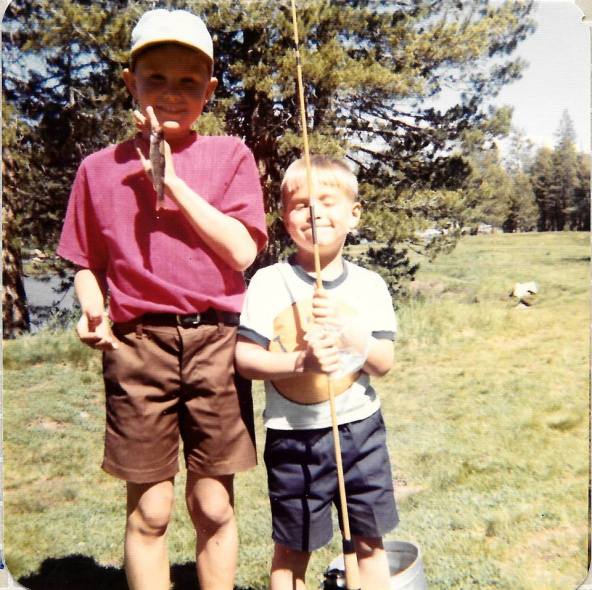
I was reminded that Tuolumne Meadows was our vacation “home” last week when I posted a photo of my brother and me with a trophy high-country trout, back when our fishing was more about self-sufficiency and every fish ended up in a pan surrounded by bacon. Mornings my brother, sister and I would hike to Soda Springs to capture the naturally carbonated water – and bits of minerals I’m sure – our mother would gently blend with pancake mix to make some of the puffiest pancakes in the world.
Our visits to Tuolumne Meadows were more adventure than vacation. Stories of our exploits of those summers come up frequently: The poor decision to slide down the granite face of Lembert Dome as the sun set. The bear that followed us back to camp after a long day hike. My sister’s discovery that fish were living beings while ironically still fishing but refusing to eat our catch. On tougher hikes, mom’s constant encouragement to discover what might be around the next bend.
It wouldn’t be out of place to say that Tuolumne Meadows, a less visited part of Yosemite National Park, helped form the person I am today. I’ve since returned to Tuolumne Meadows, one time fishing there with my sons, another time hiking up Lembert Dome with my brother and one son. Nature seems to ignore us humans; the changes over the last three decades are entirely ours.
I’ve been lucky enough to have visited Death Valley, Sequoia & Kings Canyon, Lassen, Redwood and Mt. St. Helen national parks. Many national monuments, recreation areas and historic sites as well: Alcatraz Island, John Muir National Historic Site, Point Reyes National Seashore, Muir Woods National Monument, Cabrillo National Monument, Fort Point National Historic Site and Golden Gate Recreation Area.
The national park system is America’s Best Idea. Next week is National Park Week. Every national park will offer free admission from April 16th through the 24th. If you can, get to one and #FindYourPark.
“Thousands of tired, nerve-shaken, over-civilized people are beginning to find out that going to the mountains is going home; that wildness is a necessity”
― John Muir, Our National Parks
The real streets of San Francisco are those devoid of tourists or commuters slogging through the city. They have names not widely known. Ord, Saturn, Douglass and Levant.
These are the streets laid down after the California Gold Rush of 1848-1855. Now lined by multi-million dollar homes, before the mid-1800s even downtown streets became so muddy that horses couldn’t be ridden from one end of the city to the other, much less up a hill. Often these hills were covered with the ramshackle homes of low-income workers. But after the particularly difficult winter of 1849-1850, a concerted effort began to grade streets and build planking, and many of the homes lining these narrow ribbons of asphalt were built in the 1890s.
Irish engineer Jasper O’Farrell was the stepfather of San Francisco’s street layout. He was given the task of implementing the grid designed by Swiss surveyor Jean-Jacques Vioget, who had proposed a simple north-south and east-west design. O’Farrell suggested terracing the hillside to allow for curved roads, but property owners demanded that existing property lines remain intact.
Some hills were so steep that building a road was unfeasible; hence stairways. It’s estimated that 300 stairways pepper the city, connecting streets and offering shortcuts. There are the better known stairways – the Filbert and Greenwich Street staircases leading to Coit Tower, the Lyon Street stairs stretching from Pacific Heights to the Palace of Fine Arts or the 16th Avenue Tiled Steps.
We were looking for Saturn Street Steps, a stairway normally used by locals and off the beaten track. Tucked next to a four-story hillside home is a small sign welcoming one to the stairway, with admonishments that decades before would have been common courtesy.
It was still chilly. Sunlight, only now beginning to seep through low-hanging clouds, filtered through tree branches and leaves. Dew coated the railings that separate the concrete stairways from lush plantings. The personality and preferences of the locals who maintain the green space become apparent upon closer inspection. Cacti are mixed among butterfly bushes. Redwoods shadow succulents. A petite multi-tier pagoda is hidden among palms.
Looking down on the Saturn Street Steps.
The three flights of the Saturn Street Steps connect Saturn and Ord streets. A landing between each flight invites lingering. A dirt path offers an alternative path, leading to a rustic and uneven stairway constructed of four-by-fours. Trees, bushes, groundcover and flowers abound, some plants are so green it hurts the eyes. I’ve spent plenty of time in wild places but have never seen such a defiant explosion of plant life within an overwhelming urban setting.
I took to the stairs like a kid, pausing to wonder at plants I didn’t recognize. Karen was ahead of me, appeared to appreciate not only that we found this place but that it was more wonderful than imagined. A few locals passed by, one with a dog out for a walk. This was a regular jaunt for the dog; he stopped to lap up water from dog bowls placed just off the dirt path.
The Saturn Street Steps dumped us out on Ord Street, itself a short quarter mile road off the high end of Market Street. Gentrification has hit Ord Street. Scattered among Victorian homes built in the early 1900s are others that went up in the 1930s, showing an early art-deco influence. Many appear recently refreshed; we saw at least one that’s in the early stages of a total restoration, including excavation under the foundation for a garage. It’s a sleepy street, all the more quiet this early morning.
The Vulcan Steps are just half a block down Ord Street from the Saturn Street Stairs. While the openness of the Saturn Street Stairs offers a chance to meander and inspire lingering, the Vulcan Steps are bordered by an urban forest on one side, by bungalows and cottages with well-tended gardens and patios on the other. Flowers and leaves sparkled with droplets of recent rain. They fall when I brush against a plant.
Though not long, Vulcan Steps are secluded, secreted away from the usual neighborhood noise. The narrow stairs climb the steep hillside, squeezed between picket fences and mature trees before ending at Levant Street. Apparently nearly all of the homes here are accessible only by foot. The fact that all supplies must be carried in harken back to the pioneer spirit that built this city. The lushness of the plant life is surprising, trees, bushes, succulents and flowers sharing space, soil and sun. Resident caretakers have clearly been busy taming wild branches, tilling dirt.
We took our time climbing Vulcan Steps, then reversed course. I stopped to look, take photos, growing more aware of our surroundings with each close up.
I was more in the moment this day, maybe Karen was too. We both breathed in everything around us; the plants, the houses, the history. This awareness slowly spread, stretching to the city beyond and below Saturn Street Steps. That’s how we caught a glimpse of another set of stairs, just to the north.
What we had seen were the Corona Heights Park trails. It’s not much of a park and more of an ugly peak of dirt and rocks. We picked our way around puddles and up a hillside trail that wound the south side and ended up on the eastern slope. The recently washed air was clear. The eastern horizon, across the bay, was starkly outlined against wisps of clouds. Sutro Tower stood silently behind us. The Transamerica Pyramid rises out of downtown, only its shape distinct. It is now overshadowed by newer and taller high-rises.
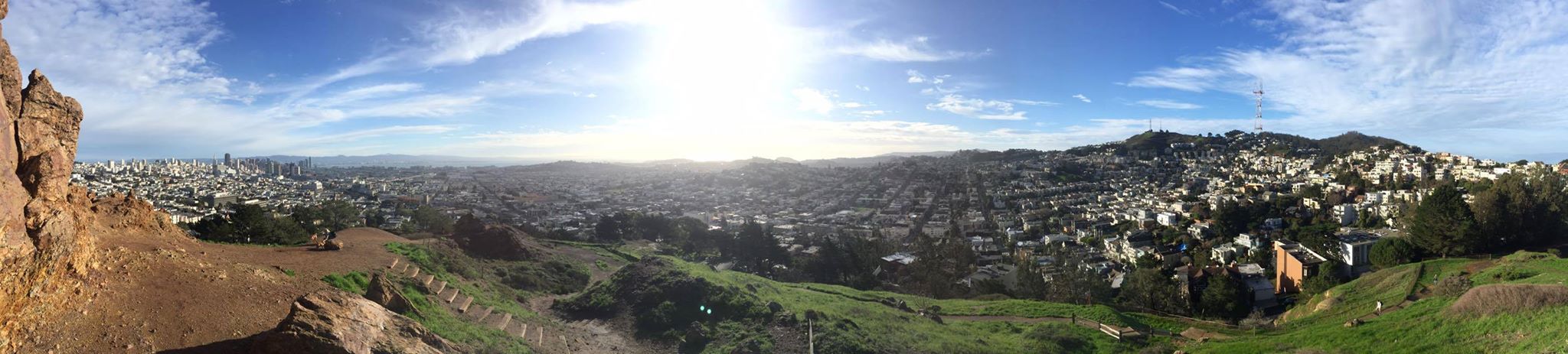
But this is a park in the city. A hipster sits on a rock, the highest point, talking on his cell phone louder than necessary. Car noises fade in and out. But Corona Heights Park is about the nearly 360-degree view. It stretches from the Presido to the Marina District and Russian Hill, across downtown and Nob Hill, and south to the Mission and Noe Valley.
The view from Corona Heights Park.
But I’m glad we’re here. Glad for the reminder that nature can be found everywhere, glad for this small piece of where we live.
At the start of the New Year, we resurrected plans to act like tourists when we could in any place that wasn’t more than about an hour’s drive away. With long-accumulated lists of points of interest and plenty of restaurants bookmarked in Yelp, it would be easy to head out with only a moment’s notice. From our home, depending on the direction, a one-hour drive can put us in San Francisco, Sacramento, the Sacramento River Delta, the wine country of Napa and Sonoma counties, stands of redwoods or on miles of coastline. This day, Karen and I found ourselves high over the city by the bay soaking in a 215-degree view stretching from the Presido to Diamond Heights.
Cooler weather is a certainty on any January Saturday in San Francisco, a reminder of the bay’s power over local weather. But winters in Northern California offer many sunny days in between storms, enough to remind one that spring and summer will return. Winter daytime highs can be in the 50-65°F range. Lower temperatures are relatively rare. The weather this winter was supposed to be impacted by the climate phenomena known as El Niño. While this implies that California will receive more rainfall, it’s generally not until February or March that we see big storms. That’s why, in January, a forecast of proper sunshine prompted a day trip to visit two of the “hidden” stairways in San Francisco.
The Destination
Making the most of any trip, whether long or short, always revolves around food we can’t get near home. This means no chain restaurants and usually an establishment that’s unique or notable. This morning it meant following cops to doughnuts. Literally.
As the biggest fan of bacon I know, Karen was keen on visiting Dynamo Donut+Coffee to sample the Maple Glazed Bacon Apple doughnut. Hearing that lines form early, we arrived before sunup. In the Mission District along the 2700 block of 24th Street, Dynamo Donut+Coffee sits in an urban canyon of buildings. Sunlight’s different here, and dawn is slow in coming.
Arriving in relative darkness and in need of cash, we missed the Dynamo sign, for obvious reasons explained below. We pulled into the first parking spot that appeared, a rarity in any city and more so in San Francisco. (Only downtown San Mateo seems to be more lacking in on-street parking.) We parked, made a quick run to an ATM and walked in what we thought was the right direction. I joked that we should follow the SFPD Ford Explorer driving parallel to us. Then we saw it.
Apparently, we’d arrived too early. The Dynamo Donut staff was only starting to open up for business when we walked up. Opening for business means pushing open a panel of wood that closes off a small coffee counter facing the sidwalk. We didn’t see the shop because, when closed, there’s nothing to see. Only on the awning are the words “Dynamo Donut + Coffee” in a stylized font too small and too difficult to read when driving by in the dark. The lack of a neon sign is strong evidence that this is a neighborhood joint – the kind of place we like.
Calling the Dynamo shop “minimalist” would be misuse of the word. The store is a simple affair, dominated by a midcentury color scheme of green and yellow, with exposed woods and small tables. There’s a hipster vibe just under the surface and an open kitchen on display. When first approached, it appears to be only a take-out counter stuck in a random wall. Dynamo is not selling atmosphere. It does, however, offer an edible adventure that starts with an unassuming doughnut that is flavored, dipped and coated with sweet or savory ingredients and sometimes both.
The Doughnut of Her Dreams
A conversation with the young guy at the counter reveals that we’ve arrived well before the line forms and that there is seating inside behind unassuming canvas drapes. With excuses – didn’t know if we’d be back, we’d be climbing multiple stairways that day – we ordered four doughnuts: Chocolate Rose, I’m Not a Gluten Chocolate with Raspberry Black Pepper Glaze, Maple Glazed Bacon Apple and Spiced Chocolate. Drinks were fresh-squeezed orange juice for me and jasmine tea for Karen.
The choice of the Chocolate Rose doughnut was in the spirit of adventure; the Spiced Chocolate doughnut just because. Both were good, but we agreed that if we returned to Dynamo, we wouldn’t order them again.
The “I’m Not a Gluten Chocolate with Raspberry Black Pepper Glaze” is a shining example of deftly balancing incongruity. By now we’ve all become blasé about chocolate and chili, so chocolate and pepper isn’t too much of a stretch. Throw in raspberry and wheat-free dough and it becomes interesting. Amazing isn’t too strong a word for this torus of gooey goodness.
We try to eat better nowadays but without outright deprivation. Yes, food is fuel most of the time. But now and then food is part of the experience, the adventure and the reason. Savoring every bite, tranquility overruns my mind as a wave of intense flavors pushes away distractions and muffles noises. There’s nothing but the sweet and the savory, my wife’s voice and the soft comfort of a day without deadlines.
Days like this are too few; when awareness of the now is stark and bright. A promising beginning to a splendid day.
Soon read about the real walking (winter walkabout, part two – finding secret places); coming April 4th.
Having found a burger joint on Yelp, Karen and I decided we could stroll from our hotel to a dinner spot. An earlier-than-expected arrival in San Pedro allowed time to get a few kinks out and unpack, and a walk would be welcome relief after six hours in the little CR-Z.
Clearly a port town.
There’s no denying San Pedro’s connection to the sea. It’s on the south side of the Palos Verdes Peninsula, with two sides directly adjacent to Pacific Ocean. Now a working class community (it’s within the city of Los Angeles), it has roots in the fishing industry and from 1919 to 1940 was home to the United States Battle Fleet. The battleship USS Iowa (BB-61) remains in San Pedro as a museum ship.
Walking the streets of any city offers an upfront education of both the neighborhoods and the people who live there. The character of the local area was revealed as we walked the six blocks from our hotel to Bunz Gourmet Hamburgers. (Yes, “gourmet” is thrown around a lot in the culinary world and I’m always skeptical, but we do love our hamburgers.)
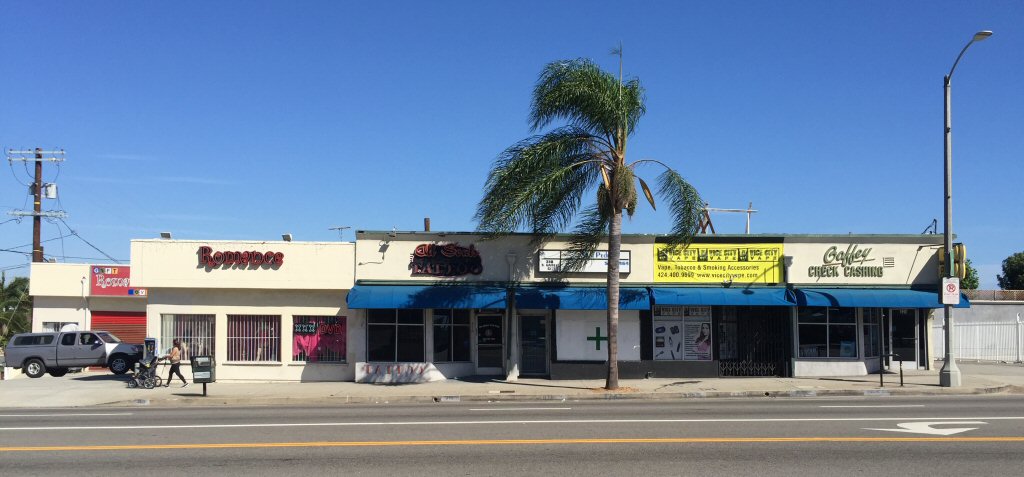
A couple of blocks away from the hotel, a strip shopping center partially revealed the character of this neighborhood. At one end, you could get some money at a check cashing store and with that cash you could step a door down to purchase vapes and/or medical marijuana, get a tattoo and, if inclined, buy lingerie (not the Victoria’s Secret kind). Buildings in the next block were occupied by a liquor store and a vacant car wash. Across the street were three national fast food chain restaurants. One more block down was another marijuana dispensary. This was the theme on this stretch of Gaffey Street.
All what you need.
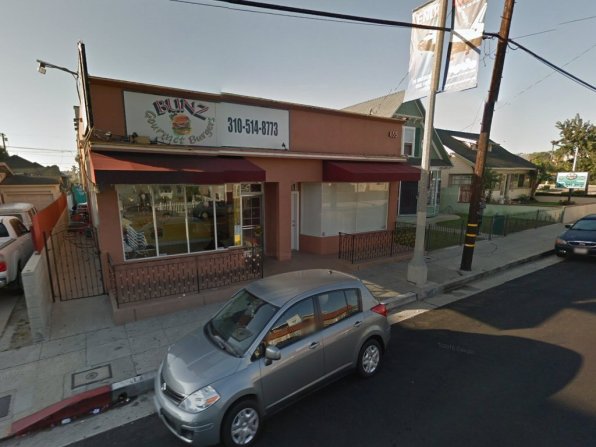
Bunz Gourmet Hamburgers is a about half a block off Gaffey, down Fifth Street, in a nondescript stucco building painted an adobe pink color. Tucked between apartment buildings and homes now used for commercial enterprises and medical offices, Bunz is one of two tenants in what appears to originally have been a dedicated retail building. While signs clearly point out the restaurant, the space occupying the other side of the building was devoid of any indicator as to its purpose. It was dominated by the type of plate glass windows that formerly displayed wares for sale but now obscured by curtains.
Bunz and the suspicious co-tenant.
Bunz is decidedly a neighborhood joint, small and focused. The menu is easy to figure out, with plenty of options for building a burger. The easy-going atmosphere is aided by a fun music selection and friendly service. Our order placed, we took seats at a table outside, watching the world go by as we waited.
Karen could see the other side of the building. It seemed vacant. Until someone walked up to the door, went in, and walked out a few minutes later.
Then a young woman hopped out of her car with a dour look on her face. She took her young daughter into Bunz, where one of the wait staff gave the girl a drink while mom went next door. The woman emerged with a smile on her face. This pattern would repeat, every two to five minutes, the entire time we ate lunch. Thankfully there was a light breeze that allowed us to eat relatively odor free.
Then we got a whiff – urban skunk.
Thankfully, the wind had shifted by the time our burgers arrived. “The Paradise” for me, loaded with pineapple, bacon and teriyaki sauce, and it was pretty fantastic. For Karen it was a basic burger, the “control” by which she judges all burger makers. The burgers were good and the fries close to excellent.
The walk back to the hotel was interrupted by a stop at a local doughnut place, ‘cause doughnuts can be dessert. Racks displayed all varieties of doughnuts and related sweet pastries, but some lonely cronuts caught our eye. There was nothing but empty air behind the counter, and Karen called out quite a few times before an older woman appeared. We inquired about the cronuts only to be assaulted by the woman’s brutal honesty that they probably weren’t the best choice this late in the day. Intent on not leaving without sugared dough, we settled on half a dozen mini doughnuts that disappeared before we returned to the hotel.
Being that we were on vacation, we spend some time that evening at Jackson’s Place, a fun little lounge that offers beer, wine and table top games. Though only three blocks east of the old neighborhood surrounding Bunz, Jackson’s Place is closer to the port and on the edge of San Pedro’s historic downtown, which seems to be undergoing a revitalization effort. Buildings in the area show a mix of updated architecture designed to echo the history of the area and buildings clearly in need of repair, while established trees and new street lamps line the streets.
Being on vacation when others aren’t, particularly in a town that’s not a vacation destination, can be odd. Only a handful of people were scattered about Jackson’s, lending a low-key feeling to the place. That’s not to complain; we got more than a fair share of the bartender’s attention. After a few games of Uno, it was back to the room to sleep.
a fall vacation, part one – finding where there are no Starbucks
The last Monday in September, Karen and I loaded up the two-seater and started our vacation by heading south. This trip would include stops in San Pedro and Avalon, Calif.; Ensenada, Mexico, and ultimately end back in Los Angeles.
To get to our first destination, we made our way out of the Bay Area to that soulless ribbon of road, Interstate 5. It’d be nice to say we left early, but oh-dark-thirty is the usual time we depart for work. Luckily, that means missing most commute traffic. Thankfully, Karen and I enjoy each other’s company and once and a while we can still hold a substantive conversation, a big plus when droning down I-5.
The last few years we’ve developed a rhythm when it comes to traveling. We outline plans, flesh out an itinerary, make reservations, and pack. (Inside and quietly, my 10-year-old boy still finds it hard to believe I am old enough to make and manage all of these arrangements.) While I still like to outline the stops along the route and the timing, I’ve come a long way in simply letting the journey play out as it will.
We generally make good time on any highway, even stopping when we want or need to, usually for fuel, for both us and the car. This stretch of the trip would total 402 miles and end at the Best Western Plus San Pedro. Running through California’s San Joaquin Valley (aka Central Valley), I-5 bisects some of the state’s richest agricultural areas and is the origin for about 10 percent of all U.S. agricultural production. Visible from the highway are fields of grapes and orchards of citrus and stone fruits, almonds and pistachios. On any given day, you can also find a bump crop of freight trucks on I-5.
This highway is the main corridor between northern and southern California. Over the years, I’ve driven it all hours of the day. The traffic is constant and never seems to thin out. Between the two of us, to put it politely, Karen is the speedier driver and three times we passed the same truck after quick stops. There’s not much to see in the 160 miles from Gustine to Grapevine, and we discovered that there is no Starbucks in the 60 miles from Kettleman City to Buttonwillow.
The view from our destination. The next day we’d be headed toward those cranes.
The weather was beautiful. The uncultivated terrain was dry. The grass was not “California gold” dry; it was an ugly, dead color. When not conversing, we had podcasts to listen to during the more desolate expanses.
A few landmarks can’t be missed. Harris Ranch is heralded by the stink of a nearly 800-acre feedlot and the cattle that inhabit it. Weathered, faded and grammatically incorrect homemade signs calling the Central Valley a “CONGRESS CREATED DUST BOWL” pop up once and a while. As if taunting, The California Aqueduct periodically snakes into and out of view. One can’t miss the iconic windmill towering over Pea Soup Andersons. (Once the sole eatery here, it now competes with no less than six chain restaurants.) The 77-foot tall windmill also marks the off-ramp for the San Joaquin Valley National Cemetery, home to California Korean War Veterans Memorial and the bronze 11th Airborne Memorial.
Soon we were climbing The Grapevine. (For those unfamiliar with California, The Grapevine is the section of highway – named either for a local creek or the vineyards that once dotted the area – that crosses the mountains of the Transverse Range and over the Tehachapi Mountains to peak at 4,144 feet.) With a 6 percent grade, The Grapevine rises about 1,500 feet over 5 miles. A collection of roller coasters at Six Flags Magic Mountain marks the far edge of urban sprawl.
After the long descent into the Los Angeles Basin one’s ability to navigate is tested by a collection of convoluted interchanges. Near the outskirts of San Fernando, it became difficult to resist the urge to refer to highways in the local vernacular: “the” 405, “the” 100. The lack of traffic was welcome, however, and we arrived at the Best Western Plus San Pedro earlier than expected.
There’s often a pregnant pause and disapproving look when you tell people familiar with the area that you’re staying in San Pedro. It didn’t seem that bad.
Just down the street from the hotel, where one could cash their paycheck, pick up some vapes and medical marijuana, get a tattoo and pick up some lingerie.



 Even with age, all is not lost when it comes to fly fishing. Wading in cool trout waters is excellent therapy for sore knees. Aches and pains fade away with one’s focus on the flies, even if that means watching an indicator (aka bobber). If it ever comes down to needing a more sedentary mode of fly fishing, I’m lucky enough to enjoy stillwater nymphing and have suitable waters not too far away.
 Growing up we visited the Martinelli’s* operation in Watsonville, Calif.; the Blue Diamond Growers* plant in Sacramento; the


 Finally seated at Tony’s Pizza Napoletana, nearly elbow to elbow with other guests, we unfolded a menu with three pages of pizza and another of pasta and Italian specialties. Two words stood out: Coal Fired. Below it was a pizza that sounded too good to pass up.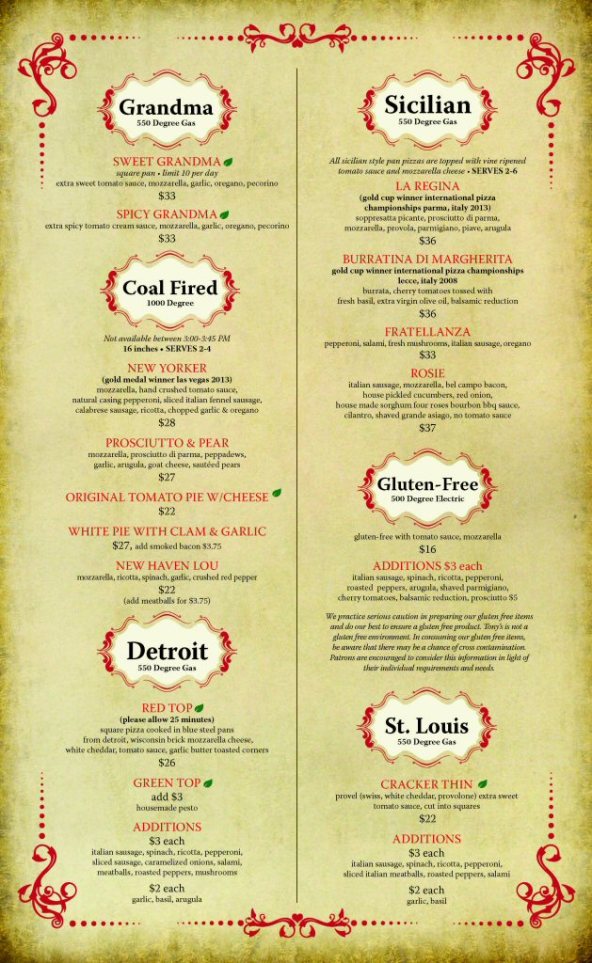
 Our days were measured by trout caught, bears seen and miles hiked; nights by stars and the embers of a campfire. During those summers we’d rarely see a familiar face, but the place seemed unchanging. We grew a lot during those short visits, climbing granite domes, hiking trails commonly rising 1,000 feet in less than five miles, floating in a river that only a few miles earlier was born of snowmelt.
 It wouldn’t be out of place to say that Tuolumne Meadows, a less visited part of Yosemite National Park, helped form the person I am today. I’ve since returned to Tuolumne Meadows, one time fishing there with my sons, another time hiking up Lembert Dome with my brother and one son. Nature seems to ignore us humans; the changes over the last three decades are entirely ours.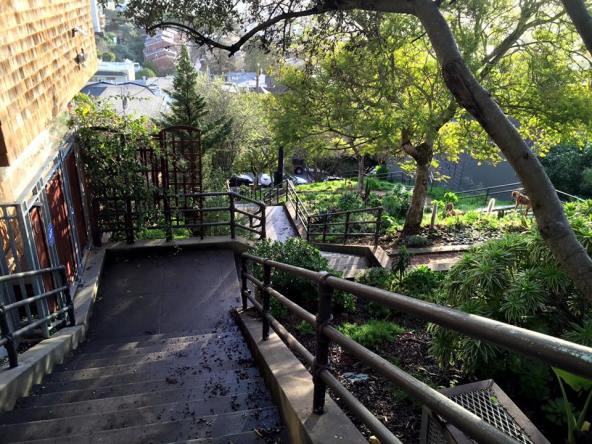



 fishing for words