It’s been a bad year for water in California. The April opener was one of the best in years thanks to low water levels.
Next week we’ll see for ourselves what Eastern Sierra rivers and lakes look like four months later.
One guide recently referred to Bridgeport Reservoir as a “pond.” Bridgeport is so low that its outflow into the East Walker River has been tainted by algae — algae that usually floats closer to the surface of the reservoir — and now the river is regularly off color and weedier than usual. Lake Sabrina in the Bishop area is so low that the front (manmade) lake no longer exists. The level of Crowley Lake is better than might be expected, but low enough to concentrate fish in the deepest areas.
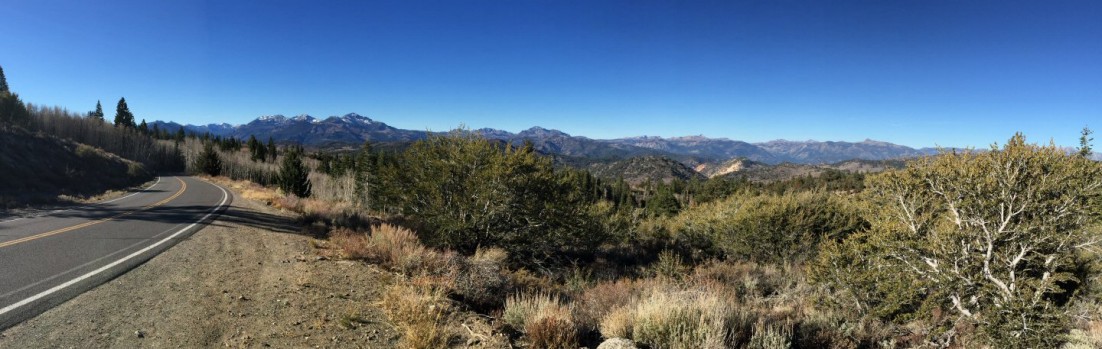
The route taken by myself and guys from the club will be dictated by the Rim Fire. Hwy 120 remains closed. An expectation that the fire might not be fully contained until Sept. 20 doesn’t lend any clarity as to when it might open.
That’s not a big issue for me. I usually head over Sonora Pass via Hwy 108, with stops at the West Walker River, Little Walker River or Molybdenite Creek.
Thankfully, there will be water to fish when we settle in at Tom’s Place Resort (which certainly isn’t the resort you might think it is). The Upper Owens is supposed to be in good shape. The Middle Owens is flowing at an unseasonably high level. I may head to the high country, visiting alpine lakes and streams where I hope the fish are already preparing for a long winter.
However it works out, there will be lies told over beer and good grub.
It was long ago decided that this blog was to be guided by a few simple rules; that it would be family focused and friendly, devoid of rants or advice, and mostly my space to write about the misadventures of my life.
Today, however, things are bit somber.
CalFire Rim Fire Incident Report
California’s fire season is shaping up to be one of historic proportions. The Rim Fire still raging near Yosemite Valley is one of 11 major fires currently burning in our bone-dry state. Those are only “major” fires. During the last few weeks, about 150 fires were sparked by lightning strikes. CalFire figures show that through the middle of August, 4,715 separate fires have burned the state — beating by a wide margin the historical annual average since 2008 of 3,000 fires. The Rim Fire is now the largest fire in the recorded history of the Sierra Nevada and, as of today, the 5th largest wildfire in California’s history.
In this moment, all eyes are understandably on the immediate danger to lives and property. Prayers are being said for the firefighters. This is devastation on an unimaginable scale.
As a fly fisherman, I can’t help but ask questions about the long-term impact on the many streams and rivers now stripped of bankside vegetation, and the fish in their waters. The extent of ecological damage won’t be understood for a long time. The intensity of the blaze — flames reportedly reached 100 to 200 feet as they shot up canyons — left nothing behind. While the Groveland Ranger District of the Stanislaus National Forest, the area predominately affected by the Rim Fire, has gone through cycles of intense wildfires, those fires have burned only small areas. (Decades of fire suppression and logging can be blamed.) Conjecture is that the Rim Fire, however, may have denuded up to a 1,000 acres.
The northern edge of the Rim Fire crossed the Clavey River, one of the longest undammed rivers in the Sierra Nevada, a designated wild and scenic river, and home to native coastal rainbow trout. The fire burned along extended stretches of the South and Middle Fork of the Tuolumne River as well as Cherry Creek, all waters known for fishing, whether stocked or wild fish. Many other but lesser known streams, streams I’ve found wild populations of trout, also fall within the boundaries of the Rim Fire.
The Clavey River
Relatively little is known about the effect of fire on fish populations. An admittedly hasty search of the Internet offers some insight. It’s clear that the effects of fire on fish populations can be complex, with dependency on the length of the event, size of the habitat, the home range of the fish, specialization of spawning habitats and the type of fish. Of course, most studies cite salmonid fishes (trout, salmon, chars, freshwater whitefishes and grayling) as the taxonomic group slowest to recover after a fire.
That said, the effect of fire on native salmonid populations can be highly variable, with extinctions observed in some isolated small headwater streams, but a quick rebound when a species’ home range extends to multiple tributaries within a single watershed.
In affected rivers, streams and lakes, fires can most notably affect water temperature and water chemistry as well as the local invertebrates, amphibians and fish. No longer shaded by trees and brush, water temperature can rise, reducing the solubility of dissolved oxygen. Absorption of ash can increase the water’s pH and impact nutrient levels in aquatic systems. Studies document five- to 60-fold increases in phosphate, nitrate, and ammonium concentrations in streams affected by fires that have swept through larger watersheds. Conditions in these waters returned to normal with a few weeks, but were later impacted by rain flushing additional ash and soil through the watershed.
It’s likely that the smallest streams will have most dramatically impacted by the fire. Though most people dance around the issue, this has been another drought year for California, and water levels are so low that any longish exposure to the fire may have “cooked” many of those small streams.
Nature, however, can be resilient; as long as we don’t get in the way. Anyone who’s visited Mt. St. Helens National Volcanic Monument can attest to that.
A beetle native to the Sierras, which has infrared receptors allowing it to detect fire, could be first on scene to feast on the blackened trees. They, in turn, will draw birds. New growth will sprout, creating forage for small mammals and, eventually, deer and bears.
Sure, deceit is rampant in fly fishing. A common non-answer answer to “What fly you using?” might be, “Well, they’re looking at dries, taking some nymphs too, but streamers might work.” And it’s always delivered with a grin.
That same grin might go along with a tale about the latest and great gear gotten at a great price, but often left unsaid is the “where” of that purchase. While I pondered the gift certificates on my desk and personally wrestled with this question of “where” the last few weeks, it dawned on me that me and my generation maybe the last one with truly equal footing in the pre- and post-Internet world.
My nearest fly shop is about 17 miles away, not too far. It’s a modest affair and on the surface, like many fly shops, seems to have had its struggles over the years. Inventory can still be hit or miss.
The Orvis gift certificates on my desk, however, made the choice between shopping online and visiting a brick-and-mortar shop both a logistical and a financial decision. The closest store, in San Francisco, closed last year. I could shop online, but wading boots were on my list, and just as much as I wouldn’t buy a fly rod without casting it first, I generally don’t buy anything that will be worn without test fitting. I also detest the drawn out process of buying, returning and awaiting shipment of a replacement item.
That’s why the wife and I ended up at the Roseville Orvis store, 80 miles away from home, a weekend ago.
We made a day of it, stopping to walk in Discovery Park along the American River, just above its confluence with the Sacramento River. The weather was great and the river was dotted with boats of anglers searching for the first salmon of the Central Valley season.
We found the Orvis store after realizing it had moved and, feeling a bit like a dork, I carried my waders and socks on the walk to the store. The waders gave me away as soon as I entered the store, and soon I was set with new rubber-soled wading boots. (My old felt boots are still serviceable, but will be relegated to a back role and waters known to be invasive species free.) A small chest pack was selected and a day pack ordered. More than a few flies made it into the bag.
I enjoyed the friendly banter with Frank – comparisons of fishing experiences, hints and suggestions of waters that deserve a visit – something that’ll never be matched online. And there was no cost to fondle wiggle test rods on my wish list.
Fuel to Get There:
$18.45
Entrance Fee at Discovery Park:
$5.00
Lunch at Smashburger:
$10.52
Plenty of New Fly Fishing Gear:
Don’t Ask
Personal Service from Guy Who Actually Uses the Gear:
Sometimes life just throws a curveball. Two weeks ago it felt like every curveball was followed by another.
So, I abandoned the original plans to sandwich a cabin visit with the sister and family between two full days of fishing and just go with the flow.
That meant the two-and-a-half hour drive to Twain Harte stretched out to about four, interrupted by a longer than usual stop at Bass Pro.
It also took longer than usual to coax that first trout to take a fly in a nearby stream.
Back at the cabin, I whiled away some time reading and generally taking it easy.
The sister, her husband and two sons taller than most everyone pulled in about noon Friday. Soon enough we were beating the heat at Twain Harte Lake. A visit to the cabin is a mixed blessing during hot weather; the lake offers respite, complete with an old-school snack shack with burgers, fries, milkshakes and snow cones. The cabin, however, and despite a lack of insulation, seems to retain all the heat of the day well into the evening.
The nephews goaded their parents into the usual swim to a platform near the center of the lake, then a swim to “The Rock.” Then back. I admired their energy from shore, dipping my feet in the water and reading. The afternoon was completed with a visit to the snack shack.
Normally the only overexertion on my vacations entails scrambling over boulders and under downed trees in search of trouts that sometimes aren’t there. Saturday I opted for an easy, sure thing, fishing a well-stocked creek that’s often pounded by the put-and-take crowd. This day I’d be alone for well into four hours, targeting specific fish and trying to coax dry-fly takes.
I found my cabin mates finishing up the breakfast clean up when I returned about mid-morning. They planned to hit the local disc golf course, and I figured I’d lug my camera along. I’ve come to realize that I don’t have a lot of hero shots of myself during fishing, hiking, motorcycling, etc., so I’m trying to step in to take a few photos for folks when I can.
The boys pondering Luci’s shot. Missed by that much.
This disc golf course is purely a volunteer effort that gets some financial support from the local community, and it’s nice to see younger folks join in the creation of something positive. The course winds its way through a now fallow traditional golf course, over an irrigation ditch and under a flume.
My nephew Nicholas plays Ultimate Frisbee and might be expected to be the odds-on favorite, and while Tom, his father, will deny his intense completive streak, it quickly became clear that the rest of us were there to, pretty much, watch a one-on-one match. On the fourth basket (hole) another player gave us another disc, allowing me to participate. Like the amateur I am, there was a lot of wasted effort spent on power when form was more important. I later learned that my arm isn’t as young as it used to be. There was no use keeping track of my score; I was always one stroke behind Tom or Nick. And where either of them could curve a Frisbee around an obstacle, my choice was limited to going straight through if I could or give it a very wide berth. The competition would end with Tom winning by a stroke. I believe Tom also won our game of mini golf that evening.
The afternoon was again spent on the beach, with swimming, conversation, tossing of the Frisbee and a return to the snack shack.
Proving that there’s not competiveness in their family, Tom and Nick returned to the disc golf course the morning before our departure for a grudge friendly rematch. Nick recovered some dignity with a win.
This short trip was a welcome, unscripted getaway.
Nathin launching one from the first tee.
Nathan letting one loose behind Lyons Canal.
Tom scoring on the first hole, aka basket.
The boys pondering Luci’s shot. Missed by that much.
Luci showing that form honed after years of playing disc golf. That or ballet.
Tom working out of the ‘rough.”
Nick in the rough. (It looks worse than it really was.)
Apparently more and more fly rod builders are chasing customers younger than I can pretend to be.
My tenure in the sport isn’t long, but long enough to absorb more than a few old timers’ tales, tales in which rods are referenced by the manufacturer and either a simple model number or more elegant name reflective of fly fishing. Examples: older rods such as the Paul Young Perfectionist, the Phillipson Epoxite Registered Midge and contemporary models like Winston’s Boron series or Orvis’ Access and Clearwater lines.
But, according to Sage, there can be only ONE*. While the Orvis Helios implies it’ll imbue one with god-like powers on the stream, at least that name still has an indirect connection to fishing†. Two years later we have the new Vapen rod from Redington. Vapen? Look it up. The first few results in a search of the Internet will show its etymology is Swedish for “weapon.” A bit of an odd name for a niche of fishing that typically embraces a catch and not-kill-or-wound philosophy. Then there’s the Vapen Red, with a polymer grip, co-developed with a golf club grip company, that’s the color of Technicolor lipstick. Yes, correlations between golf and fly fishing are many, and fly rod development — as well as that of nearly all fly fishing accoutrement &msash; has always been about chasing and adapting the latest technology from other industries.
But I’ve been thinking about stepping up to a nice, and lighter, fly rod. Now, it seems, it’s all moving a bit too fast for me and getting, well, a bit too flamboyant and aggressive for my tastes.
Maybe I’m that is slowing down as the world speeds up around me. Perhaps I’m closer to “vintage” that I’d care to admit. After all, I remember when marijuana was the “evil weed.” My high school education included a typing class. And these days I increasingly have to explain my pop references to the staff I’ve hired.
Guess there’s little hope I’ll ever be hip on the stream.
The comments, as always, are now open.
* Is someone at Sage a “Highlander” fan?
† Helios, the Titan god of the sun and god of the gift of sight, lived in a golden palace located in the River Okeanos.
Sean lining up a putt on hole four at Twain Harte Miniature Golf.
When it comes to the oldest son, the easiest way to level the playing field is to chase wild trout. While there may be some claim that genetics would ensure that he’d be at least half as good a fly fisherman as his old man, the truth is that there’s no substitute for experience.
The day after our Annual One-Day Tioga/Sonora Pass Tour, we had an agreement to take it easy, meaning no alarms. We were still up and out at a decent hour, though long after the sun had begun to warm things up. This Friday being designated a “Man Day,” our first stop was for convenience store coffee and breakfast. The day would later include miles of dirt roads, a lot of hiking, and a whole heap of fly fishing. Manly stuff indeed.
We were headed northeast to Arnold, cutting across the dry, now golden Sierra Nevada foothills once scoured by ‘49ers. We passed the time during the hour-plus drive with conversation, the usual good-natured ribbing, and a good playlist. The focus of the day was a small freestone stream rumored to be well worth the effort. It could be easily accessed through a state park.
We didn’t want easy.
After inquiring about this stream a few months back, a club member cryptically described in a hushed voice a series of left and right turns leading to a serviceable Forest Service road that eventually crossed Stream X. His tale of the wild trout that lived there was peppered with warnings of fast-moving logging trucks and rattlesnakes.
With the help of a National Forest Service map of the area, I had determined the most likely route. But there’s nothing like local knowledge. We stopped at Ebbetts Pass Sporting Goods for guidance and picked up a few flies from one of the best selections I’ve run across. Bill, owner and long-time resident who’s hunted and fished the area for some 30 years, is always willing to take the time to offer advice. (Based on our conversations, I now have a list of rarely fished and not-so-easily accessed waters.) Bill’s confirmation of our route also included some obfuscation…the first left was after a city limits sign and our destination was near the bridge.
The paved road extended farther than expected. The vegetation here was a bit greener and denser than that around the Family Cabin and a welcome change. Soon enough we were on the dirt road. Not your typical Forest Service road, rather one made more drivable thanks to constant compaction by heavy truck traffic and frequent watering.
It became clear during our pre-fishing ritual — changing into waders and checking rods — that we were in the right place at the right time. Chance would have it that I looked up just in time, over the top the car and through the trees to a bend in the creek about 50 yards away, to catch a glint that could only have been from a jumping fish. An added bonus: it was just us.
Sean was on the stream first and hooked a trout in a small pool. It was about nine inches, and coloration and big parr marks confirmed it as wild. Looking over this stream, it was clear this would be a day of pocket water. At the end of the day, about 75% of the water we’d fish was pocket water and more than 90% of our takes would be on dries.
In typical fashion, we leapfrogged past each other as we headed upstream. Sean lagged behind at one of the better shaded pools in this section. Upstream was a wide, sweeping bend. Trees provided shade on the inside. The outside of the bend must be scoured during heavy runoff, leaving a big field of rounded stones of all sizes. Tire ruts leading down to the stones were left by the logging company’s watering truck and — as evidenced by a pod of obviously stocked trout darkening the center of the bend — a DFW stocking truck. Temptation got the best of me and I got a few planters to take a big stonefly pattern. Sean had since emerged and I moved upstream, only to be halted by a fence extending through the stream and up both banks.
Returning to the bend, Sean and I agreed that, with the two other fishermen who had since arrived, it was suddenly too crowded.
A rainbow trout that’s a bit bigger than expected in this small creek.
Nice surprise in a small creek.
During my time upstream, the driver of the watering truck had chatted up Sean. While sucking water from a beautiful stream that’s habit for wild trout is uncool, at least the driver offered up details about how to get to a more remote and less-fished section upstream. Following his recommendation, we picked our way down a less-frequented road. This isn’t your graded road, but rather a barren section of forest sprinkled with stones and crisscrossed by fallen branches. The type of road that wouldn’t necessarily require four-wheel drive, but where I would have been thankful to have a bit more ground clearance than offered by my (trusty) Accord.
It was slow going. The road meandered away from the stream and gained elevation before a fork dropped us down to a wood bridge.
Here the character of the stream changes. It’s nearly all pocket water. And skinny.
As expected, the fish were spooky. We didn’t really see the fish; we caught flashes of fast-moving shadows in the periphery of our vision. This is the kind of stream that tests one’s ability to pick out suspect water and adequately present a fly. There might be strikes on your first two drifts. After that, it was time to move on. Thankfully, there was a lot of stream available.
My first cast was to ideal pocket water behind a large boulder. Water tumbled past the boulder into a pool that while not deep, was dark enough to hide fish. That first drift netted a brilliant eight-inch rainbow. This was repeated often as we hiked upstream, with nearly every fish chasing our dry flies.
It’s likely we could’ve spent all day moving upstream. But we did have to pick up a wine club shipment in Murphys, so we headed back to try fishing downstream of the bridge. There were a few spots but it wasn’t too far before the stream enters a canyon narrow enough to encourage a solid risk/reward assessment before continuing.
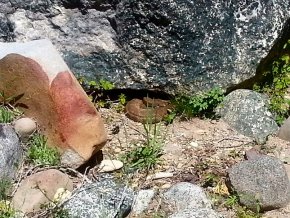
A not-so-nice surprise.
Sean, who wasn’t aware of my decision, was hiking along a deer trail above the stream while I headed back upstream. There was no scream or shout, and it wasn’t until he caught up with me that I learned of the first rattlesnake sighting of the season. Sean was foolish coolheaded enough to linger long enough to take a photo.
We debated stopping to fish again on the way out but decided otherwise. Our drive back to the highway included sightings of a coyote and turkey. After a stop at Ebbetts to report on our success (suitably suppressing how excellent it really was), it was time for a post-fishing beer. Luckily, Snowshoe Brewing wasn’t more than 15 minutes away.
We completed the day picking up that wine, tasting some of that winery’s products, and grabbing decent-but-not-great burgers at a place adjoining a gas station. Music and banter continued on the drive back, with a promise to keep up the illusion that this really-not-so-secret place was our little secret.
I did outfish the boy. I also whooped him in a game of mini golf. Even so, I think he had a pretty great time.
“High tech” used to refer to the latest silica nano matrix rod or the lightest reel made of unobtainium. Not anymore.
While Google’s Glass has launched with less-than-useful third-party apps — “Glassware” — tied into CNN, Evernote, Facebook, Tumblr and Twitter, the real breakthrough is yet to come.
For better or worse, a glimpse into the future.
Google Glass Fly Fishing App (click on image for larger view)
I never pushed fly fishing on my wife, but she’s always supported my pursuit of the sport and listens attentively to accounts of all my adventures. She usually believes the fish are as big as I say.
Then, a few months ago she took me by surprise, asking if I would show her how to cast a fly rod. I’ve had welcome opportunities over the years to help teach, or at least acquaint, a few folks with fly fishing. In addition to assisting with the club’s novice class, it could be said I didn’t teach too many bad habits to my brother and my son, both of whom went on to have some success.
After an involuntary thought that “those who can, do, but shouldn’t necessarily teach,” I agreed to take my wife out for some casting. Good weather offered an opportunity and we spent just under an hour going through the basic motions.
A few weeks later, during a discussion of our weekends, I reminded her that I’d be teaching the novice class on an upcoming Saturday. She asked if there might be room. There was, and soon she had reserved a spot. She learned a lot and suffered through some frustration.
Sure is nice to have someone along to get photographic evidence.
We’d be at the cabin a week after the class, and while a friend would be with us and side trips were planned, it was expected that I’d slip away to chase a few trout. Although we packed extra rods, reels and my spare waders and wading boots, it wasn’t until we stopped at Bass Pro and purchased a license for my wife did the reality sink in that she actually might join me.
Firmly believing that the best way to hook someone on fly fishing is to get into a fish on a fly rod, our destination the next morning was a stocked stream not too far from the cabin. We test-fit the waders at home and knew they would work well enough. My wife set up the rod and reel on her own, we clipped on our wading staffs and headed to the stream. I think it was after a dozen steps or so that my wife began referring to my old wading boots as “clown shoes.” (Admittedly, they were a bit big, but did the job that day.)
My wife doesn’t much like water — it’s for drinking and bathing and that’s about it — but she didn’t flinch much when we began wading. While waders provide a barrier between the wearer and the wetness of the water, one still “feels” the water. I reassured her that in water this cold, after a bit of time, she’d be too numb to notice.
Just before the first strike…
This is a stream best nymphed, with limited dry fly action some afternoons. Offering a running commentary on what I was doing, I rigged up two standard nymphs below an indicator. I explained and demonstrated where to cast (and hooked a fish in the process), and talked about how the trout would be looking for a close approximation of a real insect drifting near a current seam.
The morning was sprinkled with encouragement and advice. My wife’s casting, more like lobbing under the tree limbs above, improved. Her patience was impressive. After the first take of the day, it was more than an hour before a second bump. She wasn’t the only one casting to ghosts. I could count my strikes on one hand.
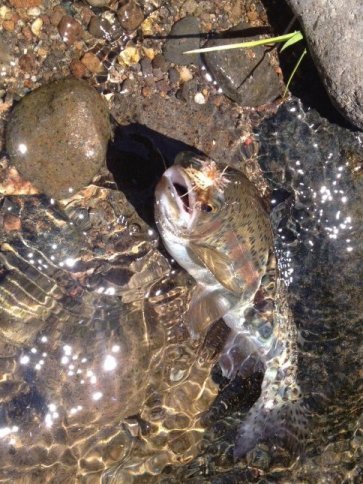
About midmorning we shifted downstream about 10 feet. The fish in this stream, though raised in a hatchery, move throughout the day, typically following the movement of the shadows. Close to noon, there’s more sunlight than shadows on the water, forcing any trout in the area into a narrow and definable seam. Downstream, I switched to a dry/dropper setup and was sight casting to a decent looking fish. Good placement and presentation earned a solid strike, and I landed my second and last fish of the day. Photo taken and trout released, the focus returned to getting the wife on a fish.
There’s no telling what changed — the temperament of the fish, the depth or general presentation of the flies — but suddenly my wife could lay out a cast, manage the line and fool a fish. A trout was hooked on the second or third strike, offered a dramatic leap and was gone. In between a few more strikes we worked on line management and talked about setting the hook. A few more strikes were missed.
Getting the “hero shot” took some dedication with an uncooperative, slippery fish. But she did it.
Then it all came together.
It was good to get excited about a fish on the line, even if it wasn’t my line. Limiting my advice to keeping the rod tip up and letting out line when the fish demanded it, I set my rod down and carefully moved downstream of the missus. I calmly instructed her to bring the fish head first into the net. For one heart-stopping moment the 12-inch rainbow would have flopped out were it not for my cat-like ninja reflexes luck.
Yes, my wife did receive a proper fly fishing baptism, falling into the water a few times. (No water over the waders and nothing broken.) Tangles were minimal and, amazingly, not one fly was lost the entire day. I do worry, however, that had she hooked (and landed) all the fish that hit her flies, she would have out-fished me.
Ask my wife why she stepped up to try fly fishing and you’ll get some sentimental nonsense that it’s another way to spend time with her husband. That day, in a cool stream away from everyday worries, after landing a trout, she told me of a new understanding of why I enjoy fly fishing.
While we’re not running out to buy her new gear, I’m now optimistic that there’s a greater chance of fly fishing any suspect water we pass during our travels.
I usually eyeball them through jaundiced eyes. Though instinctively taking inventory of every feature — shelter, shade, structure — I’d normally pass up a puddle made even more unappealing by strategically placed CalTrans-orange barrier netting.
But I missed Opening Day of trout season last Saturday. So, while a preference for good hygiene precluded any thought of sullying waders in the tepid water, it was hard the next day to pass up an opportunity to soak a line to test a presumption that life might be found beneath the surface.
My son’s tales of casting spinners to willing small bass brought me to this containment pond, barely five minutes from the house. Not much more than 50 feet across, there was nothing remarkable about it. The setting was serene enough, being that it is behind a [location redacted]. Trees line the south bank, providing a bit of shade and shelter. Reeds sprout near a corrugated culvert pipe and a darkness that comes with depth suggested a smaller drop off about five feet from shore.
“Nothing much over eight inches,” he had said.
Parked on a nearby street, I returned the 5 wt. to the trunk, selecting the 3 wt., thinking the smaller rod would offer a more sporting fight. We hiked over sidewalk and up a dirt embankment to get there.
Lacking any need for sophisticated assembly of a rod or the puzzling about the appropriate fly, my son and his girlfriend were soon throwing spinners and eliciting strikes. I maintained a semblance of dignity, but it’s a bit unsettling to publicly rig a fly rod while visitors to the [redacted] came and went by, while the sound of compression braking floated up from a nearby Bay Area highway. Being predisposed to size 20 Parachute Adams and even smaller nymphs, my choice of suitable flies was limited. A bluegill-ish streamer pattern was the ultimate choice.
The superiority advantage of fly fishing was immediately apparent. After three casts I managed to land the “largest” fish my son had seen pulled from this urban lagoon. All of 10 inches, it was a fun match for the 3 wt. This pattern continued, with more fish missed than hooked.
Previous encounters with bass — actually, lack thereof — left me a bit dismissive and a bit underprepared, but playing these little fish helped reduce a twitch developed during a winter devoid of any fishing. But the contentment that snuck up on me vanished in an in-your-face demonstration of the circle of life; a demonstration of an oft-told fish story that I had never personally experienced.
Like any of the half dozen other six-, eight- or 10-inchers, this small bass offered up a small tussle, until a large shadow shot forward and engulfed it. Any leader that was visible quickly disappeared as the shadow returned to the depths. A short tug of war ensued. Just as quickly, my line and rod went limp. It was more than I bargained for, but a welcome reminder why I enjoy this sport.
Big bass from a small pond.
In a cloud of optimism but without any expectations, my box of streamers was re-examined and a heavier, bead-head yellow woolly bugger tied on. The smaller bass paid a bit more attention to this fly, though it was equal to at least a quarter of their body length. After a few casts, I remembered to let it settle a bit, hoping that might present the fly to the fish a bit longer. This tactic worked well enough, and I landed about 24 inches of bass six to eight inches at time.
The wind made casting a bit of a chore with a big fly on such a small rod, but soon enough I was more consistently hitting promising water. Finally the fly landed where directed. I paused; stripped in line, paused again, stripped. The line stopped in mid-strip. Being more accustomed to embedding a hook in an underwater log or moss-encrusted rock, it wasn’t until my line shivered that I realized there was a big(ger) fish on the other end. The choice of a small 3 wt. rod and reel was quickly called into question; the reel’s drag screaming painfully and the rod bending into an uncomfortable semiellipse.
There’s no gingerly playing a big fish on a small rod. Do so and you’ll probably lose this fish. Horse a fish too much and you’ll probably break equipment.
Without a net, I was unprepared for a fish of any size. But the fishing gods must have been smiling on me. Time seemed to slip away, eventually the fight ebbed and a lip was gripped.
In the end, I found my temporary fix last weekend far from clear, cool streams in which I’ll be wading when you read this.


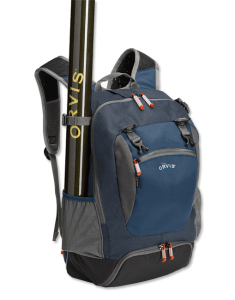 We found the Orvis store after realizing it had moved and, feeling a bit like a dork, I carried my waders and socks on the walk to the store. The waders gave me away as soon as I entered the store, and soon I was set with new rubber-soled wading boots. (My old felt boots are still serviceable, but will be relegated to a back role and waters known to be invasive species free.) A small chest pack was selected and a day pack ordered. More than a few flies made it into the bag.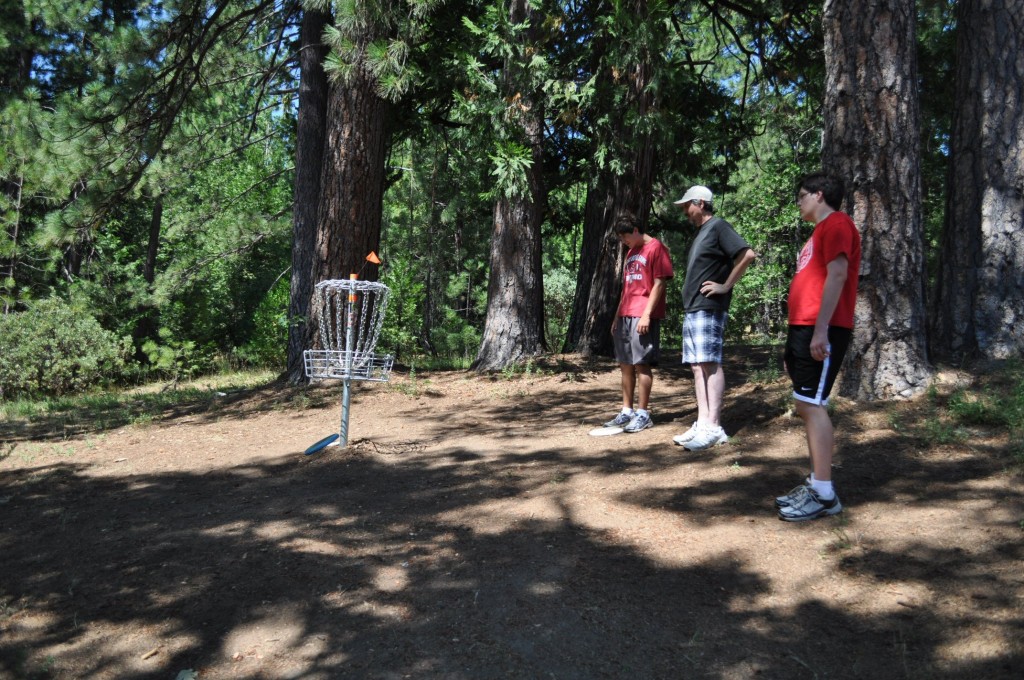


 Apparently more and more fly rod builders are chasing customers younger than I can pretend to be.


 fishing for words